Ep. 39: Lorne Whitmore – Managing Director of Sales, Royal Canadian Mint
How does a sovereign mint dominate the global bullion market? In Episode 39 of the Y'all Street podcast, Lorne Whitmore, Managing Director of Sales at the Royal Canadian Mint, sits down with Tarek to explain the business of precious metals. This episode breakdown highlights key insights into the Mint's unique "toll refining" model, the massive logistical scale of its Ottawa and Winnipeg facilities, and the cutting-edge anti-counterfeiting technology, such as Bullion DNA, that protects the integrity of the iconic Maple Leaf coin.
In this episode...
- The division of labor between the Ottawa (precious metals) and Winnipeg (circulation) facilities.
- Navigating supply chain disruptions and tariff battles of the USMCA (KUSMA) trade agreements.
- The RCM's role as a trusted custodian for precious metals ETFs.
- Why mastering the art of making complex concepts simple is the ultimate career hack.
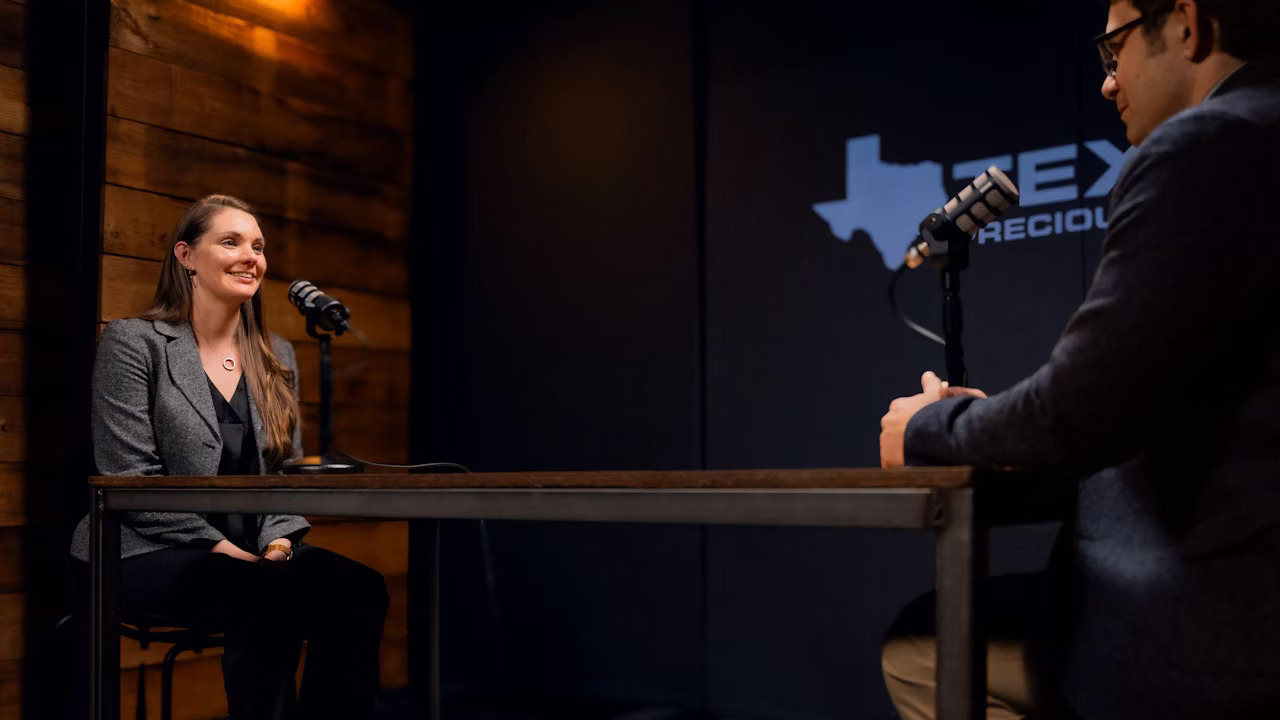
In this episode, Tarek sits down with Lorne Whitmore, the Managing Director of Sales at the Royal Canadian Mint (RCM). Lorne pulls back the curtain on how a Crown Corporation operates as a dominant player in the fiercely competitive global bullion market. They break down the RCM’s massive operational scale across their Ottawa and Winnipeg facilities, the mechanics of “toll refining” Canadian gold, and why the iconic Maple Leaf coin remains the gold standard for global liquidity.
Key Takeaways
- The “Toll Refining” Model: The RCM doesn’t actually own the gold it refines. Lorne explains that the Mint operates as a toll refiner, taking in raw doré from Canadian mines and issuing tradable “pool credits” in return. By law, the Mint does not speculate or take ownership positions in the metals market, shielding them from price volatility.
- Liquidity is the Ultimate Value: Why do investors choose the Maple Leaf over lesser-known coins? Global liquidity. Lorne notes that when dealing with assets worth thousands of dollars, the RCM’s brand equity ensures the coin can be traded and recognized instantly anywhere in the world, protecting the investor’s exit strategy.
- Securing the Supply Chain (Bullion DNA): As metal prices skyrocket, the incentive to counterfeit grows. The RCM pioneers anti-counterfeiting tech with “Bullion DNA”—a covert feature micro-engraved into the coin that can be digitally read and mapped back to the exact die that struck it, providing absolute authentication.
- The Provenance Premium: Institutional buyers and jewelry brands increasingly demand to know exactly where their gold comes from. Lorne discusses “Bullion Genesis,” a distributed ledger technology that tracks gold from a specific Canadian mine through the refining process to the final product, creating a premium market for ethically sourced metal.
- The Art of the Pivot: Lorne’s career is a testament to the power of adaptable skills. He transitioned from public accounting to fintech software sales to leading bullion sales for a sovereign mint. His advice? Do your homework, admit when you don’t know the answer, and never rely on a resume to do the talking.
Notable Quotes
“I think in sales, it’s not about buying cocktails and having a sunny personality. It’s about being competent and credible.” — Lorne Whitmore
“When you have an investment, you’re not there to collect these physical things… at a certain point, there’s a liquidity event. So you want to be able to have worldwide liquidity of those products.” — Lorne Whitmore
“If you’re going to counterfeit a coin, we’re the hardest one to counterfeit. So pick somebody else because it’s more expensive and you’re more likely to be detected.” — Lorne Whitmore
Mentioned Resources
- Company: The Royal Canadian Mint
- Refining Competitor: Asahi Refining
- Technology: Bullion DNA / Bu
0:00 - 0:16
Lorne: You also have to continue to innovate. So back to some of those security features and all of that. So we recognize how important those products are to our overall brand. Hence the desire to continue to invest not only in the features, but also making sure the communications about the product features are, are out there in the market.
0:16 - 0:25
Tarek: Welcome to Yallstreet. Today, I speak with Lorne Whitmore, the managing director of sales for the Royal Canadian Mint, the machine that smashes.
0:25 - 0:31
Intro: 100% legit. So Chris, you want a cup of coffee? I just want to be the best.
0:37 - 0:38
Tarek: Lorne, would you like a cup of coffee?
0:39 - 0:41
Lorne: I would absolutely love a cup of coffee.
0:41 - 0:42
Tarek: Coffee. Cheers.
0:42 - 0:47
Lorne: All right. I was up at 3 a.m. Texas time this morning. First cup of the day. So, uh, highly appreciated.
0:48 - 1:02
Tarek: That's great. You know, I was going to get you a, um, U.S. men's hockey coffee mug, but, uh, I thought it was too soon. So I got you to come and take it from, uh, from Gonzales, Texas, right up the road.
1:02 - 1:05
Lorne: Well, Brady Kachuk is the captain of my team in Ottawa. So it's all good.
1:05 - 1:25
Tarek: Okay. Good, good, good. Well, listen, uh, really honored to have you on the pod. Thank you for, for taking the time. Uh, want to just learn more about the Royal Canadian Mint. We obviously have a lot of customers that buy products from the mint. Um, maybe you could just tell us a little bit about the, the operation and your involvement with it.
1:25 - 4:27
Lorne: Sure. One of the things that I think is a bit notable at the, about the Royal Canadian Mint is we're very, uh, fully integrated mint. We have diverse businesses, which actually in some markets are very complimentary. So we, so if you start at the front of the value chain, we've got a refinery. We tend to be very skewed to gold refining. So most of our capacity is dedicated to gold refining. So in Canada, there's a lot of gold mines, not so many silver mines or platinum mines. So it made sense to establish a refinery in Canada. So that sort of starts the value chain. So we refine gold from primarily Canadian mines, some other sources as well. And, uh, we then take the, the raw material for silver, as you might imagine, I'm sure, you know, we do a lot of silver products, the volume of silver, so we could not possibly self-support in terms of silver. Our silver refining capacity is primarily for gold by-product in mines and things like that. So we'll source silver from the market through banking channels and others. Um, so that's sort of how metal comes into the plant to begin with. So that's sort of where it all begins. Um, so what, once we refine or take in bars or raw material to make products, we'll, um, turn them either into bars, so refinery bars that could be good delivery bars for London, for Comex, um, these are large form factor. Large bars. So let's say a thousand ounce silver bars, 400 ounce kilo bars on the gold side, a hundred ounce, uh, Comex bars as well. So we'll do all of those things inside our refinery. And then we obviously have a large minting facility, which is, you know, probably what we're most known for. So we'll take those products. We'll have a production process. So the, the precious metal side of our business is entirely in the Ottawa or primarily in the Ottawa plant. So we're in the nation's capital. We also have another facility in Winnipeg, which is in central Canada, and that tends to focus more on the circulation coin side. So again, as a sovereign mint, our core mandate is to make circulation coins for Canada. We also make them for, uh, dozens of other countries as well over the years. So many people may not know that. So there are countries around the world. You may not know it's actually a Canadian made coin. So that tends to be more on the Winnipeg side. My involvement is purely on the precious metal side, which is very focused in Ottawa. So again, we take that material in and then we, uh, you know, we make coins, we make bars and there's sort of two major kinds of coins and bars. There are bullion. So the, the, you know, the product line, your customers are obviously most familiar with, but we also make collector coins, numismatic coins. So one is very high volume. Um, the other is, has a lot of, um, uh, workmanship craftsmanship and all of that. So for the collecting purposes. So we're also, in addition to having a very strong brand, um, the, the gold maple leaf, the silver maple leaf are very well known worldwide. So that is our flagship bullion product. We also make minted bars, but we also have a, an array of about 120 different numismatic products every year where, um, we'll, we'll provide different technologies, we'll have, you know, thematic commemorative, uh, coins, um, where we're actually quite well known in the marketplace for the technology we apply to those collector coins. And it's interesting that we find some of our customers do both.
4:27 - 4:28
Tarek: Yeah.
4:28 - 5:38
Lorne: So it's not, it's not one or the other, which, um, sometimes surprised me, but yeah, it's, it's quite a complimentary business. Um, so that's what we do sort of on the production side, again, primarily precious metals in Ottawa. The other businesses we have on the precious metal side is we also have a vaulting facility. So we are custodian of assets for a big part of our customer base on the custodial side is ETFs. So precious metal exchange traded funds will be the custodian again, because we're a sovereign mint. So we operate as a crown corporation. Our single shareholder is the government of Canada. So obviously very strong credit. So it gives some of our customers confidence that we're the custodian of their assets and they bake that into their brand a little bit. So, so that's another part of our business. And then the other thing we have, um, we don't market this product in the U S but we have an exchange listed product on the TSX, which is basically a gold and silver product that's represented by gold physically in our building that we market, uh, in the Canadian market lot there. There's a lot there and, uh, it's actually good to have a lot there because markets come in cycles. And we've learned a lot about that lately.
5:38 - 5:52
Tarek: So you mentioned that you talk about these businesses. You say the, the government of Canada is a single shareholder at an RCM. So is RCM considered a private business that's owned by the government or is it considered a government institution?
5:53 - 6:17
Lorne: We sort of live in the middle. So we're considered a crown corporation. So we exist in anticipation of profit. Okay. So we operate like a business. However, because of who our shareholder is, we do, um, have an obligation to sort of carry out a certain social mandate in terms of, um, supporting our communities and all of that. A lot of the commemorative programs, as an example, we'll celebrate Canadian milestones, Canadian people and Canadian history and things like that.
6:17 - 6:23
Tarek: So are you the only refiner in Canada? Are there other gold refiners that are, that are operating in competition with you?
6:23 - 6:35
Lorne: Um, the, the other main refiner is Asahi. So they're, uh, they're based in the Toronto area. They also have a U S operation. So, so primarily if, if you're going to refine gold in Canada, um, it's going to be one of the two.
6:35 - 6:52
Tarek: Okay. So let's say I have a gold mine. I'm the CEO of a, of a gold mine in Canada and I'm pulling out nuggets. I'm turning it into Dory and now I have 90% Dory bars. Walk me through what the process is from there to do business with RCM.
6:53 - 7:39
Lorne: Okay. So, um, first of all, you've rightly pointed out the pre, you know, the lion share of our incoming, um, feedstock is from Canadian mines, primarily very gold heavy, so we will establish refining contracts. One thing that's a bit interesting about our refining model is we are what's called a toll refiner. So we don't buy the Dory. We don't buy the gold. So essentially with, if you're a gold mining company, you'll bring in the material, we'll give you credit for the goal that comes in, but those credits are not owned by the real Canadian mint. They're owned by a community of stakeholders who own, um, a share in our gold pool, so we never actually take ownership. So it's collectively owned by, um, pool participants who own an asset that is tradable in the marketplace.
7:39 - 7:46
Tarek: So they're giving you Dory, you're giving them pool gold, which they can then trade in the open market for cash or whatever.
7:47 - 8:11
Lorne: Yeah. So the, the mining company may get their pool credits and because those are marketable instruments in effect, they may want liquidity fairly quickly. And we have a whole ecosystem of banks and other participants who would be providing liquidity in exchange for pool. And then pool can later on downstream be exchanged for either traded directly with other counterparties or used to purchase thousand ounce silver bars, a hundred ounce school bars, a 400 ounce school bars, and so on.
8:12 - 8:14
Tarek: And you can trade Canadian pool for London pool.
8:14 - 8:37
Lorne: Yes, we can. We can do swaps. If people prefer to have their credits in London, there's always a difference in price between the two markets, which, which changes over time. So we're able to accommodate that, but we never do actually take an ownership position by statute. We're not allowed to actually own or speculate in gold or precious metal. So as some refiners, some private refiners are different and they do actually take ownership positions.
8:37 - 8:50
Tarek: Now, are you ever having to take positions overnight or on the weekend? So do you have like a trading team at all that that's at least holding a position temporarily until you can get to net neutral, or is that just not part of what you do?
8:50 - 9:25
Lorne: It's really not part of what we do. We don't have a trading desk per se. We do have a treasury group and treasury will do all of the buying and selling of the gold credits. They'll make sure if there's any hedging that we have to do, because sometimes we will take a small position because the numismatics business, there may be temporary ownership positions. So we'll also, you know, do hedging in terms of the, you know, the price that we can price our products onward without having a lot of volatility in the pricing of our products. But we do not act independently to take a position consciously or actively or in any meaningful way in metals.
9:25 - 9:42
Tarek: How did the tariffs affect your business? Obviously you export a lot of material in the form of finished goods and there was some tension there at the border with the US. What was that experience like and how has that maybe changed the way that you do business?
9:42 - 11:57
Lorne: Well, let me say it's much better than it was initially, as you might imagine, the rules came fast and furious. Interpretation was really difficult. So there was a little bit of confusion, which created some inertia initially, and there were tariffs and there were counter tariffs. And so there was a period of time where there was a lot of inertia to some transacting, but it really didn't last very long. The good news is we have a longstanding agreement. We call it KUSMA or USMCA, depending on your point of view. But that really is what's governing today. But there was a period of time during which it was a little uncertain and it had some effect on the precious metals markets, and you might imagine whether you're a customs officer or transportation company, when things are very much in flux, it does create some uncertainty. And so we've been able to make sure all of our documentation is in order. We're making sure it's clear that we're using the governing free trade arrangements that we have between Canada and the US. So, but certainly it was very disruptive at the time and nobody likes uncertainty in this business. So people will wait and see until the dust settles. And as you'll remember, there was a period of significant volatility, but there were some other spinoff impacts. And again, while we don't actively trade or speculate in metals, there was a major market dislocation. I know you've covered that topic on this podcast in the past, but in any case, you know, it did create opportunities because we are manufacturing COMEX deliverable products, we have good proximity to that market. And so we had an opportunity to work with other counterparties to supply those bars and participate in some of the opportunities that that presented. So while we may not participate directly, we have a really strong ecosystem of partners that are willing to collaborate with us on opportunities where we can bring physical to the table, they can bring trading to the table and together we're able to share the outcome. So it was, it was a really interesting time because some of the more traditional bullion markets were quite slow for a variety of reasons, which I know you're quite aware of. Nonetheless, it was a little bit counter cyclical. It kind of came at the right time that allowed us to find another piece of business that offset the temporary downturn in another part of the business.
11:58 - 12:48
Tarek: So, you know, at the outset, you were talking about the different business units. You have, you have the refining and certainly you're turning that into COMEX deliverable or LBMA deliverable bars, but you also have this mint operation. So let's talk about that. I mean, the Royal Canadian Mint makes some of the most beautiful coins in the world. Everybody acknowledges that you have a very diverse portfolio of products. Everything from, you know, relating to the Olympic games to, you know, various birds and species to different series that you have walk me through what the, what the process is for creating those products, how they go to market, how, you know, how much the face value is of those products and how important that is to, um, you know, the, the government and the, the people at Canada even have those products.
12:49 - 16:50
Lorne: Okay. There's a number of ways to approach that. So there's sort of the bullion side and there's a commemorative coin side. So maybe I'll break it down in that manner. So on the, on the bullion side, so again, um, our bullion coins, the flag, well, we have many, many products, our flagship bullion products are, you know, well known worldwide are the gold Maple leaf and the silver Maple leaf. They have a particular face value, not because that represents any real value, but it makes them officially legal tender, which has implications in terms of, first of all, the fact that it's issued by the government and it's a sovereign coin. It has that government, you know, guarantee of purity and all of that in some jurisdictions, the legal tender status can in fact have a tax implication as well. We are a four nine shop. So we, we refine our gold to four nines, 99.99% 99.99% pure. In fact, we've done five nines, 99.999%. We've done that for coins. We can produce grain for industrial use as well. So, um, so those are, are kind of our flagship bullion products and they are well represented around the world. One thing that we think is really important about that line of product is when you have an investment, you're not there to collect these physical things at a certain point, there's a liquidity event. So you want to be able to have, you know, you might use them for in theory, trade and commerce if those days ever come. But, uh, I think it's more if you want to at some point have a liquidity. Um, one thing that's important is our coins trade around the world. They're not a single market coin. Some coins are, you know, have a huge percentage of their market in one particular country or one particular region. I know our coins are very popular in North America, in Europe, in, in certain parts of Asia. So no matter where you are in the world, they have liquidity. I remember the first, I think the first six months that I joined the company, I, I went with a colleague to Singapore and we did a little mystery shopping, uh, just to some retail and I tried to suppress all of the A's and sound too Canadian. So anyways, we went to a number of shops and I was just, you know, I was in the honeymoon period of the job, but I was kind of hearing that, wow, I think if you want a coin, we think the maple is probably the best coin to take. And I heard that over and over again. It's like, I never would have thought, you know, as a Canadian, a small country, um, it seems that we punch above our weight in terms of not part of the business. And I guess it's because we're a precious metal country and we've evolved that part of our capabilities. But again, having the worldwide liquidity of those products, I think is really important. So we try really hard to make sure we're listening to the requirements of all of those markets and trying to make sure we build a product that works and we make sure we're present in all of those markets. So I think that's really important. And I can talk about the liquidity, uh, in more detail later, but just to, to move on. Um, but in terms of the coins and generally the process is the same where we, we take, um, we take the metal and we roll out sheets of metal to a certain gauge, we punch out blanks and then we strike the, the, the blanks with the, with the design, whether it's a maple or, or, um, you know, uh, any other commemorative kind of design. Um, so on the commemorative side, um, it's much less automated. Each coin is sort of, there's a person at a press looking at it, inspecting each and every coin, you know, you gotta make sure there's no dust in the room. It's, it's a really like quality. Yes. Yeah. In fact, proof quality, but we also use all kinds of other techniques. We try and, you know, we try and make sure that we're using advanced technologies for these coins where they're fit for purpose. So we don't do technology to do technology, but if a certain theme calls for an antiquing finish, because it has that sort of a feel to that theme, we'll apply that technology. If the coin might require relief, you're showing mountains, you're showing, um, canyons, you're showing things that were, then we use that technology, but we don't just take strange objects and make them, um, you know, difficult to produce just to display the technology. We try and map those two things together. Speaking of commemorative coins, just something that's of the moment. We just released one for the Artemis mission.
16:50 - 16:51
Tarek: So, okay.
16:51 - 17:25
Lorne: So, yeah. So there's a Canadian astronaut on that mission as I'm sure you know. So, um, yeah, so that's just an example of how we try and capture the moment. So we knew about the mission long ago, but there's often a very long planning cycle. So if we want to produce either a bullion coin or any commemorative coin, you do have to get approval by the government. So we report up through the minister of finance and there's other bodies within the government that weigh in on, on some of the coins. We also, because the King's effigy is on it. We also have to make sure that Buckingham palace through the governor general is on board with.
17:25 - 17:40
Tarek: So, so walk me through that process. So who does it go to? So now you have this Artemis idea, like this is the best idea ever. We want it, we want to run it up the food chain. So it goes to, to whom does it go to a body? Does it go to a single individual and then he hands it off?
17:40 - 19:20
Lorne: Yeah, it goes. So we have our own sort of coin committee and we've got the coins and we, we look at, we do art boards and we conceive of the idea. Once we have it, we have to send it to the minister of finances office, a certain department there. And then the minister of finance actually has to sign off on each and every coin design. So we provide a kind of a portfolio. So for the month of, what if he has bad taste? What if he's just like not a coin guy? Well, we've been fortunate that we haven't had the, had that problem. And yeah, I think it is however important that it's an appropriate theme. It makes sense that this theme would be produced by, you know, the Royal Canadian Mint. So to put a, you know, a kangaroo on a coin, a Canadian coin might not make sense, so the question would come up. So again, we try and make sure we're smart about what we present for approval. And make sure there's a Canadian connection that it makes sense. And that the other thing we need to do is we need to make sure that it's demanded. So when we conceive of a coin idea, you know, the product management group will say, you know, we think this kind of coin would be, you know, would celebrate this theme that's coming up two years from now, let's think about it. We'll also on the commercial side, go out and sort of vet this with, by providing demand estimates. So it might be in consultation with certain customers or certainly exercising judgment about how we think that theme would resonate. That's when we would set a mintage. We think, you know, this one ounce gold coin would likely have, you know, enough interest for this sort of mintage. And then we would establish a set mintage based on what we think the forecast is. There tends to be conventions about what the mintage is for particular coins of particular sizes, but themes can really make a difference in terms of demand. So we try and be sensitive to the exact context of that coin.
19:21 - 19:26
Tarek: Do you ever get designs kicked back? Has there ever been one that they say, no, we're not going to do that?
19:26 - 20:14
Lorne: I'm sure. I'm sure there has been that on, you know, at least one or two occasions. And sometimes it'll just be a question or maybe there's a resubmission. So, and you know, things can, a lot of things can change between when you conceive of an idea and the environment during which you seek approval, they may be very different in terms of the backdrop. And so, but we always try to be careful and we're, you know, we're, we've been doing this for a long time. So we're pretty attuned to the sensitivities in the market. And in terms of the face value, so we have certain prescribed face values that are sort of eligible for use for these coins. And so we will always try and make sure basically the higher the value of the metal or the size of the metal, the higher the face value. But again, it has a correlation, but no other, you know, tight relationship to the value of the coin.
20:15 - 20:51
Tarek: Speaking of value, obviously the price of silver has quadrupled in the last two to three years. That has had an impact, obviously on the underlying value of the metal itself, but also on margins, you know, with premiums getting squeezed. The premium for these coins is not increased at the same rate as the underlying metal. So how does the mint accommodate for that or think about that? You know, silver could go to $200 an ounce or $300 an ounce. How, what is the thinking behind it? And have there been internal conversations about increasing the face value to correspond to the underlying metal?
20:52 - 24:35
Lorne: So we really don't think about face value in that way, given that no matter what the price of silver, there's always great separation between, we always want the price of metal to be higher than the face value. So it would be more of a devaluation of metal that might cause us to have those conversations. But the whole price of gold and silver, it's amazing how pervasive the implications are for both the market and for the mint. So some things you might not think about. So the particular thing you talked about was premium. So I would suggest that on the silver side, the market convention is that it's a certain number of dollars, U.S. dollars per ounce or per coin on the premium side. And so, again, manufacturing costs do go up. And when you're having silver, you have to potentially lease it. There's always giveaway. You always have to give away. You want to make sure if it says an ounce, it's an ounce. So there's always a little bit more metal factor. Yes. So the metal factors, all of those things make some of the costs higher. But it would be difficult to increase the premiums in proportion to the metal price, nor do our costs. But they do go up. So I think the whole industry is sort of saying, well, there's an opportunity to increase premiums on silver bullion, coins or bars, whatever they may be, maybe not proportionately. And then as the metal prices go up, it's actually a better deal for the investor. You think how much, you know, you ask yourself, how much does the price of the underlying silver have to go up to make my premium back? This is a question everybody should ask. And I think I think that proposition has become more powerful lately. The other the other thing I'll talk about is, you know, on the gold side, on the sovereign coin side, certain mints do dollars, certain mints do percentages. And so we've done both. We were at a percentage, you know, before the big pop in prices. So eventually we had to revert to capping at a dollar value just to make sure, you know, it made sense. And, you know, there's always competitive pressures, but we always want to make sure that the investment makes sense for the investor, because if it doesn't make sense, you don't have customers. So it's always it's not only what you can get away with. It's like, what's a good deal for the investor in terms of what's a good deal? I would suggest that a couple of things on the commemorative side, there's a much larger premium than there would be on a bullion side. So it makes the affordability of those coins for collectors more difficult so that, you know, we thought that would actually have an adverse impact on that market. But actually, it's been a very stable market. And I think those that have been collecting for a long time have felt rewarded for that hobby, even though it's not meant to be an investment product. But they've seen it's kind of validated that purchase. But again, you know, back to the bullion side, some other implications would be if you're an investor and you have a certain amount of investable dollars, you got to buy less ounces with those dollars. So that made it that it makes it difficult, all things being equal, it makes it difficult for the mints producing coins. The other thing that makes it difficult and you would have experienced this as well when the price of metal goes up really fast, it causes a lot of people to come out of the woodwork and start liquidating their metal to crystallize some of those profits. And so you do see a couple of things. You feel it on the refinery side, which I'll come to later. But you also feel it in terms of the new coin producer side. When dealers have a glut of old coins, they don't need to buy new coins. Some people just want new coins. I want to freshen them in packaging and I always want new coins and I value new coins and those people will always be there. But there are some people who might be depending on the delta between the old and the new coins. May all things equal gravitate a little bit towards the well, the older coins.
24:36 - 25:06
Tarek: Yeah, well, the not only do you have a robust secondary market that's competing with these new coins, but the acquisition cost of those older coins is lower than it is on new products. So now you're you're competing on price with, you know, in some cases dealers are buying below spot. I mean, you just can't compete at those levels. So it does make it difficult. I heard some statistics to say that some of the mints were down 80 percent last year as the price of silver was rising because all of the secondary product was coming into the market. So, yeah, it's it's definitely a challenge.
25:06 - 25:34
Lorne: Yeah. And again, back to my earlier comment about having a diversified portfolio of businesses. So when that did dip during the period I talked about having some of those other opportunities, we found that the collectibles business is very stable. The refinery business was still good. So you have counterweights. And again, the circulation business, which I haven't talked much about, but it's been very strong for us in terms of supporting other countries who don't have their own mints. And so we've seen our market share increase as we've introduced new techniques and technologies.
25:34 - 25:43
Tarek: That circulation business is is it an independent business from the the gold and silver business that you have? It's one in the same.
25:43 - 25:49
Lorne: Yeah. You know, the the management of it, who works in it can be different. But ultimately, it's all part of the Royal Canadian Mint.
25:50 - 25:53
Tarek: So how many countries is that servicing then at this point?
25:53 - 26:22
Lorne: Over the years, it's been a few dozen. But at any one point, it could be, you know, 10 or so. It does vary. Sometimes you have very large customers. Where you're doing like hundreds of millions of coins, a billion coins of one denomination. So depending on what contracts you take on, it'll influence how many contracts you have at one time. So we've been able to distinguish ourselves by introducing new coin technologies like we just did a double sided colour coin, colour on both sides.
26:23 - 26:23
Tarek: Yeah.
26:23 - 26:34
Lorne: We've introduced different plating technology. So we're able to be a little bit selective in terms of, you know, finding the best fits for us, finding the highest margin business and offering good value to those countries looking to have coins made.
26:34 - 26:53
Tarek: Broadly speaking, are you seeing a global decline in demand for coins and notes because everything is moving digital? I mean, I personally don't carry a lot of cash with me because everything is on my card at this point. Are you seeing that elsewhere? Or are some of, let's say, the third world countries are still using, you know, the coins and paper notes. So it doesn't really matter.
26:54 - 27:58
Lorne: Yeah. A couple of things there. So, again, I agree with you in terms of the Canadian market, the U.S. market. You don't see a lot of coins. And so the demand for those, you know, it's not going to evaporate because you always have to have coinage for people who are unbanked or whatever. Nonetheless, a lot of other countries still are very reliant on coins. The other thing to think about, you know, either as a byproduct of inflation or as a byproduct of the durability of banknotes versus coins, it may be a decision to say, hey, I'm going to take this, you know, 10, not won't be dollars, but 10, you know, unit note, and I'm going to make it into a coin because I can use that coin much, much longer than I can use the bill. And so the banknotes have a much shorter life. So there's an economic argument to be made. So even if cash in total is being used less, the ratio of coins to banknotes could change. So that's another producer of demand. Again, not the part of the business I'm I'm working in, but I'm certainly familiar from my colleagues discussions. And it's been a really strong business for us over the last couple of years. Let's talk a little bit about counterfeiting.
27:59 - 28:09
Tarek: It's becoming a bigger and bigger problem in our industry as metals prices go up, it becomes way more economical to counterfeit product. And we're seeing that especially on the silver side.
28:10 - 28:10
Lorne: Yeah.
28:11 - 28:16
Tarek: What has the Mint done to help with the counterfeiting problem?
28:17 - 29:38
Lorne: OK, so we were on this job fairly early in our existence, so we pioneered a lot of anti-counterfeit techniques. So whether it's radio lines, micro laser marks, we have this feature called bullion DNA, which basically has a covert feature that you can be read with a reader that actually maps that to the dye that produced it. So you can actually validate that this was actually produced by the Royal Canadian Mint. That's a pretty mature technology, but a sign that we've always tried to to stay ahead of it. We've also introduced on the large bar side is so as an LBMA member, there's a gold bar integrity program. So we've developed some ways of, you know, creating a phone app that will validate sort of a thousand ounce silver bar, 400 ounce gold bar and so on. So being able to validate, you know, those large bars as well as the natural extension to the the retail products. So we continue to look at packaging on our our minted bar side. So so we keep layering on different layers of technology. We want to make sure that if you're going to if you're going to counterfeit a coin that we're the hardest one to counterfeit. So pick somebody else because, you know, it's more expensive. You're more likely to be detected. So and again, you're very right. We always found that the value proposition for the gold bullion DNA product was, you know, was always much stronger on the gold. But with the rising price of silver, it's now more lucrative for the for the crooks.
29:40 - 30:16
Tarek: You mentioned the Royal Canadian Mint has this global footprint. Obviously, it's it's helped being part of the crown because the you know, the crown is sort of connected throughout the world, still legacy from the British Empire. But it strikes me that the maple leaf in particular of all of the the designs in the British crown is unique, pervasive and vitally important to the mint. And I just as a branding and marketing guy, I'd love to just get your take on how important that maple leaf is to the RCM.
30:16 - 31:41
Lorne: Well, I think it's a sign of our pedigree. So like I like when I travel around the world, you know, we always think is our brand Canada, is it the Royal Canadian Mint? Well, guys, it's the maple leaf. So, you know, talk to people in different countries around the world. That is our brand ambassador is that that simple maple leaf. So it's it's iconic. It's not a busy design. It's very clean. So it's easy to remember, you know, versus some more abstract design. It's more difficult to remember. So so of the modern sovereign mint coins, we were never the very first, but always one of the first. So we were second. So we've been around for a long time. So on the gold side, there's the Krugerrand. And then then there's us in terms of the modern coins that are in kind of this era. And then on the silver side, it was the Silver Eagle and then the Silver Maple. So nineteen eighty eight for the gold maple leaf. Nineteen sorry. Nineteen seventy nine for the gold maple leaf. Nineteen eighty eight for the silver maple leaf. So they've been around for a long time. They're trusted. There's liquidity. So it's a deep market that are well known. So there's something to be said about, you know, being early and building a following and being, you know, first to market. But I think you also have to continue to innovate. So back to some of those security features and all of that. So we recognize how important those products are to our overall brand. Hence the desire to continue to invest not only in the features, but also making sure the communications about the product features are are out there in the market.
31:41 - 32:07
Tarek: I think the liquidity piece is an important one, because while on the one hand, gold is gold, silver is silver. The demand for a particular product has a huge impact on the buyback price when it comes to liquidity. If it's some esoteric gold coin with, you know, low mintage that not many people are familiar with, the the buyback price is going to be different than a highly liquid, pervasive brand like RCM. So I certainly understand that.
32:08 - 32:28
Lorne: One of the things that really struck me when I first started in the industry is that I've only been in for nine years, so not that long in this industry, but was how much a dollar matters on something that costs two thousand, four thousand, five thousand dollars. And if you think if that goes to zero, it doesn't really matter, does it? So it's protecting that investment is so critical.
32:28 - 32:51
Tarek: Yeah, it's it's human psychology. Let's shift topics for a second and kind of go back to the mines and talk to me a little bit about the importance of the provenance of the metal. I know, you know, in our industry, there have been a lot of issues with the sourcing of gold and where gold and silver are being mined from. And is it legal? Is it illegal? Talk about that some and how you manage that at the min level.
32:52 - 35:07
Lorne: OK, and let me maybe break it down between silver and gold, because as I explained earlier, there are supply chains a little bit different. So starting on the gold side. So almost all of our gold comes from Canadian mines, and we're actually able to segregate where it comes from. So we can say this product, we know it came from these mines. So part of what's done that is as an LBMA member, we participated in a lot of the early work in terms of provenance tracking. And so meeting some of the LBMA guidelines around that. But we took it further. We said, how can we extend that to say, I want to be able to determine with certainty that this product came from these three mines? Some people care. So so we've actually invested in something we're calling bullion Genesis, which uses a distributed ledger technology to track gold from the mine to the truck, into the refinery, into the cathode and like the full through the full refining process into the finished product. So you're able to track that and be able to demonstrate it. So a lot of people will, you know, on the gold side will say, it's the Royal Canadian Mint. I trust them to have, you know, good gold as they should. Nonetheless, I think being able to demonstrate it objectively, digitally, immutably adds another layer of value. And so we may have some customers they want to have. You know what? I have a jewelry brand and I want to be able to say it comes from this mine in Canada. And I know about their environmental practices and I know how they treat the community. And I really like the mine. And it resonates with, you know, the people who buy our brand. It makes us to be a top tier, you know, Swiss maker of whatever. And so we're that that jewelry company might say, hey, I'm willing to pay a little bit more if we can get gold from that mine because I'm happy with that mine. OK, so that's on the on the industrial or jewelry side where it's a much higher margin environment. So the economics of that are a little bit different, but there's certainly a value add. And some it might be more even on an investment product side. It might be for our social responsibility practices or, you know, of certain investment banks, of some of their institutional customers may want to know about the practices underlying the gold mining.
35:07 - 35:09
Tarek: So even the requirements of the LBMA.
35:09 - 36:12
Lorne: Yeah. And so we that's sort of our our, you know, baseline. But we try and go further. But just to say, you know, we're able to demonstrate in an immutable way what the provenance is. Now, here's the other thing. Now, imagine you take that further down into the retail product. So this may not matter right now, but maybe there's a bar product that's in the retail market. And somehow that mine or that producer gets blacklisted. Well, suddenly we've talked about liquidity earlier. If that becomes tainted, you've just lost a big chunk of your investment because there's either it's going to take you longer to sell it or you're going to take a haircut, probably both. And but if you're able to, again, thinking, you know, beyond today, but into, you know, more interesting scenarios down the road, you know, if you're able to demonstrate the provenance of that metal, you're protecting the liquidity and the integrity of that product. And whether or not you're concerned about, you know, the environmental practices or not, and many are just knowing that you've preserved value because you can demonstrate it's not tainted. There's value from an investment point of view as well. So left and right brain are both sort of ticking boxes.
36:12 - 36:15
Tarek: You mentioned silver was a little bit different. How is it different?
36:15 - 37:02
Lorne: So silver is different in the sense that we are, you know, in the during the pandemic years, we sold, you know, 35 million ounce of of minted silver. We do a fraction of that in our refinery and we refine to three nines, high three nines in a refinery because we're not specialized in silver because of the country we live in and what's what metals in the ground. So we will source silver externally. We only have a few brands that will put into our silver Maple Leafs and we all have a few channels we'll purchase from. So we really carefully LBMA only certain channels, certain brands, either from both from a reputational and from a physics point of view. We need to make sure we're very discerning. So they manufacture well. We know both the channel which through through whom we buy and the ultimate source of the metal aligns with our values and our and our standards.
37:03 - 37:08
Tarek: What's on the horizon? What would you have planned for the future without giving away any trade secrets?
37:08 - 38:47
Lorne: Well, one of the things I talked about was just continuing to innovate. So we are looking at, you know, trying to figure out how can we introduce technologies either to the refining or the minting process that do a few things. One, you know, create efficiencies. That's not that interesting. Everybody tries to create efficiencies, but also making sure that we protect employees, making sure that we, you know, use the kinds of manufacturing processes that keep our our employees healthy. So we have a number of initiatives on that side of things. We've also recently commissioned our a new silver blanking line in our. So I mentioned our Winnipeg facility does the cert coins. We've also introduced precious metal there. And so we've been working on that for a number of years. We we saw ourselves, you know, during the pandemic where we sold 35 million ounces of silver, we could have sold 60. So we said, let's make sure that we have augmented capacity. So when that spike comes, we're able to service the market. So we've recently commissioned that technology as well. And we're using different technology to create the blanks than we have used in the past. And we think it's quite innovative, not just in the technology, but how we deploy it. So we're continuing to try and push things forward to create higher quality products. We're looking at how do we use A.I. to do quality inspections, to identify pressure points on dyes, to see where flaws could take place. So there's just a lot of, you know, introducing technology, not for its own sake, but to create either generate value for the customer, whether it's better quality or better features, or if it's to create efficiencies or improve the health and safety of our employees. So like all of those things are important.
38:47 - 39:05
Tarek: Out of curiosity, it makes sense to me that the the mint that you're involved with is located in Ottawa, right? It's capital and it's local to the close to the US. Yes. But Winnipeg is an interesting location for the circulation business is pretty far up there.
39:06 - 40:00
Lorne: Well, one of the one of the things about the circulation business, I think we're rather unique in this sense. So we manufacture coins. That's what all mints do. But the other thing that's a little bit unique is we're also responsible for the distribution of coins. So we have tools that are predictive tools about which denominations of coins need to be in which city and which bank. So we manage the coin pool. Winnipeg's right in the middle of the country. So, you know, Vancouver on the West and, you know, Halifax or even just Montreal, Toronto, more to the east. So it's a very central location. You know, there are a number of other factors in terms of, you know, where does the government of Canada, you know, want to generate activity? Does it make sense logistically? It might make sense from a labor market point of view. So a number of considerations. But certainly it's central location as a hub for the distribution of high volume, low value items. It makes a lot of sense.
40:00 - 40:09
Tarek: You mentioned you've been with the Mint for nine years. Where were you before then? And how did you end up? What was your your personal journey to get you to this current position?
40:09 - 40:59
Lorne: I wish I had a better story, but I'll tell you that I'll tell you the truth rather than make up something more interesting. So I spent a good chunk of my career in the investment software business. So when I finished university, I actually started in public accounting. So I used to do audits and things like that. So I'm a reformed accountant, as I like to say. And but I quickly moved into a sales role on the financial technology side, first on the investment accounting side. So doing the, you know, the valuation, the reporting, and then also some other portfolio management features, whether it's compliance, pre and post-trade compliance, reporting, performance measurement. So I spent a lot of my career in that space. So it's where I really got to really learn about the buy side of the investment cycle. So I learned I was not a technology guy, wasn't a programmer, but more of a business guy understanding the needs of the market.
40:59 - 41:00
Tarek: So, yeah.
41:00 - 41:28
Lorne: So, you know, when I when I worked for one company for quite a number of years and I eventually migrated to a company in that space that was acquired and the acquisition changed the complexion of that environment. So I was actively looking for a job. So like many people have the Indeed feeds and things like that. And I really wanted to work for I've worked for remotely from like primarily U.S. companies for a number of years. I worked at MetLife Canadian head office for a while doing investment accounting.
41:28 - 41:28
Tarek: Yeah.
41:28 - 42:06
Lorne: But I I had this Indeed feed from Royal Canadian Mint. And I looked at it was to, you know, manage a sales team. And I looked at it and I thought, well, nobody in Ottawa knows minting. It's a very unique thing. So what are the fundamental capability? And I said, you know what? I can do that. Let's have a go. Yeah. And I applied and lo and behold, an invitation for an interview came. And I remember the day the title was managing director sales, bullion and numismatic. So I true story, like three days before my interview, I Googled numismatic collectible coins. So anyways, and the rest is history.
42:06 - 42:11
Tarek: And sales is a far cry from accounting. I mean, it's just a completely different part of your brain.
42:11 - 42:12
Lorne: It is.
42:12 - 42:15
Tarek: Well, why was that of interest to you?
42:16 - 43:15
Lorne: Well, I got into accounting just because, you know, I had some aptitude there and whatever, but it wasn't really. I enjoyed working with people. And even when I was auditing, I enjoyed talking to people. And, you know, in the different areas of the business, I remember one light bulb moment when I was very young in my career and I was auditing payroll and I was like, well, the head sales guy made more than the CEO. There might be something there. Not that I'm entirely coin operated, so to speak. But it was sort of interesting in terms of, hey, that's a real career that it could be a lucrative career and then never thought about it again. And then an opportunity arose where I was working with a sales team selling to a company where I was at, and they sort of recruited me and thought I had the the right, you know, I think in sales, it's not about, you know, buying cocktails and having a sunny personality. It's about being competent and credible. And they thought I had the right business knowledge combined with the right, I guess, you know, soft skills. And I was scared to death, but I figured if they're confident, let's have a go. And and here it is.
43:16 - 43:34
Tarek: As we wrap up, you know, in your career, what pieces of advice, what learnings have you sort of collected along the way that that you would pass along to anybody that's young or out of school and interested in working with people?
43:35 - 44:06
Lorne: I would say for somebody young is know your stuff, do your homework. Admit when you don't know, admit when you're wrong, because if you know your stuff, you should have the confidence to admit, you know, that you don't know. So just believe in yourself, do your homework. So you have a reason to believe in yourself. It's not delusion. And as a leader, I would say, be honest and transparent. Same thing. Admit fault, gain trust, get in the trenches with your folks, have empathy.
44:07 - 44:31
Tarek: Yeah. And I'm going to ask the question a slightly different way, because for a lot of young people graduating, the job market is not robust right now. We're in an economy that's slowing. And I know a lot of young people that are struggling to find a position, especially in their own field. When you're out there hiring, what are you looking for specifically? What traits are you looking for in somebody that's applying for a position?
44:32 - 45:34
Lorne: Well, what's what's interesting is, you know, there's a lot of ways of, you know, using A.I. and parsing resumes and you need to have X years of experience in that and this degree or that degree. And I, while I care about those things, I give 90% of the weight to the interview. I may be a bit off the standard in that regard, but at the end of the day, it's people communicating with people and conveying information credibly, accurately, clearly. And so I place a tremendous amount of weight. So I would, my advice would be learn how to do that. Learn how to talk about things, learn how to make the complex simple. Keep it real. You're just talking to a person. And I think sometimes the world has become so digital, you forget about that and build relationships and don't, and don't build them fully out of utility. Enjoy those relationships. But remember, it's also important for your career. And if you are your genuine you and you meet people who want to work with you, then you're going to be happy as opposed to, I'm going to tell them what they want to hear and I'm going to be miserable because they did, you know, they bought what I'm not selling.
45:35 - 45:40
Tarek: Yeah. So excellent. Great way to end. Lorne, thank you so much for joining us on Y'all Street.
45:40 - 45:42
Lorne: It's been a pleasure. Thank you.
45:47 - 45:48
outro: That's the y'all street.