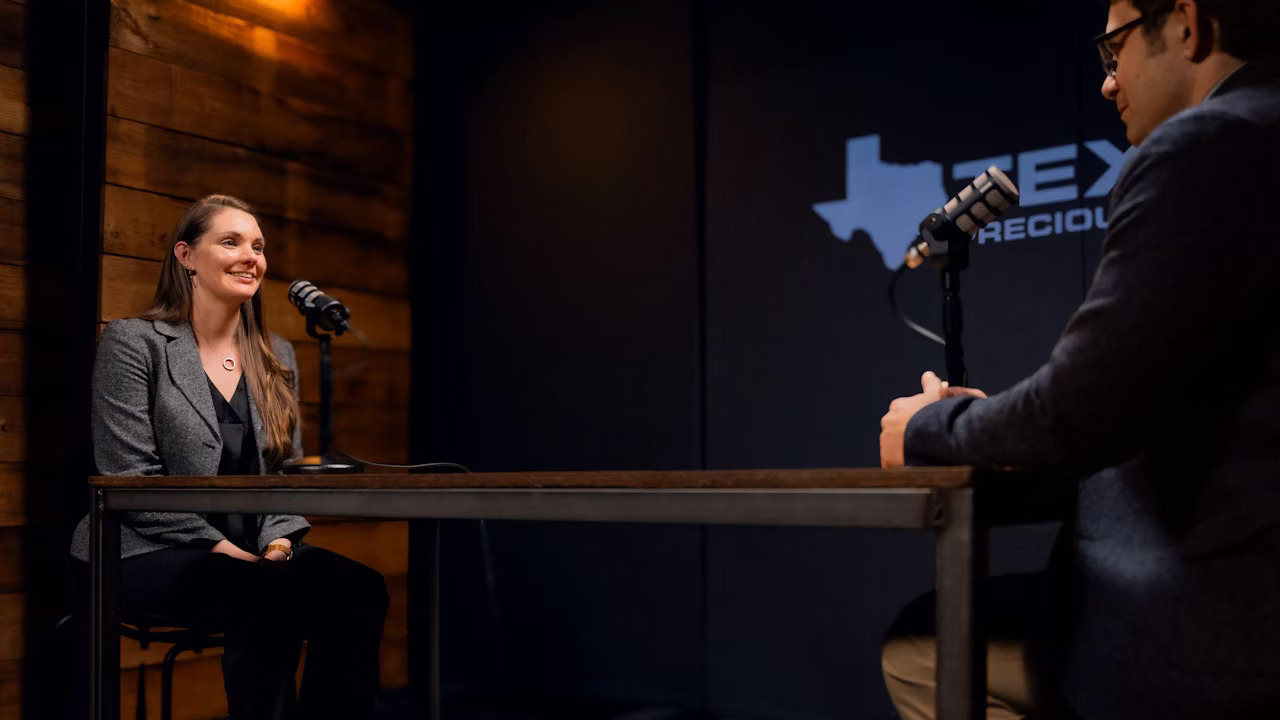
For nearly two centuries, the New York Stock Exchange and Nasdaq have operated as the twin pillars of American capitalism. But according to Nicole Chambers, Global Managing Director of Listings at the emerging Texas Stock Exchange (TXSE), that foundation is cracking.
In a candid interview on Y’all Street, the 17-year Nasdaq veteran broke down exactly why the U.S. has seen a 45% decrease in public companies since the 1990s. The problem isn’t a lack of great businesses; it’s a broken listing model that charges premium prices for minimal utility.
The “Two Seconds” of Value
Chambers highlights a metric that most CEOs feel but rarely articulate: the disconnect between exchange fees and exchange value.
“The exchange really is only there in two seconds a day as a total requirement,” Chambers explains. “They are required to open a stock and close a stock.”
In the modern era of high-frequency trading and dark pools, the vast majority of a company’s stock volume trades away from its “home” exchange (e.g., Tesla trades 80% of its volume off-Nasdaq). Yet, the primary exchanges maintain a monopoly on the opening and closing crosses, allowing them to dictate pricing and listing fees without significant competition.
The Regulator Trap
Beyond the fees, the friction of being public has become unbearable for small- to mid-cap companies ($500M – $1B valuation). Historically, these companies would IPO to provide liquidity for founders. Today, they sell to Private Equity.
Why? Because exchanges have morphed into quasi-regulators.
“Exchanges can create their own additional rules and disclosures above and beyond what’s already required,” Chambers notes. “It’s been a very unpredictable year-over-year.”
When an exchange acts as a regulator rather than a commercial partner, it adds layers of compliance costs that drive entrepreneurs into the arms of private equity, effectively boxing retail investors out of the wealth-creation cycle.
“Texas is its own brand. And that in itself is the best marketing.”
Nicole Chambers
The Texas Solution: Litigation Reform
TXSE isn’t just competing on fees; it’s competing on law. Chambers highlights a massive legislative win for the state that TXSE is leveraging: The Business Judgment Rule.
While Delaware courts have recently become more hostile to corporate boards, Texas has codified protections for directors and officers.
- Shareholder Proposals: Requires a shareholder to own at least 3% of stock for six months to make a proposal, eliminating “noise” and activist distractions.
- Liability Protection: Codifies that directors cannot be held liable for business decisions, barring intentional misconduct or fraud.
“This allows companies to lower their D&O insurance immediately,” says Chambers.
By combining the economic engine of the “Texas Triangle” with a regulatory framework that actually protects businesses, TXSE is betting that the future of finance looks less like Wall Street and more like Y’all Street.
Curious about the new “Texas Market Center” and when trading begins? Watch Episode 17 with Nicole Chambers on Y’all Street here.