
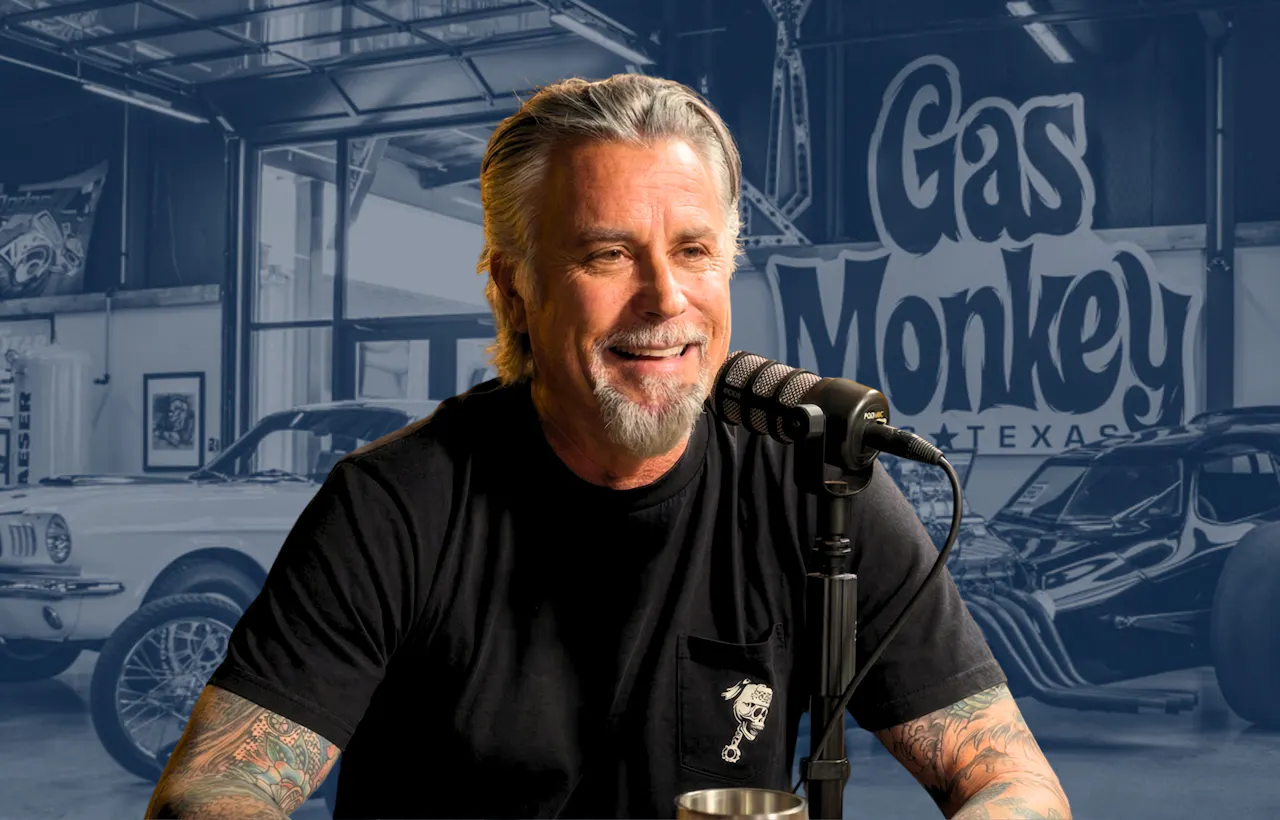
In Episode 34 of Y’all Street, host Tarek Saab talks with Richard Rawlings, founder of Gas Monkey Garage, about the business of branding and rejection.
Richard Rawlings, known for his transformation of a Texas hot rod shop into a global lifestyle brand, shares his insights on entrepreneurship and branding. In a world where monetary policy can shift at a moment’s notice, Rawlings emphasizes the importance of building a robust brand that can withstand the pressures of a volatile market.
The ROI of Rejection: Embracing No’s in Business
Throughout the episode, Rawlings discusses how rejection played a pivotal role in his journey. “You’re gonna lose. Like I said, I’ve been broke several times in my life,” he states, emphasizing that each rejection is a stepping stone toward success. This perspective aligns with the contrarian view that in a fiat system, where central banks can debase currency at will, resilience and adaptability are essential for entrepreneurs.
Gas Monkey’s Strategic D2C Pivot Amidst Monetary Uncertainty
Rawlings transitioned Gas Monkey Garage from a traditional television model to owning its intellectual property outright. He explains, “I started canceling licenses… I own all the licensing and all the IP.” This strategic pivot allows him to capture higher margins while selling directly to consumers, a significant move in an era where the debt cycle is tightening and real yields are becoming increasingly important.
- Gas Monkey Garage’s trajectory from local shop to global brand.
- The significance of direct-to-consumer sales in today’s market.
- Rawlings’ approach to rejection as a tool for growth.
I wasn’t aiming at trying to make a living. I was aiming at trying to build a brand, worldwide brand.
Richard Rawlings
As Rawlings outlines his journey, it becomes clear that success in entrepreneurship is not just about the product; it’s about building a brand and audience that can withstand the pressures of central bank policies and economic fluctuations. This mindset is crucial for those skeptical of the traditional financial system.