Ep. 51: Josie Conner | Professional Rodeo Breakaway Roper
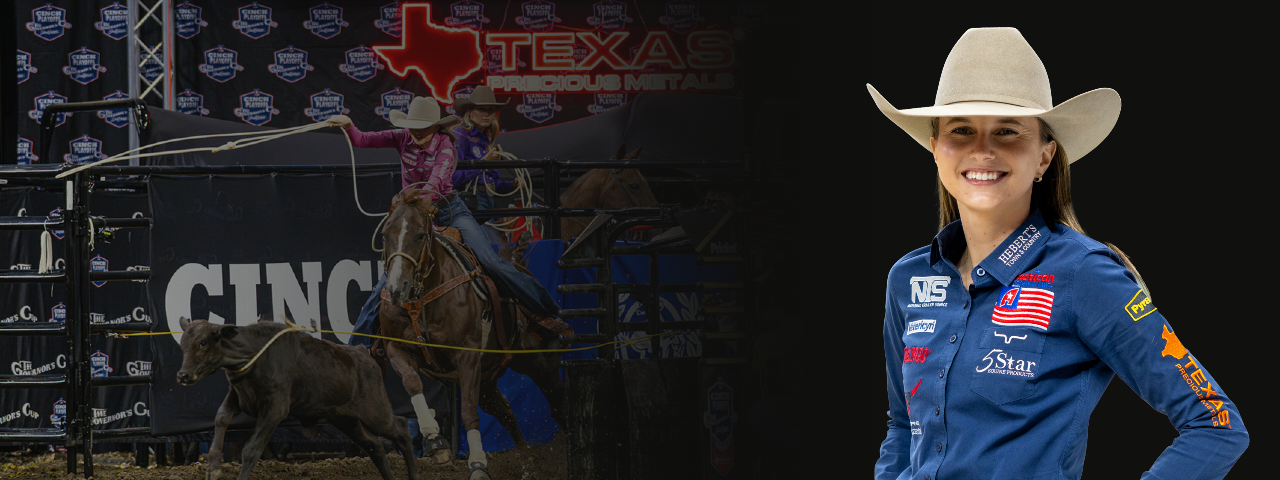
What does it take to win a rodeo event decided in under two seconds? In Episode 51 of Y'all Street, recorded at the 2026 CINCH Playoffs Governor's Cup in Sioux Falls, South Dakota, professional breakaway roper Josie Conner joins Tarek Saab to explain the speed and skill behind the fastest event in rodeo, the partnership between rider and horse, the mindset that carries her through losing streaks, and the financial discipline her parents instilled when she was earning six figures as a teenager. The episode closes with an early 23rd birthday surprise: the first look at the Texas Precious Metals Josie Conner Silver Round.
In this episode,,,
- Josie explains breakaway roping, the fastest event in rodeo.
- Why her 17-year-old horse, Dutch, and a young mare are key to her success.
- The money rule her parents set when she was earning six figures at 16.
- The push to bring breakaway roping into the NFR's Thomas & Mack Center.
Breakaway roping is the fastest event in rodeo, and a great run takes less than two seconds. In this episode of Y’all Street, recorded at the 2026 CINCH Playoffs Governor’s Cup in Sioux Falls, South Dakota, professional breakaway roper Josie Conner joins Tarek Saab to explain how the event works, why the horse is 80 percent of the equation, and what goes through her head in the box with thousands of people watching. She posted a 1.7-second run during the Governor’s Cup and closed out the event by winning breakaway roping on the final night with a 1.9-second run.
Conner also talks about growing up in a rodeo family in Iowa and Louisiana, the financial lessons her parents taught her while she was earning six figures at 16, life on the road with her fiancé, Riley Webb, and the push to bring breakaway roping to the Thomas & Mack Center at the NFR. The conversation ends with an early 23rd birthday surprise: the Texas Precious Metals Josie Conner Silver Round.
Key Takeaways
Breakaway Roping is Old, the Stage is New:
Women have roped for generations, but until recently, the top prize for a breakaway roper was a college title. Around 2019, the American Rodeo added the event with a $100,000 payout, the WCRA followed, and in 2021, the PRCA and WPRA picked it up. Conner came of age right as the money arrived.
Tenths of a Second are Worth Thousands of Dollars:
At the Governor’s Cup, a 2.0 might win $12,000 in a round while a 2.2 might place third for several thousand less. The start is everything. Conner holds the reins lightly and uses a small hand drop combined with a squeeze of her legs, one fluid motion, to send her horse out of the box.
The Horse is 80 Percent of the Run:
Conner’s horse, Dutch, a two-time AQHA Breakaway Horse of the Year, is 17 and gets red-light and magnetic therapy blankets to stay sharp. When an injury kept him home this summer, a seven-year-old mare stepped up. A great roper and a great horse still have to become a great team through daily care and repetition.
Film Everything and Don’t Dwell:
Nearly every run Conner makes, practice included, is recorded. That means she does not have to guess what went wrong. She watches, identifies the mistake, learns from it, and gets back in the truck. In every loss, she says, there is a win.
Break the Mold Financially:
When Conner was averaging $200,000 a year on the jackpot circuit at 16 and 17, her parents told her that sometimes even the most successful rodeo athletes come out with nothing. They made her document everything and plan for the lean years. She now invests in a mutual fund and an IRA and recently earned a business degree from McNeese State University.
Notable Quotes
“A great breakaway roping run is two seconds or sub two seconds.” — Josie Conner
“In every loss there’s a win.” — Josie Conner
“We wouldn’t be known on social media if we weren’t good at what we did.” — Josie Conner
“If this is what you’re gonna do, you have to break the mold.” — Josie Conner, recalling her parents’ advice
Mentioned Resources
- Organizations: WPRA, PRCA, WCRA, The American Rodeo, AQHA, McNeese State University, Texas Precious Metals
- Events: CINCH Playoffs Governor’s Cup (Sioux Falls, South Dakota), National Finals Rodeo (Thomas & Mack Center), California Rodeo Salinas, Fort Worth Stock Show & Rodeo, Rough Riders Rodeo at Petco Park, The Times Million Dollar Breakaway
- People: Riley Webb, Betty Gayle Cooper
- Product: Texas Precious Metals Josie Conner Silver Round
This material must be preceded or accompanied by a prospectus. Please read the prospectus carefully before investing.
YSAU | YSAG
The Fund is not an investment company registered under the Investment Company Act of 1940 and is not subject to the same regulations thereunder.
0:00 - 0:17
Josie: We were running 10 to 20 calves a weekend at three different jackpots that added $10,000 when I was 16 and 17 years old, I was averaging 200,000 a year before, before the pro rodeos, even because there was just so much money in the breakaway roping. And it was like a big boom in the sport.
0:17 - 0:34
Intro: Welcome to Y'all Street. Today, I speak with breakaway roper, Josie Connor. He's a Smashing machine. That's 100% legit. So Chris, you want a cup of coffee? I just want to be the best. Thank you, sir.
0:38 - 0:40
Tarek: Ms. Josie Connor, how about a cup of coffee?
0:41 - 0:42
Josie: I'd love to have one.
0:42 - 0:52
Tarek: I got you this special coffee mug. It says forget glass slippers. This princess wears cowboy boots and check out this thing. It's to keep your coffee hot.
0:52 - 0:53
Josie: Look at that.
0:53 - 0:54
Tarek: That's for you.
0:54 - 0:56
Josie: That is awesome. The cowboy hat.
0:57 - 0:58
Tarek: Coffee cheers.
0:58 - 1:07
Josie: Cheers. I have to put my hat back on it.
1:08 - 1:08
Tarek: That's right.
1:08 - 1:09
Josie: Keep it warm.
1:10 - 1:20
Tarek: So Josie, you are a world-class breakaway roper. For those who don't know, what is breakaway roping?
1:20 - 1:56
Josie: Breakaway roping is the fastest event in rodeo. It is just women. If anyone knows what the tie-down roping is, I like to say we're the women's version of the tie-down roping. If you don't know what any of that is, we are on our horses in the box and we nod our head and they open the chute and they release the calf. We chase after the calf on our horse and we rope the calf and our rope breaks away from the saddle. It's tied on with a piece of nylon string. A great breakaway roping run is two seconds or sub-two seconds. It's super fast and furious. Most of the time, the crowd really gets into it.
1:56 - 2:15
Tarek: I do want to get into a little bit of the technicals of it because even I have questions and I've seen it a whole bunch. But before we do that, I want to go into the background of breakaway roping because this is a pretty new event. I guess growing up, you wouldn't have even seen this before, right? How old are you now, 22?
2:16 - 2:16
Josie: I'm 22.
2:18 - 2:22
Tarek: Growing up, did you ever think that you would be in rodeo?
2:22 - 2:37
Josie: Well, breakaway roping is actually not a new event. Roping in general came generalized from the ranches and that's how the tie-down roping and everything got brought out. But breakaway roping itself is not a new event. It's just new to this main stage.
2:37 - 2:38
Tarek: Got it.
2:38 - 2:49
Josie: The girls have roped forever. Betty Gale Cooper, all of them. 70 years ago, they were breakaway roping and it just wasn't on this stage or for this amount of money. Where were they doing it?
2:49 - 2:50
Tarek: Just at local rodeos?
2:50 - 4:06
Josie: They just had, I guess, local rodeos, amateurs, jackpots. I think they were putting together their own association there for a while. I'm not really into the history of it all. I probably should be more. But it really got its spotlight in about 2019. Even before that, I breakaway roped all through junior high and high school. Obviously, the biggest accomplishment for a breakaway roper in those days was a collegiate title. You could college rodeo and you could win a college title. Then most of the girls got degrees and got a job and did something else because there was nothing on the professional level for the breakaway roping. Like I said, my whole life I roped. I've been roping probably since I was seven or eight years old and riding way before that. I just grew up around it. When I was about 16 in about 2019 was the first year the American Rodeo had it. It paid $100,000. Then the WCRAs followed. That was an organization that put majors on in big cities, and they had it there. Then in 2021 is when the PRCA picked it up and the WPRA picked it up, and it's just kind of been mainstream ever since then.
4:06 - 4:08
Tarek: Now your dad was a tie-down roper.
4:08 - 4:31
Josie: Yes, I grew up in a rodeo family. My dad pro rodeoed a little bit. He didn't do it professionally to where he would leave for four months at a time and go. He did pro rope some. He circuit roped, and he roped, rode horses, gave lessons, just everything you could do that was tied into this industry, he pretty much did it.
4:31 - 4:40
Tarek: Where did you grow up? I'm assuming that you were living on a ranch and had a bunch of animals. Describe, paint the scene for me of what growing up as Josie Connor was like.
4:40 - 4:44
Josie: Yes, sir. I was born, raised, and still live in Iowa, Louisiana.
4:44 - 4:46
Tarek: In Iowa, Louisiana.
4:46 - 5:29
Josie: It's spelt like Iowa, but it's pronounced I-way. That's what you get when you go to Louisiana. You just get some funny pronunciations. I lived there my whole life. It's funny because most of the time people are like, you live on a ranch, but our ranch isn't a typical ranch as to where most ranches have thousands of heads of cattle and all the horses or whatever. We just had what we needed to make their living. We just had a few horses, outside horses. We had calves to rope, and my dad would lease some calves and stuff. Growing up, I just grew up in the arena on a horse doing something. We just love it, and we've spent so much time together as a family doing it.
5:32 - 5:38
Tarek: I said at the outset, you're Miss Josie Connor, soon to be Mrs. Riley Webb.
5:38 - 5:39
Josie: Yes, sir.
5:39 - 5:50
Tarek: Riley Webb, three-time NFR tie-down roper. What was it like when your dad found out you were dating a world champion tie-down roper?
5:50 - 6:41
Josie: Well, he wasn't a world champion when we started dating. We started dating when we were 17, so we weren't even in the professional ranks yet. What is so cool is I've known Riley my whole life. I'm sure, if you don't know, his parents produced junior ropings and did things. I've been going around to the jackpots in the junior ropings. They have 12-and-under divisions. We've been going and roping competitively since we were 12 years old. We would do the 12-and-under, the 15-and-under, the 19-and-under, and the open divisions. That's how they usually split it up by age bracket. I've known Riley my whole life because I've been going to these ropings since I was 12, and his parents put them on, and he roped at them. We were friends for forever, and almost every weekend we would see each other most of the time. We started dating when we were 17. It's been really cool because we've been on this journey together and doing some of the same things. I've been around a while.
6:41 - 7:16
Tarek: It's been really fun watching y'all's journey on Instagram and so forth. You've become kind of like the it couple of rodeo, and you're both super successful. I'm curious what it is like. I guess I want to get into sort of the celebrity side of being Josie Connor. What is it like being in the public spotlight and going to events like this at Governor's Cup, going to national finals rodeos, signing autographs, having young girls looking up to you, signing your picture? Walk me through that a little bit.
7:16 - 7:50
Josie: Man, it's just really cool, and I just think that I have such this amazing opportunity because being in women's sports and having these opportunities and being on this stage, and we have this light, and it's my job to use it as positively as I can and just to base it around family and God and work hard and all of these things and to know that you have to work hard for what you want, but you also have to love it. So to be able for people to come up and recognize me or want my autograph, it's just such a cool opportunity for me to have.
7:50 - 7:55
Tarek: Any memorable experiences that you've had that you can think of with particular fans?
7:57 - 8:44
Josie: Well, so I own the two-time AQHA Breakaway Horse of the Year, and I like to say that he's more famous than me. I mean, he's definitely not as famous as Adios or anything. Adios is so famous, but people all the time want to come up and want to pet him or take a picture with him or take a picture with us. It's kind of funny. A lot of people don't recognize me when I'm not in my cowboy hat, and so I just look different without the hat. And then when I'm with Riley, everybody recognizes Riley. So most of the time they go up to Riley, want to take a picture with Riley, and then they see a girl, and then they put two and two together, like, oh, you're Josie. And so most of the time when we're just out and about, a lot of people don't recognize me. I don't really get it a lot, but Riley, he can't go anywhere without being recognized. And so, yeah, it's just all experiences are so cool.
8:44 - 8:54
Tarek: You talk about your horse, and obviously your horse is so important in your success. What is your relationship like with your horse?
8:55 - 9:57
Josie: Honestly, maybe just a touch crazy. No, I'm just kidding. That's definitely what people think. But these horses are so important for what we do, and we definitely can't do it without them. They're just 80% of what we do. You have to have a good horse to be successful in this sport. And so it's just your identity almost gets wrapped up in them. Dutch, the horse that I was talking about, he actually kind of got hurt at the beginning of this year, and so I had to leave this summer without him. And I'm not going to lie to you, when I left this summer, I was thinking, man, this might be a struggle for me. I don't have the horse that I feel so confident on. Anyway, I have another mare that I bought, and she really stepped up to the plate, and it's been good. And so now coming into this new season, because it's about to start October 1st, and I really feel confident going into this season with these two horses that I have. So they're just so important and so instrumental in what we do.
9:58 - 11:25
Tarek: As we're recording this, there's a movie coming out with Brad Pitt called The Heart of the Beast, and it's the relationship between a soldier and his dog. And obviously there are a lot more dog owners in the world than there are horse owners in the world. But I think people listening to this who haven't spent time around horses maybe don't quite appreciate the relationship that people have with horses who live and work with horses every single day. Prior to 150 years ago, we couldn't survive without horses. The horses were doing the plowing, and they were our transportation, and they were involved in the military and so intimately tied to our culture and our existence. And we own horses on my property, and they all have different personalities. Their personalities change depending on what other horses they're with at any given time. And some days we'll ride them, and you can kind of feel like it's a little bit of an off day. And other days you ride them, and it's like, oh, they're just as smooth as silk. And I'd love to kind of just get into your relationship with the horse from just a psychological standpoint. Like you told me before this podcast, you went out and you were riding a little bit in the arena. Are you feeling the horse? Are you getting a sense like, oh, he's got it today or not?
11:26 - 13:50
Josie: 100%. And to just piggyback off of everything that you just said, I think that the horse is the smartest animal I've ever been around in my life. I mean, they are just better than a dog. Like really, seriously, and I'm a dog person. But like they are just so intelligent, and you can tell that God took his time when he created horses because, I mean, they're just, it is such a blessing that this is what, every day I get, this is what I do for a living, is I get to go out there and I get to be with these horses and, you know, use them to make my living. And they're just, it just is like a peace of mind thing. I definitely think that, just like you said, every horse is different. I think a big thing of being successful in this sport is you have to know your horse, and you have to know what's best for your horse. Like the Dutch horse that I have, like for him, like I want him to be feeling his best, like hyper, like I'm giving him everything that I think will make him feel good. There's like even magnetic blankets for horses now, and like beamer blankets, and basically what it is, is just like it pulls all the inflammation out. It's just like a high type of red light therapy, kind of, basically. And they have all these things that we can do to our horses now because they're so important for what we do. And it's like, so for him, I'm trying to like make sure he feels his best because he's 17 years old and I need every ounce of him, and this is how I know he works his best. And then, you know, the seven-year-old little mare that I got, she's seven years old. She's a spring chicken. She needs to be ridden, and, you know, that's how she does her best when she's prepared and ridden down. And so you just have to know what's best for your horse, and they're just so important in what we do, the barrel racing, the breakaway rope, really every single event. The top people have the top horses, and, you know, that goes hand in hand. And so you can be a great roper and you can have a great horse, but you have to be a great team to be successful. And, you know, last year around the NFR, they were having this horse virus, and a lot of our world shut down, and I think that we realized, I think we always knew, but it just got brought into light that we do this for the love of the horse. It's for the love of the sport, but it is because of the love of the horse. So, like, we shut all these things down for the safety of our horses, but no one was bringing their horse anywhere to get sick. And so these horses are just so instrumental in what we do.
13:50 - 14:06
TPM Promo: If you're enjoying Y'all Street, please like and subscribe and share with your friends. It really helps the show. Y'all Street's a division of Texas Precious Metals. If you've ever been interested in buying gold or silver, check us out at texmetals.com. We take good care of our customers, and we're proud to say we do business the Texas way.
14:07 - 14:56
Tarek: You talked about the importance of you and your horse being a team. Explain that to me a little bit more. How do you work together as a team? Is it just the training? Is it your various signals? Does the horse know exactly what you're trying to communicate when? Because ultimately, it's really about communication with the horse, right? And actually, this ties into a question that I had about the event because it is so important in breakaway roping. It's like a sprinter coming off of the starting line, and you want to jump as soon as you can but not too early because then you'll create a fault. How do you communicate to the horse? I guess get into the details there for me.
14:56 - 16:56
Josie: Well, just to answer your first question, how you become a team, I think it's just every single day, day in and day out, you're doing something with this horse, whether it's catching him, giving him a bath, feeding them every day, whether or not you ride every day, but when you ride, they become used to your signals. You become used to how they respond. Just different things. I am not in the horse training industry. I hardly do anything with young horses. I never start a horse from the beginning, but I am a full believer that they're born special or they're not. Obviously, the trainer and everything matters, but top of the line, God either gave it to them or they didn't. But to the actual, to break it down, the start is what you're talking about, and the breakaway is tenths of a second costs you thousands of dollars. Two flat might win you $12,000 over here in the first round of the Governor's Cup, and two-two might win you third, and that's like $8,000. It's like, I don't know what third place, but several thousand less. So tenths of a second is what you're looking for in the breakaway groping. To come off of the starting block, for me personally, I love it when a horse just is like, when you're in the corner, you can tell that they're ready to go, like they're completely focused, and they know their job. And that's also why I don't really fiddle around with young horses either, because the older the horse, the more trained or veterans that they are, and they know their job. Young horses, you're teaching them their job. I like horses that know their job. And so just when they're in the corner, and everybody's different. Everybody's style is different, but most of the time, the biggest key that you'll see is when you drop your hand. When you drop your hand is when they go. But it's your whole body. Horses can sense your whole entire body. But you want to squeeze with your feet, and that's how you get them to leave and engage.
16:57 - 17:14
Tarek: So you say drop your hand. So right before you jump, you're essentially tugging on the bit a little bit to hold them back. So the moment that that horse feels that tug go away is the signal along with your legs to get them to go.
17:14 - 17:34
Josie: And you want it to simultaneously with your legs. And, you know, like I said, just like anything, there's different styles and there's different variations to it. Some people hold really, really tight and make a big drop. And some people, like for me, I don't hold quite as tight, so it's more of a little drop and more of a squeeze, like a fluid, one fluid movement.
17:34 - 17:35
Tarek: Got it.
17:35 - 17:35
Josie: Yeah.
17:36 - 18:01
Tarek: What's going on in your head right before, you know, you're getting loaded up. Maybe there's a couple of contestants before you, and now you're starting to kind of get yourself pumped up. Are you, what are you talking to yourself in your head? Are you going through in your mind exactly what your body needs to do? Are you singing choose in Texas by Ella Langley and just kind of getting the right spot? Like, what are you doing?
18:02 - 18:29
Josie: I'm a, I like to get by myself and get pretty locked in and focused. I'm a very routine girl. So I like to try to do the same thing every time. Like I like to get my horse, my saddle tight. So many before me, I like to get my rope tight on my saddle. So many before me, I go watch the star at a couple of times. So many before me. And then about two or three ropers before me, I'm usually like getting ready and the rope or before me, I hardly ever watch like most of the time.
18:29 - 18:30
Tarek: Really? Yeah.
18:30 - 19:08
Josie: I'm getting my hat sucked down. So making sure my hat doesn't come off and getting my rope, getting my powder, just making sure that everything is how I like it. And, um, I usually just try to tell myself, go do your job. Um, I put in so much preparation up to before this point that I'm not trying to hit on every little key thing. Like if I feel like I'm having a habit or like something I really want to tell myself, I'll remind myself one more time, but I'm just like, do your job. Do the best you can right here. Like in my head and obviously not out loud, just talking to myself over there. But, and then when I walk in the box, I'm telling you, I hardly hear anything really. Yeah. For a minute I'll hear what the announcer says, but then I don't hear anything.
19:08 - 19:20
Tarek: I was going to ask because you know, typically there'll be 10, 15,000 people watching you. You got the spotlight on you and it's a lot of pressure, but you don't, you just block it out.
19:21 - 19:58
Josie: I've just roped for so long and on big stages for so long that once you do it, so much, you just, it's a privilege to be there and a privilege to have all of these eyes on you. And at the end of the day, you're just doing what you love. And you've done this a million times in the practice pen. So it's really no different, but it's crazy how the voices, like I won't hear the announcer. I really won't hear what's going on. But like if Riley's in there and says something, or if my dad's in there and says something or somebody, you know, that I trust, I'll hear them. Like, it's just weird how you just, that's where you go when you're locked in like that. And it's really cool.
19:59 - 19:59
Tarek: Do you pray?
20:00 - 20:00
Josie: Yes.
20:00 - 20:03
Tarek: You say a prayer before you go out every time. What do you pray for?
20:04 - 20:08
Josie: Safety to shine to the best of his ability that he gave me.
20:09 - 20:09
Tarek: That's great.
20:09 - 20:09
Josie: Yeah.
20:11 - 20:25
Tarek: After the run is over, let's say it was not your best. And actually right before this rodeo, so we're in Sioux Falls, South Dakota, you were in Washington, is that right?
20:25 - 20:26
Josie: Uh, North Dakota.
20:27 - 20:27
Tarek: You were in North Dakota.
20:27 - 20:28
Josie: Okay.
20:28 - 20:44
Tarek: So you've been traveling around everywhere. Um, sometimes you drive super long distances, you know, hundreds of miles for what is tantamount to a two second opportunity in the arena. When you're not, when you haven't done your best, how do you handle that mentally?
20:45 - 21:30
Josie: I just think that in every loss there's a win. So in the loss you have to find and identify what went wrong and then you learn from it. And that's where the wind comes in. Because every single time you go somewhere, you're learning something. Every single time you make a movement or anything you're what you're, and you know, technology is huge. Everything. I'm going to say probably the most important thing is, is that we have everything filmed because we don't have to second guess what we felt. We get to see what we felt. And so that's so huge. Like even when we're practicing and stuff, like almost every single run is video recorded so we can go back and, and watch it. But learn from it, find what you, what went wrong or what you think happened and move on. I mean, because there's no point in dwelling. You got to get back in the truck and do it again.
21:31 - 21:36
Tarek: Have you ever been on a run where you've had successive bad performances three or four in a row?
21:37 - 21:37
Josie: Yes.
21:39 - 21:48
Tarek: Does it compound by the time you get to the fourth time in a row that you feel like you didn't do your best or you, you know, you weren't in the money. Does it start getting to you?
21:50 - 22:55
Josie: I'm going to say that there's probably times in my career where yes, it probably has gotten to me, especially like, you know, in your younger years when your, when your foundation isn't there, you get so you get just frustrated fundamentally. But now I feel like my fundamentals are there, you know, I've done this for so long. And so it's easy for me to identify and move on. And most of the time, I'm really not making the same mistake twice just because I feel that I'm just understand it so much better and I'm older and mature and all, and all the things. And so I haven't really had a really bad run in a lot, like a really bad string of runs in a long time. And, but I, I also think mentally where that comes from is just, I'm surrounded by such good people, people that are really good and uplifting and winners and you know, Riley and my parents are very instrumental and we run with a great group of friends that are just, it's just easy. It just feels easy. And even when it's hard, it feels easy, if that makes sense. I know it's a little contradicting, but it's just, it's really all about mindset and to have a sound mindset. It matters who you surround yourself with.
22:55 - 23:20
Tarek: So I know that you and Riley travel a lot together and have there been times where, you know, you've done great and he's had a bad night or vice versa and you know, you've had to talk through it together. Like what, what is it like when you get back together? You talk about the events, do you, do you analyze it? Is he watching you? Are you watching him? Do you share notes? What is, what is that relationship like?
23:20 - 24:43
Josie: Well, I'll say that what you just explained, the scenario you just explained happens a lot. Most, we've only, I could probably count on my hands the time that we've actually won like first together. It's not many times. Yeah. So most of the time it's like, it's actually a running joke in our rig. We're like, Oh, if you wrote first and you do good, like it's probably not going to go great for the other one of us. But I mean, we place a lot together too, but I'm just saying it is a joke and it's a, it's comical. But anyway. Yeah. I mean, I just think that it would be a missed opportunity if we had each other and didn't use it to the best of our ability. You know, obviously I value Riley's opinion tremendously and my dad helps us both a lot. He's been, he's been there for me my whole entire career. And even before Riley and I were together, he's been, uh, was really good friends with Riley. And now that, you know, um, we're all together all the time. Um, he's very instrumental in our career too. So to have my dad as a third, you know, I is, is so instrumental in, in what Riley and I do because for, you know, when Riley and I talk about it, we feel the same things because you know, our sports very similar. And we get to talk about that. And then like, just to have the outside opinion that you know is 100% rooting for you at all times. Cause he's my dad. And, uh, it's just really, it's a really cool dynamic that we have.
24:43 - 24:45
Tarek: What are you working on personally right now?
24:46 - 25:49
Josie: That's a great question. Um, that's actually a hard question is so I, it'd be easy for me to answer it if it was about roping. Um, I just think that there's always room to grow. Um, and you know, especially in this chapter of my life, um, you know, we're about to get married and, um, we just juggle so much between personal and professional. And a lot of times that overlaps. And so especially being on the road for the last four months, like we, we left the first week of June and, um, we actually flew home this last week and it was the first time that I had been home since the first week of June. And so I think that sometimes those worlds collide too much. And so it's just probably backing those off, but it gets easier when, when we're home some too, because, you know, we're not in the 10 foot short wall living, living quarters, trailer, um, rodeo and all the time. But, uh, yeah. So just probably being aware of my surroundings and, and, uh, just trying to like back those off a little bit.
25:49 - 26:11
Tarek: It's interesting because, you know, I've been married now 20 years and, uh, love my wife to pieces. I don't think we would work very well together. Um, and you know, for, I think a lot of couples, it's that way that that kind of separation during the day is maybe healthy. You and Riley are spending just, yeah, 24, seven, three 65.
26:12 - 26:12
Josie: Yeah.
26:12 - 26:18
Tarek: And, um, you know, in some ways that is probably going to be a good preparation for marriage.
26:18 - 26:19
Josie: Right.
26:19 - 26:24
Tarek: Because you've just spent so much time together. You've kind of worked out a lot of the kinks I would imagine.
26:24 - 27:32
Josie: Yeah. Well, it's just so cool because like, even before the professional ranks, like it was always like in the junior, in the junior events and stuff too, we were always kind of like winning on the same level. And then obviously, you know, now that we're in the professional ranks, he's won on a higher level than I have, but it's just been so cool because we've always been pretty equal and just was always easy to reflect things off of each other. And, you know, like now where he's at is where I want to be. And so like, that's even like a huge thing for me to like, just to be around it every day and see like, this is the goal. I mean, like what he's done is the goal. And so to have that, um, like you said it, most couples don't work together all the time, but for us, this is what we do 100% of the time. So it's nice that we get to share it because it would be hard if he did something different than I did. And this is what I want to do 100% of the time, you know? So it's nice that we get to do it 100% of the time together and to always have someone. And then when we want to do something else, we both usually want to do something else at the same time too. So that, that's nice. And it works out.
27:33 - 27:35
Tarek: What's the hardest thing about being on the road all the time?
27:38 - 28:17
Josie: Um, you see all the time it for these top athletes. And we think of ourself as athletes, how, how important food rest and, and physical activity is. And that is the worst part about the road is you eat horrible food. Most of the time, your sleep schedule is terrible. And to get a steady, um, physical workout regimen is hard because we're in the truck and we're, when we're not in the truck, we want to rest or we're having to rope or, you know, something. So that's, that's the worst part about the road is just like the, the schedule is just so inconsistent.
28:17 - 28:21
Tarek: But you make a, a disciplined effort to try to exercise.
28:22 - 28:48
Josie: Well, Riley really does. Um, I, I was on a physical fitness program a lot while I was in high school. I'm just so small. So like, I just have to have it to get the extra in the sport. And honestly, I've really done a bad job with it the past two years probably, but we've been starting again and Riley's been on, been doing it and he's been really making an effort. So it's making me make an effort too. So, yeah.
28:49 - 29:17
Tarek: Have you ever been in really, um, kind of dangerous situations on the road? I'm thinking, you know, much of the rodeo year happens in the winter time and you have this truck and this huge trailer and the horses. And I mean, I, I've driven all over the country and I've been in some like real sketchy situations in the Rocky mountains where you got to chain up and things of that nature. Have you largely been able to avoid some of that or?
29:17 - 30:21
Josie: Yes. Most of the time. Um, we don't actually go a lot in the North during the winter. We're mostly in Texas. I mean, like we've got iced in at the fourth work Fort Worth rodeo before. But the thing about the winter rodeos is there, um, they cater to the contestants. So we have hospitality and indoor stalls and plugins and all the things. So like we got iced in at Fort Worth, but we were okay and we could walk to Papacitas if we wanted to. So it was okay. And, uh, we're not usually really driving in the wintry, um, conditions. Cause like I said, we're in Texas. Um, but you never really know what's going to happen. We roped in a lot of rain this summer. Um, and a lot of mud and never really got dangerous or, or anything. And they usually do a good job. If the ground's unsafe, they'll postpone it or, or try to, um, fix it or anything. But we haven't really got in many dangerous situations, but I make it a point. I'd never go by myself. Um, most of the time I either have my mom or my dad or I'm with Riley or I'm with somebody. So, because you never just traveling in general is a little scary. And so, um, I just feel safer with somebody.
30:22 - 31:24
Tarek: I want to talk a little bit about money. You are at an age right now where most other women your age are just now graduating from college and kind of going into the workforce. And you know, I've mentioned on this podcast many times that I grew up poor. I got a degree in electrical engineering. I had no finance background, no finance classes, learned absolutely nothing from my parents. And it wasn't until really in like my later twenties that I really started to understand, um, you know, just how to really manage money. Well, your career earnings, I think I read are already North of $600,000. I know there's a lot of money that goes back into the sport, the cost of travel, taking care of your horses, that all comes out of that pot. But how do you think about money? How are you learning about money? Um, and with, with you and Riley now getting married, I mean, it's going to become a, I think a big question going forward, you know, in terms of what your goals are. Can you comment on that?
31:25 - 33:30
Josie: Yes, sir. Uh, actually what you said about the $600,000 in earnings, I probably, I have that, those earnings are just in the WPRA. And for a long time I made money without the WPRA, um, coming through the, from the junior ropings. There were so much money. Before breakaway got into the professional level, there was so many women who wanted to rope in and different things. So they put on like jackpots. We went to a jack, we were running 10 to 20 calves a weekend at three different jackpots that added $10,000. When I was 16 and 17 years old, I was averaging 200,000 a year before, before the pro rodeos even because there was just so much money in the breakaway roping. And it was like a big boom in the sport. So those earnings are just the WPRA. But like now we even, um, we're in the Sioux Falls has us where equal money, uh, the Honda rodeos have us there. There's just so much money. The Kimes million dollar breakaway, there's just so much money that we can be one. And when my, my parents are my role model in when it comes to money. And when they saw that the breakaway roping was booming and I was making this money as a 16 and 17 year old, they sat me down and said, um, if this is what you're going to do, you have to break the mold because a lot of people who rodeo and are successful come out of it with nothing, not everybody, but the majority. And so they just said, if this is what you're going to do, you just have to be different. Everything, everything is documented, everything you, I mean, if you're going to do this, you have to make money. And so from a long, a long time, since I was 16, 17 years old, it's just been, Hey, this is what you have to do because when it doesn't dollar out, we have to do something different. And so they're just, they're a great role model. And I'm so glad that Riley and I have them too and his parents. And it's just like, I've, I'm already investing. And, and so that's, uh, it's just, it's nice to have that foundation from a young age. Um, I have a, a mutual fund and, um, I have an IRA.
33:30 - 33:31
Tarek: Fantastic.
33:31 - 33:32
Josie: Yeah. Yeah.
33:32 - 33:33
Tarek: Got to get you into some gold and silver.
33:33 - 33:41
Josie: Yeah. We actually saw, um, on there that you can switch your IRA into the gold and silver stocks. And my dad was like, we probably should look into that.
33:41 - 33:42
Tarek: Yeah, that's great.
33:42 - 33:43
Josie: Yeah.
33:43 - 34:16
ETF Promo: This episode is brought to you by the y'all street physical gold ETF and the y'all street physical silver ETF trading under the tickers YSAU and YSAG. Why did we create gold and silver ETFs? There are a lot of them out there. It's because well over 90% of all the metal held in ETFs are held overseas in foreign jurisdictions. We want to develop products where the metal is held on us soil, specifically in Texas. These funds are us vaulted, fully allocated gold and silver bars and less expensive than most of the existing gold and silver funds out there. Visit Y'allStreetETFs.com.
34:17 - 34:21
Tarek: Um, if you weren't doing this, what would you be doing?
34:22 - 34:30
Josie: I honestly don't know. Um, marketing is really interesting for me. I actually, I actually just graduated from McNeese state university with a business degree.
34:31 - 34:31
Tarek: Oh, you did.
34:31 - 34:51
Josie: I did not know that. Congratulations. Thank you. It's a, um, yeah, I graduated from McNeese. I did business degree just to, I didn't think I was going to use it cause I'm, I'm rodeoing, but just to have it, you can always use a business degree. If I wouldn't be rodeoing, I probably would have done marketing or, or, or something.
34:51 - 35:09
Tarek: Um, I want to get your views on marketing because you live in a world that is just surrounded by marketing. Your shirt has, you know, sponsors on it. We sponsor you. You go to cowboy Christmas and you see all of the marketing in and around the rodeo world. What observations do you have? What, what, what do you think about?
35:10 - 35:16
Josie: Do you ever point things out to, well, I just think that, um, like as I basically market myself.
35:17 - 35:17
Tarek: Exactly.
35:18 - 35:42
Josie: You're your own brand. I'm my own brand and Riley's his own brand. And you know, to have these partners is huge because it just makes it so much easier on us athletes. But there's just, the thing about marketing is there are so many job opportunities because everybody has to market themselves. I mean, marketing is how you sell yourself and especially now with like social media and like Tik Tok influencers and all the things, it's just so mainstream.
35:43 - 36:01
Tarek: So do you, are you really cognizant of how important it is for you to post on Tik Tok and on Instagram and build that following? Are you, are you having conversations with Riley about that and in the cab of the truck thinking, Oh, we got to post what's been a day and a half. Like how did, how do you think about your interaction with your fans on social media?
36:02 - 37:00
Josie: Well, my thing, I have a love hate relationship with social media because I know how important it is and I know how much these companies want it and everything. And I think that it's so important to have a presence, but also I think that it's important that we win inside the arena. And that's why we're able to have a presence. So when I just think that you have to have, there's a fine line of you have to roping and practicing and the horses and everything comes first because that's why we have the social media presence. We wouldn't be known on social media if we weren't good at what we did. And so to have it, it's just interesting from like my standpoint because I see both sides of it. But then I also see that you need us to post because if not, you know, how are they know that we're partners? And so I think it's a fine line and I think that, um, I've been so blessed to have companies that understand and, and are just so easy and willing to work with you. And so that, that's really great. I'm grateful for that.
37:01 - 37:40
Tarek: Right now, breakaway roping is not in national finals rodeo. Uh, so they have their own separate event at, at NFR. Are you hoping to get breakaway roping into sort of the, the main arena during, during those 10 days? What is the, what is the plan for that? Cause I know breakaway roping is part of WPRA, which is different than the PRCA PRCA, if I'm correct, has seven events and WPRA has two events. The two events are a barrel racing and, and the breakaway barrel racing is in NFR. What's it going to take for breakaway roping to get there?
37:40 - 38:37
Josie: I just think it's going to take the right people to want us. Um, there's so much controversy in our sport about, you know, whether or not we're going to get in there or not. And I mean, obviously that's the goal is to get in the Thomas and Mac and rope for the money that they're roping for. And I understand that we have to pave our way and, and, um, you know, get there first. I really don't know what it looks like to get us in there from their, their standpoint of it. And we, we don't really have an answer on if we're ever going to get in there or not, but we've just come leaps and bounds. And, um, at this point, I just would love if we would get to rope for the money. Um, we, we, each year our finals is getting a little more, a little more, um, you know, year by year, but I, hopefully one day if the Thomas and Mac is an unrealistic goal, I hope that the money is a realistic goal for us. So I don't really know what it looks like. Um, I would be happy to do whatever I needed to do as an influencer of the breakaway rope and to get it in there, but I'm not really sure what that looks like for us.
38:38 - 39:34
Tarek: Cowboy culture in general has exploded over the last, you know, five to 10 years. There are so many new shows coming out. It's become even a global phenomenon. Uh, I think that the, uh, World Cup soccer tournament did wonders to bring cowboy culture internationally. Cause everybody came to Fort worth and you saw the Norwegians wearing the cowboy hats and you know, the Asians and so forth. And, um, one of the key features of the cowboy look, everybody talks about the cowboy hat and the cowboy boots, but the cowboy belt buckle is a really big deal. And in professional rodeo, the, the belt buckles are not decorative. They're, they are truly the prize of winning. And, uh, I saw your belt buckle when you came. Can you, can you show us your belt? I want to show, show my belt buckle too. It's not as nice as yours, but it's fun to this camera. Sure.
39:34 - 39:34
Josie: Yeah.
39:35 - 39:37
Tarek: So what is that belt buckle from?
39:37 - 40:13
Josie: This, um, belt buckle is from this year's, it was the 116th anniversary of California rodeo Salinas. I want it in the, in the beginning, the end of July and, um, California rodeo Salinas is one of the most coveted rodeos. Um, obviously the most coveted belt buckle in pro rodeo. Um, all of it is the world championship buckle. Um, but as far as like singular rodeos go Salinas is buckle is pretty coveted. Um, yeah, it's, it's up there on the list because it's just so pretty and unique and, and uh, so yeah, I definitely, the, the men and I won and I had to put it on my belt and wear it.
40:14 - 40:15
Tarek: How many buckles do you have?
40:15 - 40:16
Josie: A lot.
40:16 - 40:17
Tarek: What's a lot?
40:19 - 40:19
Josie: Hundreds probably.
40:20 - 40:36
Tarek: Hundreds of buckles probably. Um, we just got these made. I'm very proud of it. It is not as exciting as yours because there was no championship attached to it, but we got to get you one of these as well. Speaking of, speaking of branding for Texas precious metals.
40:36 - 40:37
Josie: Yeah, those are awesome.
40:37 - 40:51
Tarek: When you look out into the future, what do you see? Five years, 10 years, 20 years out? If you had to think about like, are you a dreamer or are you someone who just takes it one day at a time?
40:52 - 41:49
Josie: I definitely take it one day, one day at a time. But, um, if you're asking as in terms of the rodeo world, I think that it's only up for the rodeo world. I mean, I just think we're here and um, our industry and our way of life is just such a powerful movement and it's just so true to its values that I just think that we're here for a long time and I think it's only going to get better and the money's only going to get bigger and hopefully the athletes get better and, and, and all of it. So I just think that this is such, I'm just so blessed that this is what I get to do because this industry, like I said, is one of a kind and to be able to do this for a living and to, to say that this is my job. Some people never leave their whole town, their hometown, their whole life. And I've traveled the country and uh, got to ride horses and rope and, and uh, do this for a living. So I just think that if that's, I wasn't sure if you were asking personally or for the rodeo world, but I think the rodeo world's here to stay.
41:51 - 42:23
Tarek: One of the unique things about this sport is you can participate. I've seen young girls as young as like 11, 12 years old running barrels and all the way up into, uh, I want to say sixties in the sixties, seventies, maybe not seventies, but some pretty high up there. Um, and there aren't a lot of sports where you have such a broad age range. I'm curious, do you see yourself still doing breakaway roping in your forties, fifties?
42:23 - 43:42
Josie: Is that the plan or probably not, but I see myself doing something in this industry. Um, I mean, who knows? I might be still out here, but that's not the plan. I just am trying to just take it. I want to be as best as I can. I'm like five years is a good, it's just doesn't feel too far away five years, you know? So like, that's kind of how far I look out. I just, hopefully in five years I have a gold buckle or two and, and, uh, I'm probably still going to be doing this longer than five years, but it's just easy for me to look at the next five years. And if I'm not doing this, I bet I do something in this industry because I think Riley's going to do this for a long time. And so the thing about that is if he's out here, I'm probably going to want to be out here too. And so I might as well just do it too. But all of, all of, um, competitively speaking, it just really depends on the horses, what horses you have at what time in your career, you know, I'm not going to have my horse Dutch for forever. He's 17 years old. Um, but this mare that I have is seven. So I could have her for the next 12 years. So you just never know. And it's all in God's plan and just try not to, um, fret about it too much because it's his plan anyway, and it's already chosen what's going to happen. And so we're just, uh, we're just living.
43:43 - 44:06
Tarek: Not to get too personal, but I am curious. You're on the road most of the year, right? Yeah. North of 200 days out of the year you're getting married. Are you going to buy a house? Are you going to get an apartment? Like, what does it even matter since you're on the road all the time? Like even wedding gifts, like what kind of wedding gifts are you getting because you're never home? Like, what is that whole deal like?
44:06 - 44:28
Josie: Yes, I've actually, we've been getting wedding gifts in and Riley doesn't really understand the registry or how that works. And he's like, we don't even have a house, but we have a crock pot. And I'm like, yes, we have a crock pot. Um, right now we're, um, we're living at my parents' place and, we, we have a piece of land picked out where we're going to build a house we think. So we're probably going to start on a house soon.
44:29 - 44:29
Tarek: Really?
44:29 - 44:30
Josie: Yep.
44:30 - 44:32
Tarek: So the wedding date is January 2nd?
44:32 - 44:33
Josie: Yes, sir.
44:33 - 44:34
Tarek: And are you going to go on a honeymoon?
44:35 - 44:35
Josie: Yes, sir.
44:35 - 44:35
Tarek: Where are you going?
44:35 - 44:36
Josie: The Bahamas.
44:36 - 44:41
Tarek: Oh, very nice. And then you immediately start in on the Texas rodeos.
44:41 - 45:09
Josie: Yes. Um, actually the weekend right after we get back from our honeymoon is when they do the, um, rough riders rodeo at Petco park in San Diego. And so we'll go there like as soon as we get back. And then, um, I think Riley goes to Denver. They don't have breakaway at Denver, but he'll go to Denver. And then Fort worth will be starting soon. So it's pretty literally new year's was the only time that worked for us. So we're just like, it was glad that it worked out that way.
45:09 - 45:16
Tarek: When, uh, when I got married, um, I was on the television show, the apprentice. I don't know if you know that.
45:16 - 45:16
Josie: I did not.
45:16 - 46:01
Tarek: And we, we literally, the wedding was in the middle of the show being aired on television. And the finale was a live finale in Los Angeles. And the finale was six days after the wedding. So we knew that we couldn't, yeah, super short. So we knew that we couldn't leave the country and, you know, I was trying to figure out like where we should go or what we should do. And my uncle said, uh, don't worry. I have timeshares, you know, throughout the U S and you just go to a timeshare for, you know, six days or whatever. And, uh, the only one that was available was in Williamsburg, Virginia. Yeah. So we ended up honeymooning. It was just a random place in the United States and then flew cross country to film the finale of the apprentice. So it was pretty wild. Well, you have a birthday coming up.
46:01 - 46:02
Josie: Yes, sir.
46:02 - 46:02
Tarek: October 2nd.
46:02 - 46:03
Josie: Yes.
46:03 - 46:04
Tarek: And you're going to be 23.
46:04 - 46:05
Josie: Yes, sir.
46:06 - 46:07
Tarek: We are also releasing.
46:07 - 46:08
Josie: I know.
46:08 - 46:12
Tarek: Josie Connor, silver around. Have you seen this yet?
46:12 - 46:12
Josie: I'm not.
46:12 - 46:13
Tarek: This is your first time.
46:13 - 46:15
Josie: It's my first time to see it. Okay. Yes.
46:15 - 46:16
Tarek: Here we go. Early birthday gift.
46:16 - 46:20
Josie: I'm so excited. Yes. Oh my goodness. Can I take it out?
46:20 - 46:21
Tarek: Yeah, take it out.
46:22 - 46:23
Josie: This is like so good.
46:24 - 46:27
Tarek: Isn't that so fun? We're going to have those at NFR as well.
46:27 - 46:36
Josie: They came out so good. Oh, in the back. That is awesome.
46:36 - 46:49
Tarek: We're proud to sponsor you. We're so encouraged by all that you're doing and proud of your success and wish you nothing but the best on your wedding and, um, and success the rest of the year. Thank you for joining us.
46:49 - 46:53
Josie: Thank you so much. Thank you so much for having me. It's been a blast. And I'm so excited for the coin to come out.
46:56 - 47:00
Outro: How do y'all drink this? That's the Y'all Street. Yeah. Stop. You bet.