Ep. 28: Luke Branquinho – Five-Time World Champion Steer Wrestler
How does a 5-time World Champion steer wrestler transition from the rodeo arena to the boardroom? In Episode 28 of the Y'all Street podcast, Pro Rodeo Hall of Famer Luke Branquinho sits down with Tarek Saab to decode the mechanics of bulldogging and the economics of the Western lifestyle. This episode breakdown highlights key insights on surviving post-retirement athlete depression, capitalizing on the "Yellowstone Effect".
In this episode...
- Score lines, barriers, and the evolution of livestock genetics.
- Dealing with identity loss and depression after a 22-year athletic career.
- The mainstreaming of Western culture and its impact on brand sponsorships.
- Structuring a tequila brand from the ground up in Mexico.
- Exposing hidden fees in merchant services through Payment Cowboys.
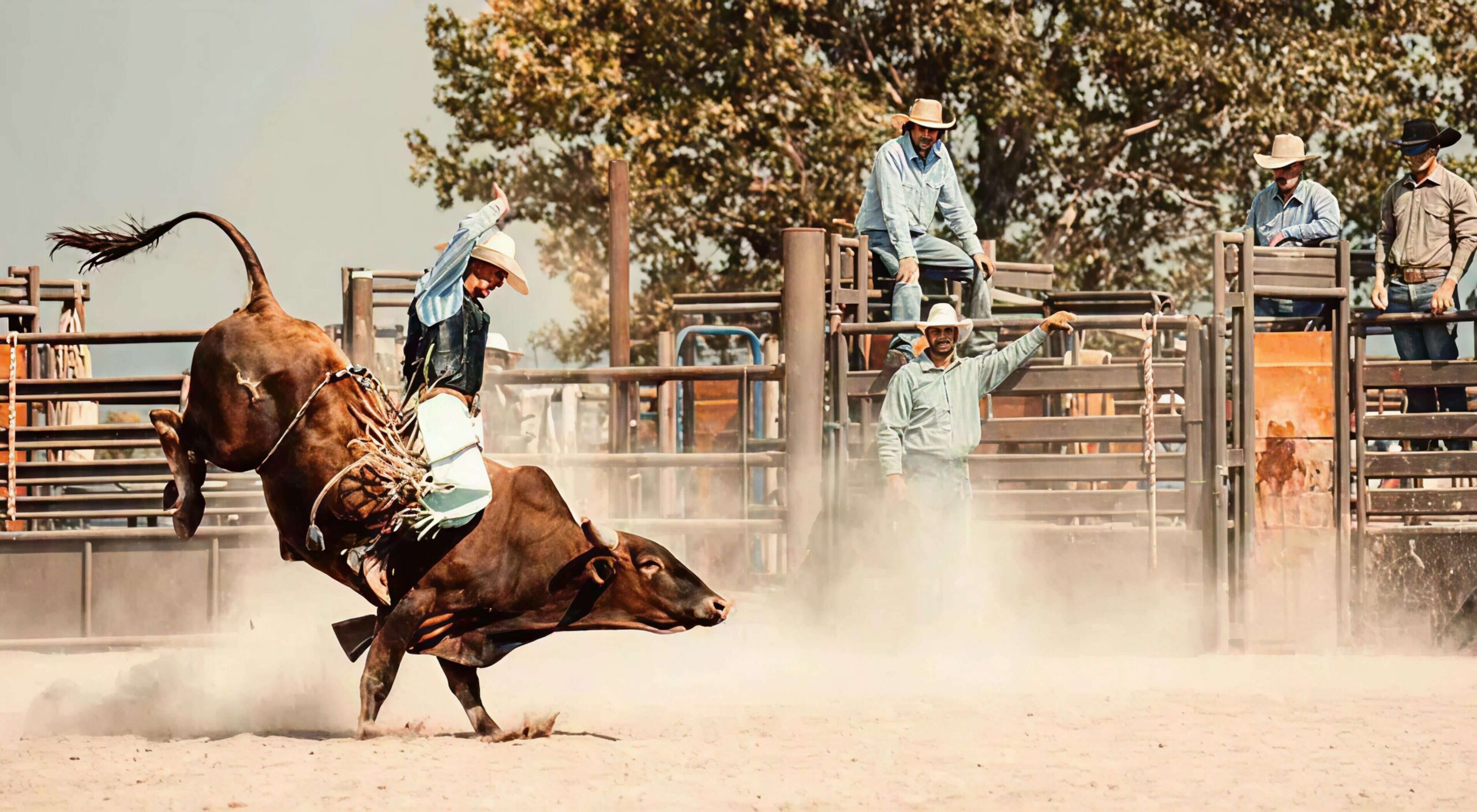
In this episode, Tarek Saab sits down with 5-time World Champion Steer Wrestler Luke Branquinho during the National Finals Rodeo in Las Vegas. Luke pulls back the curtain on the hyper-technical physics of wrestling a 500-pound steer at 30 miles per hour, the massive sacrifices required to spend 285 days a year on the road, and the dark reality of post-retirement depression. Discover how this Pro Rodeo Hall of Famer leveraged his grit to launch a broadcasting career, a premium tequila brand, and a credit card processing company that is giving back to the Western world.
Key Takeaways
- The Science of the Drop: Steer wrestling isn’t just brute force; it’s geometry and horsepower. Luke explains the mechanics of “the hole,” the timing of the barrier, and why 80% of a bulldogger’s success is entirely dependent on the horse.
- The “VHS” Work Ethic: Talent is a myth without repetition. Luke shares how he spent three years practicing on a stationary dummy—recording himself on a VHS tape to critique his own technique—before he ever jumped a live steer.
- The Real Cost of Winning: Rodeo is a selfish sport. Luke opens up about the massive opportunity cost of his five world titles, acknowledging the sacrifices his wife and family made while he traveled 285 days a year.
- Navigating the Void: The transition out of professional sports is brutal. Luke candidly discusses the depression and physical stagnation that hit him post-retirement, and how accepting an offer to do color commentary ultimately saved him.
- Payment Cowboys: A masterclass in B2B disruption. Luke details his new merchant services venture, which audits the hidden fees of credit card processing for Western businesses and redirects 5% of the profits to charity.
Notable Quotes
“Everybody says, ‘You’re such a great athlete.’ But yes, I’m a great athlete because of my horse. The horsepower is 80% of it.” — Luke Branquinho
“Rodeo is a very selfish sport. If you want to have the success like I had… I was number one. Even with the wife, the kids, what I had to do to go out there and win was first.” — Luke Branquinho
“I failed more times than you’ve tried. I feel like I failed so much at a young age that it helped me to have success when I got out in the arena.” — Luke Branquinho
Mentioned Resources
- Company: Payment Cowboys
- Show: The Luke Branquinho Show (The Cowboy Channel)
- Organization: PRCA (Professional Rodeo Cowboys Association)
0:00 - 0:23
Luke: But back then I had three other guys in the rig. And if my wife wanted to come with me, I was like, this is going to be hard because we got three guys in the rig. And it's just tough to do that. And if you're with me, it's going to distract me from going out there and winning. And I get emotional talking about it because what she did to support me, I couldn't get back.
0:24 - 0:37
Tarek: Welcome to Y'all Street. Today I speak with Luke Branqueena, the five-time National Finals Rodeo Steer Wrestling Champion and Pro Rodeo Hall of Famer. Luke, would you like a cup of coffee?
0:37 - 0:38
Luke: Absolutely.
0:39 - 0:40
Tarek: Coffee cheers to you.
0:40 - 0:40
Luke: Thank you, sir.
0:45 - 0:53
Tarek: I got you the welcome to Las Vegas coffee chip, coffee mug, because this is a place that you own. Legend.
0:54 - 1:04
Luke: I love it when people say that. The legend of Vegas, yeah, not the house that Joe built. They say the house that Luke shook after Joe built it. That is something that I have heard before.
1:04 - 1:13
Tarek: Pro Rodeo Hall of Famer, steer wrestler. A lot of people listening have no idea what steer wrestling is. What is it?
1:14 - 1:28
Luke: Well, I explain it in my words, is I wasn't good enough to rope. And I was too scared to ride rough stalks. This was the middle ground for me, jumping off a horse, running about 30 miles an hour onto a steer, and wrestling him to his side.
1:28 - 1:46
Tarek: Let's talk about that. I mean, there's a lot of technical aspects to being a steer wrestler. And it starts, I guess, with the horse. So you have your horse, and you're training your horse. Walk us through the whole process, step by step, of what it takes to wrestle a steer to the ground.
1:47 - 2:36
Luke: Yeah, you're absolutely right. Everybody says, you're such a great athlete. But yes, I'm a great athlete because of my horse. And the horsepower is 80% of it. If you don't have a horse that's going to get you to those steers as fast as possible, it doesn't matter how good you are throwing them down, you're not going to win. So starting a horse, a steer wrestling horse, you have to get them one, number one, calm in the box. You want them sitting in there so when you drop your hand and the gate's open, it's all forward momentum. If they're moving around and side to side, you're not going to be able to get that start, which is key, very important. Then you want to train them to run by as close to the steer as possible without being so close you can't, we call it the hole, slide down in the hole from the saddle to the steer side. So yes, very, very much technical on how a horse needs to be trained for steer wrestling. Calm in the box, leaves the box quick, and runs hard past the steer.
2:37 - 2:50
Tarek: So the rules are, there's a steer in the chute, they open the chute, the steer comes out. Now you have a little rope that's sitting in front of you. And you can't break that rope until when? Until the steer is completely out of the box?
2:50 - 3:32
Luke: So each rodeo is different. It's called the score line and the neck rope. So the score line's out in front of the chute, the steer has a neck rope on him that is attached to a pin. This is very technical, we almost need a little board to draw on. But that is attached to a pin where the barrier line hooks in. And when that steer makes his few steps, it pulls the pin, the barrier releases. On that barrier, they call a pigtail. It's about a 12 inch piece of rope tied with string. And if you leave before that pin pulls, that string breaks, the pigtail hits the ground, and it's a 10 second penalty. So each rodeo is different as far as what the barrier start, or the score line is, the start. National finals is very fast. It's tough to break the barrier here.
3:32 - 4:07
Tarek: So the horse comes out, the steer's out, and now you have to time it. And I've noticed this, because I've been watching the last couple nights, is sometimes it takes, I don't know, two, three seconds before the steer wrestler will get off the horse and try to get that steer to the ground. Sometimes it's almost immediate. So you talk a little bit about this gap and falling into the hole, but what are you looking for, like specifically? Are you trying to get a certain distance in between the cow? I mean, this is all sort of new to most people.
4:07 - 4:44
Luke: Yeah, so when you leave the box, you want to be as close to the barrier as possible. And what you were saying is it takes some guys a little bit longer to get to the spot of being able to get off on the steer. That's because they were late. They missed the barrier. So they're running the steer down the arena farther, which causes time to run on the clock, which if you do that in the steer wrestling, you're not going to win. So when you see them jump quick, that means they probably got a good start. So what you're looking for is as soon as that steer leaves a shoot, you're riding your horse to position, which is right alongside the steer. And as soon as you get to the middle, that steer's back is when you, we call it, make your move. All the way down in the hole, that horse packs you by, and you're able to get the steer's horns caught.
4:44 - 4:57
Tarek: And the goal there is you're sliding onto the steer, and you're wrapping around the neck, and then there's this technique that you have to employ to get this steer on its back. And so how difficult is it to learn that technique when you're coming up?
4:58 - 5:38
Luke: Yeah, it's funny you ask that, because you see kids now with the junior NFRs and all these junior rodeos. It seems like when you're younger, it's a lot easier to pick up on. In anything in life, I think you learn at a young age, it's easier to pick up on. So it takes a couple of years to really figure it out. And I wouldn't say master it, because there's guys here at the NFR that have been doing it a long time and haven't been able to master it yet. Very few have. But it does take a few years to be able to say, OK, I'm confident enough to go do this and do it professionally. But these kids are starting at such a young age. There was a kid last year that won the average here at the national finals, Cash Robb. The year before, he was at the junior NFR here in Las Vegas.
5:39 - 6:09
Tarek: Incredible. Incredible. Yeah, I'm so interested now, because we're celebrating the 40-year anniversary of NFR here in Vegas, to look back at some of that footage from like 1985. And they're playing a lot of the 80s music in there. What has changed from 85 till today? I was sitting next to somebody yesterday, and they said, has the sport changed? And I said, I don't think that it's changed as much as it's just bigger, stronger, faster. But I'm curious about what your opinion is on that.
6:09 - 7:00
Luke: No, 100%. Bigger, stronger, faster is spot on. And you could watch those old videos from 85. And I'm going to go to the rough stock. Those horses were great. But there's bred-to-buck programs now, where every one of these horses, that's what their job is when they're born. And you could see how much bigger, how much stronger those horses are. Buck and bulls are no different. The timed events with the timed event horses, they're bred specifically for that. So yeah, bigger, stronger, faster. The only thing I would say has changed is the size of the timed event animals. The steers aren't quite as big as they used to be in the steer wrestling team. And the calves aren't quite as big as they used to be. And that's why you see the time variations from 85 to what you see now, the mid-four-second, five-second runs in the steer wrestling now to the short threes, short four-second runs that it takes to win.
7:01 - 7:10
Tarek: Yeah. So how did it start for you? Where were you from? Why did you decide to get into steer wrestling? Let's go back in time.
7:10 - 7:48
Luke: Yeah, so seven generations, California cowboy. My mom's side of the family moved out there from the East Coast. My dad's side of the family came from Portugal. So dairy farmers by trade on my dad's side of the family. My mom's side of the family were a little bit more, they were smarter. They were doctors and lawyers and stuff like that. And we actually have a street on my hometown where I was from, Los Alamos, that my mom's great-great-grandfather started. Bell Street was his last name. So that was the main street through town. He was the doctor in Los Alamos, California. So we grew up, born and raised Californians.
7:48 - 7:55
Tarek: So when you say seven generations, were your family 49ers? Did they go out for the gold rush? Was that what the motivation was?
7:55 - 7:58
Luke: They weren't 49ers. They were just coming out from the East Coast.
7:58 - 7:59
Tarek: Interesting.
7:59 - 8:16
Luke: Yeah. So I mean, it's an interesting story. I try to tell it. And I don't even start, because I don't do it any justice. My mom could tell it and just get spot on. And hearing her say it over and over, I'm still in awe to how her side of the family came to California.
8:16 - 8:29
Tarek: When you watch some of the programs now on TV, and you see how those pioneers came out West, and all of the stuff that they were dealing with, and the elements, and trying to get food, and the battles with the Indians. And I mean, these were different people.
8:30 - 9:18
Luke: Oh, yeah. There's no way, if we had to go back in time, that many of us would survive. I'd like to think I would, but it's still tough times back then. And California has changed so much. But to hear the history of how the family started. I mean, the ranch was an old Spanish land grant. We had over 20,000 acres out there that I got to grow up on and was all part of the families. And on the central coast of California, Santa Barbara, north of Santa Barbara, about 40 minutes. And San Luis Obispo, 40 minutes. So I was born in Santa Maria, California. And if anybody's ever been out there, you know that there's no better place for weather. And now we live in Texas, so it's kind of like, we don't get that weather. But California is a beautiful state.
9:19 - 9:25
Tarek: So you grew up in rural California. And how did you get into rodeo? Is that just part of the culture there?
9:25 - 9:51
Luke: Yeah. At that time, my dad farmed and ranched. At one point, he had 3,000 head of mother cows. So being on the back of a horse, that was the way of life. He farmed over 10,000 acres of grain hay, him and my mom. And it was all part of the family. So yeah, you're on the back of a horse. You're doing cowboy stuff daily. We get home from school, grade school, and we're on the back of a horse doing something.
9:51 - 9:56
Tarek: Yeah, so when did your dad put you on the back of a horse? When were you really starting to be productive?
9:56 - 9:57
Luke: Like helpful. Helpful. Helpful.
9:57 - 9:59
Tarek: Asset, not a liability.
9:59 - 10:27
Luke: I would say that they still probably think I'm not helpful on the back horse. They actually say two good dogs is better than Luke. But anyway, from the time I remember, six years old, we were on the back of a horse gathering cattle, Brandon in the Brandon pen, and running cattle up and down the chutes, vaccinating, doctoring, whatever it took to take care of it from a young age. Whenever you were able and capable is when you did it. Everybody develops different, but at six, seven years old, that's what my brothers and I were doing.
10:28 - 10:34
Tarek: Wild. And so walk me through the transition of getting into rodeo for you and your brothers.
10:35 - 10:54
Luke: So I'm the youngest of three. My older brother Tony, team rope, roped calves really well. Casey did all three really good, steer wrestled. And when they're older, so as a young kid, I'm like, I could do that. I could do that better. And that's kind of what it was. They were out there practicing.
10:54 - 10:56
Tarek: Until you started roping. And then you said, I'm going to be a steer wrestler.
10:56 - 11:34
Luke: Exactly. Yes, exactly. But especially the steer wrestler, when I seen them doing that, I'm like, well, that's good. That's fun. I don't have to pack a rope. I don't have to swing a rope. Yeah, I'll do that. And it's a fun story, because my dad would always get two semi-loads of steers put on jackpot team ropings. And there would always be one or two each year that were like dwarf steers. They had huge horns, but didn't weigh 300 pounds and just short. So that's what I practiced on when I was like 9, 10, 11 years old. That's what I shoot-dogged. And those steers lasted a long time, because I didn't do it a lot like my brother was practicing. And I just fell in love with it.
11:35 - 11:42
Tarek: You use an expression, shoot-dog. And of course, steer wrestling, the other name for steer wrestling is bulldogging. What are all these names? What does it all mean?
11:42 - 12:20
Luke: So shoot-dogging is a practice that we use to just do our groundwork. You don't have to jump off the horse. You put a steer in a chute, you crawl in there with him, they open the gate, he runs out. And you hook up to his head, throw your feet out, and throw him down. So shoot-dogging is just a way to practice without having the horse. And now junior rodeos, junior high rodeos, they're doing that for the young kids. So it's letting those young kids get in, started at a young age to be prepared when they do start jumping steers off a horse. Bulldogging, it was a term they used way back when, because I think some of the steers, they were castrated if they're steers. They weren't castrated, and they're wrestling bulls.
12:20 - 12:37
Tarek: This particular discipline attracts the bigger boys. The bull riders tend to be a little bit smaller, and the saddle bronc rider is a little smaller. But the steer wrestlers are big. You come from a family of big boys. You were, at your peak, you were what, 6 feet 270?
12:38 - 13:37
Luke: Oh, 6 feet 290, but I try not to go there anymore. Yeah, and now I'm 6 foot 235. I've dropped down. And that's one thing, you talk about what's changed, what's evolved. The steers have gotten smaller. When I first started, I was probably one of the smaller guys that competed in the steer wrestling. And I learned a lot of my technique from watching a guy by the name of John W. Jones Jr. from Morro Bay, California, multiple time world champion. And he was a smaller guy, but he dominated because his style, his technique, his timing was impeccable. But that was on really big steers, so there were not very many guys his size that had that success. Now, you transition to where we're at now with steer size. Those steers are about 150 pounds lighter. They handle a little bit faster. So you can get smaller group of guys that are having more success than you did back then. But generally, you look at Will Loomis. That's a big boy. Ty Erickson's a big boy. But you are able to see a few smaller guys in the mix now.
13:38 - 13:47
Tarek: As a pro rodeo hall of famer, do you talk to these guys, give them pointers, tips, encouragement? Like, what is your involvement with the current crop?
13:47 - 14:31
Luke: Yeah, and a lot of these guys, not a lot, a handful of these guys have come to my clinics before they even started rodeoing professionally, much like Joe Beaver. You know, he's just a legend of the sport. And we've helped teach these kids, you know, the basics. And I don't ever want to say, and I will never claim that their success is because of me. If they wouldn't have came to me and wanted help, they wouldn't have had that success. So they had to initiate all that. All I did was kind of show them some pointers, some path, a way to go, a direction. But to your question, yeah, they'll still reach out to me. Like, hey, I have this steer from round one. He did this to so-and-so. What do I need to do to get by him? And it does feel good that they're reaching out. Like, I still kind of have an idea what I'm talking about.
14:31 - 14:36
Tarek: When you started, were you good immediately? Were you winning everything right out of the chute?
14:36 - 15:06
Luke: So when I first started, I, again, jumped the dummy, which, for those that don't know, jumping the dummy is a fake steer. You put on hay bale or whatever, and you put horns on it. You ride the horse by it and get off and practice your head catch. I started that at 11 years old. And I did that for four years before, or three years before I actually jumped my first steer. I have a video somewhere of VHS set on the fence, videoing it so I could watch myself back and point things out.
15:06 - 15:07
Tarek: We need to get that on YouTube.
15:08 - 16:07
Luke: Can we get that on YouTube? I need to have my mom see if she can find it. But yeah, I have video of all that stuff. That's what I wanted to do, so I took it very seriously. And at a young age, you wouldn't think an 11-year-old was like, why you got a VHS sitting on a fence post videoing yourself to try to critique yourself? So I did that for two, three years before I ever jumped my first steer. And I feel like that did lead me to your question. I did have a lot of success when I first started, but the work I put in to that point was why I had that success. And I seen a deal the other day that, people call you lucky if you win. And it said, I failed more times than you've tried. And I felt like that, when I read that, I'm like, holy crap. I don't know how many times I failed that, and then seeing other people like, they haven't even tried that much. So I do feel like I failed so much at a young age that it helped me to have success when I got out in the arena.
16:07 - 16:08
Tarek: Was it an obsession for you?
16:09 - 16:48
Luke: Oh, absolutely. Yeah, absolutely. Especially once you get that first taste of winning. My freshman year of high school, my oldest brother, or my middle brother, Casey, was a senior. So it was one of those things like, well, he's doing good. I need to do good. It was that brother competitiveness that everybody has, I think. And when I beat him, it was a drug. It was like, I could beat him. I'm gonna keep going. Won state finals in high school my sophomore year. Got hurt my junior year. Won it my senior year. Went to college for a year and had a lot of success. And it was, it was, it's very addictive.
16:48 - 16:51
Tarek: The reason you left college, was it to turn pro?
16:52 - 16:53
Luke: Absolutely, yeah.
16:53 - 16:56
Tarek: And so this was the year 2000, you're 19.
16:56 - 16:57
Luke: Mm-hmm.
16:57 - 17:15
Tarek: You're now a professional. And you're traveling all over the country. What was that like? Now this is, by the way, I was talking to Riley Webb about this, and I'm thinking, you know, in his generation, it's easy, he's got his iPhone, he's got his GPS. Were you like map questing? Were you like pulling out like the Atlas or what?
17:15 - 17:48
Luke: No map quest. I can remember stopping at the pilot, no, what were they? Yeah, the pilot truck stops. And they'd have those Rand McNally books, you know, maps. And I couldn't tell you how many I've torn up of those flipping through the- With the highlighter going through. With the highlighter, exactly. But even before that, when we were going to high school nationals or family trips, my parents would pull out the old folding maps. And I can remember my dad driving and looking at the map, looking over the steering wheel. My mom was like- No hands on the wheel. No hands on the wheel. Two hands on the map. Yeah, this doesn't seem safe.
17:48 - 17:48
Tarek: Been there.
17:48 - 18:04
Luke: But yeah, now it's evolved so much. And these kids, they enter on their phone, they travel from their phone. It's almost like we talked about if we lost all technology, I don't know if these kids could rodeo nowadays.
18:04 - 18:21
Tarek: Let alone travel across the country as a pioneer 150 years ago. So when you were 19, were you traveling with other guys in rodeo? So you had like traveling buddies and you would both bring your horses and kind of share a lot of the duties.
18:21 - 19:24
Luke: Yeah, so when I first started, I'd went to a Sierra Sun Clinic that Trav Cattle and Vince Walker, some guys from California put on. And that was my senior year of high school. And they said, hey, whenever you're ready, give us a call, we'll jump in with us and we'll go. 2000 comes around, I'm like, hey, I think I'm ready. My rookie year, I wanna go with guys that have been out there and they had all rodeoed. None of them had made the national finals. Vince was very close a couple of times. He ended up 16th two or three times. Trav was a guy that was so technically correct. I wanted to be with a guy like him to pinpoint anything I needed to change, anything I needed to fix. And so yeah, my rookie year was with guys that had been there, done that. And I ended up missing the national finals by $1,300. And I'll say this, winning the rookie of the year is the one award that you only have one chance at. Your rookie year, that's it. Once you get past that, you don't have a chance to come back. I ended up winning the rookie year, that was my goal. In fact, at that time, we had a Nokia cell phone, which most of these kids don't even know what that is.
19:24 - 19:25
Tarek: I still remember the ring.
19:25 - 19:53
Luke: Yeah, yeah, exactly, exactly. And you could change the face plates on and make different colors, cool stuff. But on my banner on my phone, I put Roy, rookie of the year, missed the national finals. I was 16th, I missed it by $1,300. And I think if I'd have set my goals a little higher, I would have achieved making the national finals, my first year roadie on my rookie year. Then I look back on that, but if I would have, would I have had the success I had that I ended my career with, so.
19:56 - 20:03
Tarek: 22 years on the road. 22 years traveling all over the country. How many days a year did you travel?
20:04 - 21:31
Luke: About 285 years, or days out of the years. The older I got, that number kind of backed off a little bit because I wanted to spend more time at home with the family. And I've said this anytime anybody's asked, especially since I retired and got put in the Hall of Fame, rodeo is a very selfish sport. If you want to have the success like I had, and my family, they gave me everything. My wife gave me everything to have the success and let me achieve these goals. And the older I got, I started to realize they have given so much for me. I need to start coming back home and giving more to them. But those first few years of winning gold buckles, winning championships and all that, I was number one. Even with the wife, the kids, what I had to do to go do that was first. They were always second. And it's sad to say that. Rodeo's changed a little bit now where it's not quite that much because the amount of money you can win and maybe traveling schedules are a little easier because of the way rodeos are set up. But back then I had three other guys in the rig. And if my wife wanted to come with me, I was like, oh, this is going to be hard because we got three guys in the rig. And it's just tough to do that. And if you're with me, it's going to distract me from going out there and winning. And I get emotional talking about it because what she did to support me, I couldn't give back.
21:32 - 22:15
Tarek: You know, this is a theme that has come up on a lot of interviews that I've done with successful people, talking about the sort of unsung heroes of our success is our wife, our children who are supportive, collaborative in that process. My wife is the same. I travel a lot. She has the responsibility of the kids at home. She stays at home and without her, I couldn't do what I do. And it has to be something that's fully invested from the whole family. I will say that I think it has become a little bit easier today because of technology.
22:15 - 22:16
Luke: Absolutely.
22:16 - 22:42
Tarek: And it's not that technology can replace being with your family, but it sure is nice being able to FaceTime a couple of times a day and seeing your kids face-to-face and sharing stories and at least feeling like you're part of the environment. Whereas again, you rewind 20, 25 years ago and it wasn't that. A lot of people didn't even have cell phones. And you're lucky if you're getting a landline connection with someone, you know?
22:42 - 23:12
Luke: So I- I can remember Zoom when it first, I think it was Zoom, but Lindsey had got me, I had a laptop and I had a camera stuck on top. I plugged into the side of it and I wasn't smart enough to figure it out. We did it a couple of times and I'm like, I don't know how to run this dang thing. So you're exactly right. Technology has, I guess, eased up on that, those emotions, especially for me because I still travel a lot. I try to take Lindsey or the boys with me as much as I can because the demand of what I do now is nothing like what it was when I was competing.
23:12 - 23:38
Tarek: Yeah. So as you were traveling around in those early days, let's say it's 2004, 2005, were you just, were you guys sleeping in the truck? Were you like just getting hotel rooms? I mean, because some of those trips, I mean, you get to the Western side of this country and it is like, there's nothing. You know, you leave sort of like, let's call it Dallas-Fort Worth area and you head West and it's like barren land for miles and miles and miles. So what were you guys doing?
23:39 - 24:22
Luke: Yeah, so when I first started, Rodeo and Living Quarters had just kind of started to make their way onto the scene. They're not near as fancy as the ones we see nowadays, but yeah, we were, you know, we were living in a horse trailer that had an RV in the front part of it and horses in the back. So there was a bed up in the nose, a couch. Some of them had bunk beds, but it is nothing like they have now, the luxuries they have now. But yeah, it was pretty easy. We would, you know, we'd find places to put the horses up, put them in stalls and we'd crawl in the trailer and bundle up. Sometimes we didn't have heaters and sometimes we didn't have air conditioners. You know, it was just roughing it out on the road now. Yeah, and you know, you see these guys going up and down the road. These trailers, they're immaculate. These toter homes they're pulling around are awesome.
24:22 - 24:33
Tarek: There's a lot more money now too, especially with the sponsorships and everything and how the sport has changed and evolved and really grown. The guys that you were traveling with, were they your competitors?
24:33 - 24:34
Luke: Absolutely.
24:34 - 25:02
Tarek: So let's talk about that a little bit, the relationship on the road with the guys that you're competing against to make a living, to put food on the table, to, you know, to win buckles. And yet these are the guys that are also your buddies traveling with you across country. So walk me through, I guess, some of those relationships. Did you have like really tough competitors that you didn't like? Did everybody just kind of get along? Start me there.
25:02 - 26:30
Luke: Yeah, so in the steer wrestling, it's a very unique group of guys. Everybody gets along for the most part. We're all there to help each other because I always looked at it as it's me against the steer. If I don't do my job on that steer, I'm not gonna win. You know, I never thought, okay, so-and-so's three, five, I gotta go beat him. Well, I may only had a steer I could be four flat on. I need to go beat that steer and be four flat because four flat still pays money, you know? And in the rodeo game, it's all about averages. You need to go make sure you win as much as you can, not worry about one steer, you know? Go do your job on the steer you have drawn. If it's only a sixth place check and you did your job, bingo, you won, you know? And then you get those situations where guys think, oh, I need to try to beat him. Well, then you get in your head too much. Like, oh, he beat me, and then you try to push things. You know, again, going back to that four second steer, I'm trying to be three, six on a steer I can't be three, six on, I might break the barrier and cost myself a fourth place check. And you said it, it's putting food on the table. Every dime counts. You know, for the most part, no, we were competitors, but I always put myself with a group of guys that had the same goals, same ideas as me, same, you know, very similar in our styles of bulldogging and how we wanted to go about it to win. Because when you did get done at the rodeo, you could have that conversation and make yourself better and make them better. And I've always been around, I've always wanted to be around people that would raise me up and we do the same to them.
26:30 - 27:17
Tarek: As we're showing footage of steer wrestling, people will see that there's actually two horses and two riders that go out. And the second horse and second rider are actually your competitors in the event. It's one of the unique sports, I don't know that I can think of another one where your competitors are then tasked with the job of helping the next guy who's in the process. And I wanna understand that culturally in terms of, you know, the role that they are playing in the success of the guy that's actually doing the run. Is it a situation where they can mess up or can force the steer to go in the wrong direction? Like walk me through that because it's just such a unique relationship, you know?
27:17 - 28:20
Luke: No, absolutely. And again, why I put myself in a group of guys that I trusted. You know, I trust them with my wife, I trust them with my kids, I trust them with anybody in my family because I'm trusting them with my life too. Whether it's sitting behind the wheel driving or if it's hazing the steer for me. And to that point, it's a four man buddy group. So you got a bulldogger, a hazer, a guy pushing your steer and a guy on his head. Now the guy on his head is trying to keep the steer's head looking straight out the chute. So when it opens, he's going forward. The pusher is in behind pushing the steer out when the gate opens to get a clean start. Hazer, obviously he's staying alongside making sure that steer's in the right position for you to get off and make a fast run. So it is a very strange dynamic for rodeo. And I think steer wrestling is probably the only event that is like that. I mean, the team ropers, they kind of get along, the tie down ropers, not so much, but, you know, and that's just the truth of it. You could ask about any competitor or any fan of rodeo, you know, and they say, hey, the steer wrestlers, that's a tight knit group and they do whatever they need to do to help each other.
28:20 - 29:02
Tarek: Five time world champion, pro rodeo hall of fame. Your career ends in 2022. Now you got to make the next step. Before we get into the stuff that you're working on now, walk me through the psychology of being a world champion. And now everything that you have devoted your life to, everything that encompasses your identity as a professional is now gone. And now we're moving into the next phase. What was it like, you know, when you stepped away and you're back home and now you're looking out into the void, what was that like?
29:03 - 29:19
Luke: For me, I was very, it was tough. No doubt about it. I mean, there was a lot of depression that I didn't show. You know, it was, I held it in. I mean, even my wife and kids, they knew something wasn't right, but I was depressed.
29:19 - 29:21
Tarek: How did it manifest itself for you?
29:23 - 29:55
Luke: Gaining weight and getting fat and lazy and just being, not wanting to do anything. You know, when I retired in 22, in fact, I wrote the retirement note to put on social media on our way out to the national finals in 21. And, you know, I said, hey, this is it. I couldn't write it. My wife, I was driving down the road and I started and she's like, let me do this for you. And so I gave her my words as I was babbling like a baby crying and she did an awesome job, obviously.
29:55 - 29:57
Tarek: Now you can just use AI. Yeah, exactly.
29:58 - 30:34
Luke: These kids could retire on AI, that ain't even right. But yeah, it was tough. The one saving grace for me is in 2016, 17, 18, right around there, I got introduced to the camera and they started using me for a rodeo commentary, color commentary broadcast stuff. And so when that happened, the years that I was hurt in 17, 18, 19, I was in front of the camera. So I was still involved. I was never, you know, a lot of guys when they get hurt and they don't have that opportunity, they're done, they're gone.
30:35 - 30:55
Tarek: You're a super personable guy, very outgoing. Everybody in the space loves you. Around that time, 2017, 2018, 2019, did you have a sense, were you thinking like, man, this is something I would love to do. I'd love to be out, you know, commentating or being in front of the camera or is it something that you were almost recruited to do?
30:56 - 32:41
Luke: I feel like it was something I was recruited to do and Randy Bernard, good family friend, started the American and he kind of said, hey, why don't you come be on TV? So a lot of props to Randy for putting me out there and giving me that opportunity. Another one is the US Army. When the Army sponsored Cowboys in 2004, I was lucky enough to be picked as one of their indoor Cs for rodeo athletes. And one of the requirements was we had to go back East and do media training. And we were in a room for three days and they grilled us on media training. Rightfully so because if you're gonna have somebody represent your company, you wanna have them know how to speak in front of the camera, talk to people, be personable. So really big thanks. I didn't think it was ever gonna go lead me to where I'm at now. Fortunately, I was very lucky to do it. But yeah, I feel like, you know, I was recruited to do it. But even in those years, 17, 18, 19, 20, when I was hurt, I was still competing. I'd get hurt, get in front of the camera again, heal back up, start rodeoing again, get hurt, get back in front of the camera again. I never thought this is what I wanna do. It was always steer wrestling until I wrote that letter saying I'm done. Yeah. You know. How do you like it? I love it. I honestly do. I enjoy talking to people. Even with my show that I have going now, I talk to people that I've rodeoed with and hear stories that, you know, family side, other side of the spectrum of rodeo that you don't even know about. So being able to hear those stories and see what their family dynamic is, what just their lives are, it's really neat. And I think it's great for the Western fan to hear.
32:42 - 33:20
Tarek: And everything in the orbit of rodeo. So including, you know, country music singer. I saw you did an interview with Cody Johnson and like all of the guys that are involved. You know, at an event like NFR, you get everybody in the Western world. I wanna get into the Western lifestyle at large. What does it mean to you as it relates to, you know, your identity? You're talking a lot about your relationships with the other steer wrestlers growing up, you know, on a farm in California and seeing now over the last 25 years how much the Western lifestyle has grown in sort of the American ethos.
33:20 - 34:36
Luke: Can you talk about that a little bit? Absolutely. I do feel like the Western lifestyle has its peaks and valleys. Right now we're on an uptick and anybody could say, everybody could pretty much see what it is. The Yellowstone effect is what I like to call it. And thank goodness for it because I think we were kind of down in a little lull. And when Yellowstone come out, it skyrocketed. And I can go back to when we were living in California, I'd fly at LAX a lot. 10 years ago, I'd wear my cowboy hat in LAX and I'd get looked at like I had two heads. Like, what are you doing down here? You know, now you could fly through LAX and you get a smile, you get somebody pointing at you. I've been, people come up to me, I couldn't even tell you how many times, I had this hat on and they're like, are you ripped from Yellowstone? Because I had the beard, you know, had similar, I guess, look. But yeah, it's growing and it's taking off and it's hopefully we don't ever stop that trajectory. We keep going, even if it's flattens out a little bit, but just keep going. Because I think people nowadays, they look back on how America was made, the fundamentals and where we came from. And they're like, that was the Western culture. That was a Western lifestyle of how we were made, where we came from, and we like it. So I think we just keep rolling up.
34:37 - 35:06
Tarek: Yesterday, I was at the event and you were on camera on the Jumbotron talking about some of the new technology that is coming out. Before this pod, you were mentioning that you lost a world title because of no instant replay. And now we, and I want to hear about that, but now we've gone from instant replay to AI helping on the scoring. Talk about that a little bit in terms of where we were and where you think the sport is going.
35:07 - 35:51
Luke: Yeah, and where we're at now was where we weren't even close to this two years ago. But the AI is tracking the bull and the rider, the horse and the rider. It's showing power, kick, G-force. I mean, all this cool stuff that not only is it great for the fans to see like, wow, that's tougher than we thought looking at that. And you see the numbers, numbers tell you everything about power, turns, twists, kicks, how high, how powerful. But now the judges can see that and they're like, okay, we could put this and mix it with what we're doing and make our scores. I'm not going to say make them higher, but make us understand them a little bit better so they can get the placings in the right spot.
35:52 - 36:01
Tarek: You said that you moved to Texas. When did that happen and why did you leave California?
36:01 - 36:42
Luke: Oh, we moved to Texas in 20, 2023 was our first year, 22. 22 was our first year moving to Texas. You know, California was seven generations. It was a tough, tough decision, but with everything going on out in California and how we wanted to raise our boys in that Western culture, that Western lifestyle, not that California doesn't have it, but there's just a whole lot more of that in Texas, whether it's, you know, rodeo, anything Western, the sports, they love the sports out there, you know, and just how we wanted to raise the boys. So we moved out, my folks moved out, my brother moved out, my oldest brother.
36:43 - 36:46
Tarek: The whole family migrated back East, essentially.
36:46 - 36:53
Luke: Yeah, exactly. My middle brother, Casey, he's still out in California, but it was just a move we had to make for the kids.
36:54 - 37:20
Tarek: So looking at you now, I mean, you're in great shape. You look good. You got past this, you know, depression after retirement. You're in front of the camera and you now have all these different business ventures that I wanna hear about. Walk me through how those opportunities came about, what those opportunities are, and what those conversations are like with your wife as you start venturing out in all these different places.
37:20 - 38:46
Luke: Yeah, so starting with the Luke Branquino Show, which is a show we have on the Cowboy Channel and we're on 30 other markets across the United States. And it was right after my hamstring surgery, we were in Arizona, we were at Thanksgiving with my wife's family and a good friend of mine, Joe Loverro, who was big in rodeo, he said, hey, why don't you come down to Phoenix and meet a buddy of mine, Bob Sullivan, Bitfire Networks and Bandit Productions. So we go down there and I'm hobbling around on my crutches and at that point, I'm still pretty heavy because I hadn't officially announced my retirement, but it was coming. So I mean, I was probably 285 pounds hobbling around on crutches and we sit down in this meeting and they're talking about, well, why don't we just do a show with you where you interview people and it'll be great. So that's how that got started. Just a good friend introduced me to Bob Sullivan, who's my partner on Luke Branquino Show and it's growing and taking off. And then the next venture, obviously doing TV stuff, color commentary through the Cowboy Channel, Teton Ridge, whoever, I'll work for whoever. The PBR has hired me to do stuff. But the tequila company is, this one was pretty interesting. The same buddy, Joe Levero said, hey, I got an idea for us. Okay, he said, I met a guy in New York. He knows a family in Mexico, one of the oldest family distilleries in Mexico. Let's start a tequila company. Like, I love it. I love it. We're doing it.
38:46 - 38:46
Tarek: Are you a tequila drinker?
38:47 - 39:15
Luke: Oh yeah, I love tequila. It is one of my favorites. And this is the nice part about our company is when we're not quite up and running yet, we're hopefully Q2 of this coming year, we'll be out in market. But we are partnered with one of the oldest distilleries' families in Mexico. So we're not a white label. We have our own juice. They're building it right there in Mexico. And that's gonna be a fun one for me because we got a lot of great ideas.
39:15 - 39:26
Tarek: Are you involved in any of the production of that tequila? Are you sitting across the table saying, well, this is the kind of tequila I like and this is the kind of tequila I don't like? Yes. What are those conversations like?
39:26 - 39:56
Luke: I'm curious. That was a fun trip for me. We went down to Rondes and sat at the table and they're like, well, we have this juice. And they call it juice down there. This juice, this juice, this juice. So we're sitting there sampling, me and the CEO of the company. And he has a very, very good palate. And me, I'm just a, yeah, great. But I also learned how to drink tequila properly. You exhale, no, I'm sorry. You inhale, take the drink and exhale after the shot.
39:56 - 39:56
Tarek: I did not know that.
39:56 - 40:04
Luke: It does not burn and you get every flavor that the tequila has to offer. It's unbelievable. I never thought, you know, drinking a margarita.
40:04 - 40:07
Tarek: So you were getting an education on your way down there as well. 100%, yes.
40:08 - 40:47
Luke: And so we sat down there and there's, you know, six or seven different juices that they have. And like, yeah, we brewed this one or we not brewed, my brain's not working, but you know, we had distilled, distilled this one. This one was in the barrel this long. This was in the barrel this long. So we're sipping them, trying all of them. And obviously you have to have a palate cleanser, right? After every sip. And we're saying, well, this one tastes a little nutty. This one's kind of honey. This one's a little dry. Well, we blended. That's what I asked. We sit there, well, can we mix that one and that one? And the family's like, why not? So that was just a fun sit down with us.
40:47 - 40:54
Tarek: And as you're mixing it, I guess they're also different ratios. So you can say, well, maybe a little bit more here and a little bit more there.
40:54 - 40:55
Luke: Exactly right.
40:55 - 40:55
Tarek: That's fun.
40:55 - 41:11
Luke: It was, that was probably one of the funnest trips. Obviously I've never been on a tasting of whiskey or anything like that. So that was my first experience, but one learning how to drink tequila properly and then being able to blend what we want to be, you know, our tequila.
41:11 - 41:26
Tarek: So at this stage of the game, you're talking Q2 of next year, you're looking at branding and marketing and distribution and getting it out to the world. What are those conversations like? Do you have a name for the tequila?
41:26 - 42:03
Luke: We do, but I can't disclose the name yet. Yeah, so, and that's something that all of us are part of, you know, what the bottle design is, what the artwork and what the label is. You know, it's been a fun, I'm still waiting on, I'm still waiting to find, see the final product, but we've had a couple of bottles that we've shared with friends. Cody Johnson's had some and he said, man, I don't just, I don't drink a Blanco, but this is amazing. So exciting to hear guys that enjoy tequila saying that ours is good. So that has been a fun, dang sure, a fun little venture for me.
42:03 - 42:05
Tarek: Well, I'm going to buy some for the man cave. That's for sure.
42:05 - 42:07
Luke: I'll get you one, I'll sign it too.
42:08 - 42:31
Tarek: I always say friends pay double. Yeah, yeah, right, right, right. That's great. So when that rolls out, how do you anticipate being involved in the promotion of that? Is that something that you're like scheduling timeout next year to go around and is the cowboy culture going to be sort of like the first market for it, you think?
42:31 - 43:07
Luke: You know, we're not going specifically after anybody and I don't want it to sound like we're just being a boutique because that's not what we're looking for, by no means. We want to be big, we want to grow, but more importantly, we want a great product. So it doesn't matter if it's cowboy, hunters, outdoors, man, it doesn't matter. We want everybody to be able to enjoy it. And it's one of those, and Pendleton did a great job in their model, you know, a whiskey that women enjoy and a man could enjoy, because a lot of times, you know, whiskey is, this is too manly for a woman to drink, but we still want to hit that demographic as well.
43:07 - 43:09
Tarek: No, that's great. What other projects do you have going on?
43:10 - 44:09
Luke: Payment Cowboys. Casey Field started a credit card processing merchant service company called Payment Cowboys. He brought me in about a year ago and that has been another fun adventure for me because as a bulldogger, I never thought I'd be sitting here crunching numbers and percentages and points and this and that. So now learning all this about the back end of just being a cowboy, where you swipe your credit card, you could see what's happening on the other side of it. And we've had a lot of success with that. We have some of the major Western businesses, American Hats, prefer their processing and using us and we've saved them money. And that's the goal with Payment Cowboys. I didn't realize how many little hidden fees are on the back of credit card processing statements until I started working with Payment Cowboys. So that's been a fun one, learning all that. But one of the things cool about Payment Cowboys is 5% of what we make, after we save, you know, the business's money, 5% of that goes back to a charity that business's choice.
44:09 - 44:10
Tarek: Oh, I love that.
44:10 - 44:15
Luke: Yeah, so given back to anybody but the industry that gave so much to us.
44:16 - 44:36
Tarek: No, that's fantastic. Well, Luke, I got you a couple of gifts here. First of all, obviously, we got to get you the steer wrestling coin from Texas Precious Metals in conjunction with the PRCA. And I got you a Yall Street coin for being on the pod. And now that you're a Texan, we got to get you the Dallas Fort Worth Goldback. That's one one thousandth of an ounce of gold.
44:37 - 44:38
Luke: Holy cow.
44:38 - 44:39
Tarek: Throw that into the coffer.
44:40 - 44:43
Luke: That is amazing right there. Well, I can't thank you enough.
44:43 - 44:47
Tarek: Yeah, my pleasure. If people want to learn more about you, where do they find you online?
44:47 - 44:51
Luke: Yeah, just social media, really. Luke Branquino on Instagram, Facebook.
44:51 - 44:53
Tarek: You got a great podcast on there.
44:53 - 45:11
Luke: Yeah, Luke Branquino Show, hit me up there. We'd love to hear, you know, especially Payment Cowboys. We're taking clients right now. Anybody wants to, nothing else will say, hey, you need to tell your company that they're hitting you here and they shouldn't. Even if you don't come with us, we want to make sure you save money one way or the other. So hit me up and we'll make it happen.
45:12 - 45:15
Tarek: The legend, Luke Branquino. Thank you so much for joining us on Y'all Street.
45:15 - 45:16
Luke: Appreciate you. Thank you.