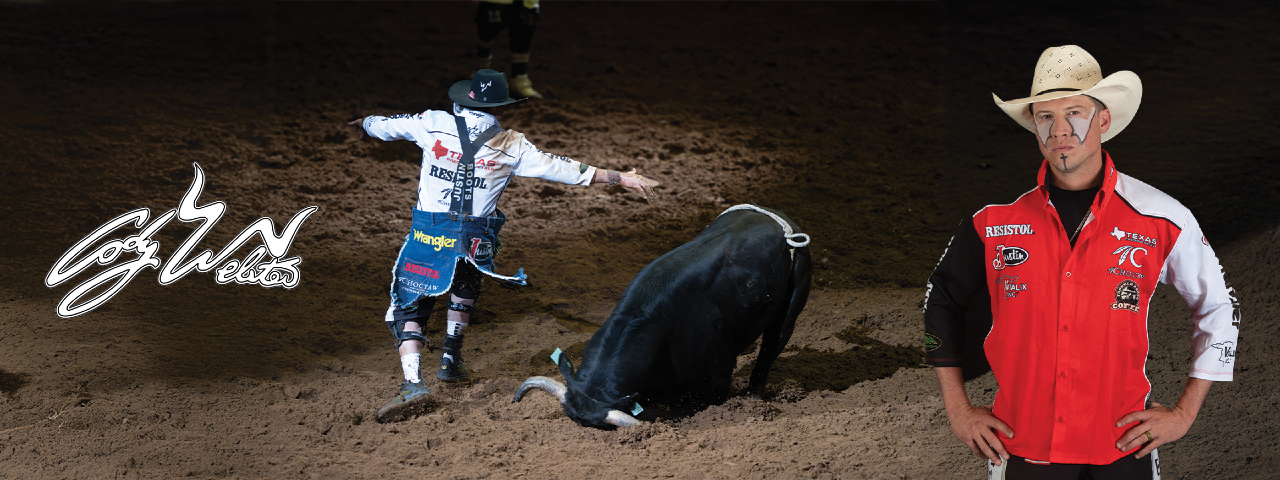
Ep. 2: Cody Webster – 5x PRCA Bullfighter of the Year
What goes into the business of professional bullfighting? In Episode 2 of the Y'all Street podcast, 5-time PRCA Bullfighter of the Year Cody Webster sits down with Tarek Saab to break down the economics of modern rodeo. This episode summary highlights key takeaways on the "Yellowstone Effect" driving capital into Western sports, the extreme physical and financial risks of competing without guaranteed contracts, and the specialized genetics behind breeding professional fighting bulls.
In this episode...
- Calculating physical risk vs. financial reward in a sport with no guaranteed contracts.
- Livestock genetics: Breeding fighting bulls vs. bucking bulls.
- The impact of Frank Newsom on Cody's career.
- From athlete to business owner through merchandise and schools.
In this adrenaline-pumping episode, Tarek sits down with 5-time PRCA Bullfighter of the Year Cody Webster. Fresh from the San Antonio Stock Show & Rodeo, Cody breaks down the economics of the modern rodeo athlete, the “Yellowstone Effect” on Western sports, and the sheer physics of standing in front of a 2,000-pound bull. If you think this is just about “clowning around,” think again—this is a masterclass in risk management, brand building, and pure grit.
Key Takeaways
- Clown vs. Bullfighter: Cody clarifies the distinction. While the rodeo clown entertains, the bullfighter is a “Secret Service agent” for the cowboy—a serious, athletic role focused solely on protection.
- The “Yellowstone Effect”: How mainstream media and social access have transformed rodeo from a niche rural pastime into a booming professional sport with real money on the line.
- The Instinct Gap: You can teach technique, but you can’t teach the “want to.” Cody explains why some have the instinct to jump on a bull to save a hung-up rider, while others freeze.
- Business of the Bull: It’s not just about the fight. Cody details his operation running the Flying W ranch, breeding fighting bulls with Spanish genetics, and managing a 190-show-per-year travel schedule.
- The 10,000 Hour Rule: Cody discusses his mentorship under Frank Newsom and why there are no shortcuts to reading a bull’s body language in the heat of the moment.
Notable Quotes
“If you’re thinking, you’re a step late. And if you’re a step late, the bull’s got the upper hand.” — Cody Webster
“I can help you with the steps, but the teacher is the bull. And he’s going to teach you the hard way.” — Cody Webster
“If I can get these kids hooked by a bull instead of hooked on drugs, then I think the world’s going to be a better place.” — Cody Webster
Mentioned Resources
- Event: San Antonio Stock Show & Rodeo
- Organization: PRCA (Professional Rodeo Cowboys Association) / PBR (Professional Bull Riders)
- Persons: Frank Newsom (PBR Hall of Fame/Mentor), Skipper Voss (ProRodeo Legend)
0:00 - 0:16
Cody: The money in rodeo is growing, you know, and I feel like it, I feel like right now, bull riding, rodeo, PBR, PR, everything for rodeo is just skyrocketing. We're talking guys that can legitimately make a great living and retire from being a rodeo athlete.
0:17 - 0:31
Tarek: Welcome to Yallstreet. Today, we visit with Cody Webster, five-time bullfighter of the year, 12-time NFR selection, and an athlete considered by many to be the greatest bullfighter of all time. So first of all, you want a coffee?
0:32 - 0:32
Cody: Yeah.
0:33 - 0:33
Tarek: I got you.
0:33 - 0:34
Cody: Is that even a question?
0:35 - 0:57
Tarek: I got you a special coffee mug with all the injuries that you've had. This is, this is, this is your prescription coffee mug and hope that you're going to be drinking out of this thing. Dr. Harold Feelgood. Dr. Harold Feelgood. Exactly. Which you probably need after you do your rodeos. Daily grind quantity. Right here.
0:57 - 1:00
Cody: 12 ounces, black gold. Love it.
1:01 - 1:03
Tarek: Speaking of black gold. Yeah, let's go.
1:03 - 1:04
Cody: Can I get a shot of that?
1:04 - 1:08
Tarek: Yeah. Speaking of black gold, you just came from the Texas Precious Metals Depository. What'd you think of it?
1:08 - 1:12
Cody: Uh, absolutely blown away. I had no idea.
1:13 - 1:13
Tarek: Shiner, Texas.
1:13 - 1:43
Cody: Well, yeah. Shiner Texas for one. You know, you're driving by, I seen some really beautiful Brahma cattle standing in the pasture. And then here we are. TPM gold, silver, uh, you know, stuff that they've wrote Western stories about movies. Uh, all the bank robbers, everybody's going after one thing. Get your kerchief gold. And I actually got to hold a bar or two. It was like so heavy, but it's wild.
1:43 - 1:48
Tarek: You don't think, you don't think about how heavy gold is. You see it in the movies. They're tossing in the back.
1:49 - 1:52
Cody: Well, I learned today it's very dense. Yeah.
1:52 - 1:56
Tarek: So, uh, Oh, that's Dr. Feelgood right there.
1:57 - 2:00
Cody: So do we need a little motley crew? Like feel good playing in the background right now?
2:00 - 2:01
Tarek: Maybe. Can we cue that up?
2:01 - 2:02
Cody: Thank you.
2:03 - 2:05
Tarek: So what are you doing down here?
2:05 - 3:13
Cody: San Antonio rodeo, San Antonio stock show and rodeo. Uh, one of the premier PRCA pro rodeos, uh, of the year. You know, you're, you're not talking this, this is a 23, uh, that 23 shows performances, uh, for people that don't understand performance show, you know, every night on the weekends, two shows a day, uh, double up. So, and it's the stock show, you know, everything goes back to the Texas youth, uh, scholarships is huge. You know, everything that goes on with the rodeo, the concerts, uh, you're talking somewhere around 18, 18,000, 18,500 people per show for 23 shows, you know? So it's, uh, like I said, it's one of the premier events. So, uh, I don't know exactly how many years I've been there, but I think I've been going since 2011. So rolling on, uh, it's been a lot of bulls at the used to be AT&T stadium. Now it's a Frost Bank stadium, uh, Frost Bank arena. And, uh, yeah, we're in Texas for a month.
3:14 - 3:29
Tarek: That's crazy. So what does that entail for you? So last night you were, uh, it was 80s night at San Antonio retro, retro rodeo, retro rodeo. And you were just telling me that you were wearing some gear from one of the rodeo clowns from 40 years ago.
3:29 - 4:39
Cody: Yeah. Skipper Voss, uh, one of the legends of the sport, you know, that kind of his style was, uh, a lot of the style you see that bullfighters, you know, we, we use his same moves nowadays. You know, you're talking 40, 50 years later. So, uh, yeah, Skipper come down. We got him, got him in behind the scenes, brought me his gear bag. Let me borrow all of his equipment, uh, his hat that hadn't fought a bull in 40 years. So it was, it was retro rodeo. It was really cool. It was, it was still the very best stock, the very best guys, but they kind of changed the music, uh, not so much as much rock and roll, but more of the old band style, you know, like something you would have seen back in the eighties, 70 eighties, you know, so it, it was a really neat night of rodeo and, uh, to top it all off, man, we got to fight a fighting bull. And that's a, that's a, for the viewers that don't know about fighting bull is, uh, the same bulls that you see in Spain or Mexico that the matadors, you know, you see videos of that. Uh, my wife and I actually, we raised these bulls at our ranch in Oklahoma. So, uh, every year for the San Antonio rodeo, we get to bring in a load of bulls that we get to turn out to fight just for ourselves at the end.
4:40 - 4:43
Tarek: Uh, and you've had the matadors actually come to Oklahoma and we have,
4:43 - 5:02
Cody: we've, we've had the matadors that, you know, that kind of a whole nother story, but for the breeding program and what we're trying to accomplish at the ranch, you know, we've had the matadors come to the ranch, test all of our calves and, you know, go through everything and make our decisions on which ones can go back for fighting and which ones go a different route.
5:03 - 5:25
Tarek: So, so it's interesting because when, when I think of Cody Webster, I think Cody Webster comma bullfighter, right. But there's this whole other aspect of rodeo, which is the rodeo clown. And sometimes those words are synonymous and sometimes they're not. So can you kind of walk Gus through like what the difference is between a rodeo clown and a bullfighter?
5:25 - 6:52
Cody: Well, I mean, just a little history lesson. I mean, back, back in the old days, when all this, you know, and talking about skipper, uh, you know, it for a long time, it was one job. You had the rodeo clown that was the bullfighter that did take care of the bull riders that did entertain the crowd that did acts and skits and filled time. And, you know, it was all just one big job, you know, well, then as time went on skipper boss, the guy would just, you know, that let me borrow his gear last night, uh, and wick path where the kind of the two innovators or the guys that solely got hired just to protect the Cowboys, not do comedy, not do hacks. And, uh, and that's kind of when the sport started changing and it's a revolutionized into what it is now, you know? So, uh, I still wear the baggy clothes. I still paint my face, uh, out of tradition, uh, you know, kids come to the rodeo, they get to, you know, they want to see the rodeo clowns. They want to see the bulls. And, but my job is very serious. You know, it's, uh, literally taking care of the best bull riders in the world. So it, you know, it comes with a high, high price tag. You know, it's something that I take very serious. It's something that, uh, you know, when these guys look out through that buck and shoot and they're tying their hand to an 1800 pound bull, uh, I don't take it lightly. We're there to keep these guys safe and that's at all costs.
6:52 - 6:53
Tarek: Yeah. It's dangerous.
6:53 - 6:54
Cody: It's very dangerous.
6:54 - 7:06
Tarek: So you didn't grow up on a, on a ranch. You didn't grow up around bulls. This is not in your, your family DNA. Um, how did it come about for you? Well, I mean, what was that journey like?
7:06 - 8:10
Cody: Yeah. I mean, there is a little rodeo involved, you know, like my, my dad and my cousins and uncles and everybody, they all, uh, were bull riders when they were kids, you know, or, you know, really young, nobody was professional, nobody, uh, you know, and my, my grandpa, he, he could wrote, but he was in the, in the war, you know, he was, he was an army vet and, and so he, you know, did what he could when he could, but when he was drafted, it was, it was time to go to war, you know, so it, that kind of might be where things and could have maybe went a different direction, you know, if he hadn't been in the army, you know, who knows what would happen, but, uh, so anyhow, moving forward, you know, it rodeo was there, but it wasn't like a profession, you know, like my grandpa had a machine shop where everybody worked and, you know, just, it was just a different time and different era, but now moving forward, you know, being, uh, doing what I've got to do in my career, you know, has been, uh, kind of the first of its kind for our family, you know?
8:11 - 8:13
Tarek: Yeah. What, what got you interested, man?
8:13 - 8:53
Cody: It's a question I get asked all the time, you know, is what, uh, what inspired me or what made me want to do that one day, or did I see it on TV or whatever, but it, it literally was from the word go. That's, I mean, it, I think that's what I was born to do. You know, I think, God instilled something in me that really had a desire to, to want to be, you know, from being a little bitty baby, trying to paint my face like a rodeo clown and moving on, you know, it, it, it's what I was going to do. I never had a question if I was going to be a rodeo bullfighter. And that's literally from the time I was a baby till now, you know, still the same dream.
8:54 - 10:11
Tarek: A lot of people have dreams. A lot of people have aspirations. A lot of people want to do, you know, a variety of different things in life. Um, the reality is that very few people ever achieve their dreams. And usually it's for want of, you know, mentorship or it's lack of perseverance or just the, the will to, to drive forward and, and be the best. You know, we were hanging out in Coeur d'Alene and you were telling me about your background and what I think really inspired me about your story is number one, you had a mentor that helped kind of shepherd you into the rodeo world. And, and more than that, I mean, you just had the drive, you had the perseverance and you know, on, on y'all street, a lot of what we talk about is related to business. And one of the things that really separates the, the real entrepreneurs from the wannabe entrepreneurs is the will to drive the perseverance, the willingness to fail the grit. And you were telling me some stories about even being in high school and leaving high school and coming back. So I love to just kind of hear a little bit more about that journey for you, because I think it's an important part of how you became the best bullfighter in the world.
10:12 - 11:05
Cody: I don't know about the best in the world, but you're the five-time bullfighter of the year. So it's objective. It's been a really, really cool journey, you know, and still at 32, you know, I feel like I still have a lot of gas left in the tank and, and feel like I'm, you know, I've been very blessed with a good career to, for not only get to be as busy as I am, but also the injuries that, you know, we, we injuries as a part of it, that's what you're going to deal with. But overall, I've been very fortunate to, to stay pretty sound, you know, I've had some surgeries and different things, but overall, you know, just a lot of, a lot of broke bones that heal back, you know, uh, even with that though, even with the injuries, you fought through a lot of these injuries.
11:05 - 11:15
Tarek: You were out there in the arena, not feeling a hundred percent, just, it goes back to that willpower and that desire to, you know, just keep pushing forward because there was no other option.
11:15 - 14:44
Cody: Right. Well, I mean, and there's, there's good nights that we, you know, the, the show goes good. And, you know, you're, you're, if you're doing your job correctly, even on the good nights, you're still going to be a little bit sore the next morning, you know, and rather that's just your forearms and your elbows and your shoulders being sore from taking some of the abuse, but you know, there, there is nights that does get really, really rough. You, you, you get some big time shots where you do break bones. You, you know, broke ribs is a lot of, uh, a common injury for bullfighters because the bulls hitting you and, uh, just kind of being where you're at, but your legs take a really big beating, but, you know, if I had only fought bulls when I felt good, you probably wouldn't see me in the arena very much. I mean, that's just the demand of the, the game we play, you know, it's very dangerous. It's very intense. Uh, you're dealing with bulls on average, that's probably 14 to 15, 1600 pounds, but there's some bulls that are 2100 pounds, you know, you're weighing over a ton and got feet as big as dinner plates. And, uh, when, when they step on you, the only thing that you're not going to break the ground and you're not going to, you know, this 1800 pound animal, it's, it's going to be you that takes the abuse, you know? So it's, uh, it's a very, uh, it's a sport that's really, really, you know, that average outside person looking in or the, the people that's watching or listening to this podcast, you know, you probably think, man, these guys are crazy or they're stupid, that they're, uh, they're crazy to do what they do with these animals. On the flip side of that, I've got a burning desire that, you know, I want to keep these guys safe and, and do my job and, uh, to build a step in the middle of a hurricane, you know, getting the eye of the storm and be able to literally manipulate and control an animal that I can't talk to. You can't say, Hey man, take it easier. You know, Hey, go left. I'm going to go right. You know, there's, there's no community. It's literally off of instinct and what you're, uh, reading, you know, you're, you're taking in the situation as it's coming to you. And it's gotta be on an instinct basis. If you're thinking you're a step late, if you're a step late, the bull's got the upper hand on it, you know? So there's a lot of outside looking in as crazy, but on the inside of it to build a taken animal and slow him down and manipulate his, his own body, you know, a bull's got a lot of muscle on their necks and their shoulders are really beefed up and you know, they're very large animals. So like, but they're very athletic and they're very, very good at what they do and they become smart to the game, but to be able to step in and get that bull into, uh, an angle to where he can't bend no further because of the neck muscle and the mass that they have and literally be standing in the middle of a storm and controlling it. You know, that's, uh, I think that's what keeps bringing me back to the game and what is so neat because I still feel like I'm learning even at this point in my career, I'm still learning just like I was when I was 10, 11, 12, 15 years old.
14:44 - 14:57
Tarek: Yeah. So let's dive into that a little bit because it's, I find it interesting, right? The name is bullfighter, but you're not really fighting the bulls. It's more of a dance. It's more of a game. It's more of a chess match.
14:57 - 14:58
Cody: It is the bulls.
14:58 - 16:04
Tarek: It's a site. It's a, it's a, it's one part physical, but it's one part psychological. And, um, you know, just what you described, it reminds me in high school with, with wrestling, you know, it's all about leverage. It's all about angle. It's all about how you can manipulate the opposition to do what you want them to do. And the psychological aspect of being 100% sharp mentally in the arena is what I think is so fascinating about bullfighting because I think for people that haven't watched rodeo, they think it's, you know, maybe, um, you know, just about brute force or it's about, or just crazy cowboys, crazy cowboys doing dumb things, but there's a real science behind it. And you talked about at the beginning of the podcast about how, how bullfighting has really changed over the last several decades and how it, it really has become, you know, this art that guys train for many, many years to know how to get into an arena and manipulate the bull to do what you want them to do. Yes. So can you talk a little bit about that and how that has changed and maybe even your contribution to it?
16:04 - 18:12
Cody: Yeah. I mean, it's just like anything, you know, sports evolve, um, everything's changed, you know, it's still, you're still watching NASCAR, the car still go left-hand turn for 500 laps, but you know, the cars have gotten better. The drivers have gotten better. The, just everything that's went into it, same way with rodeo or bull riding, bullfighting, uh, everything has gotten just a little bit better. And the, the biggest change that probably is within at all is the bull himself. You know, you're talking 50, 60, 70 years of breeding now versus back in the old days where, you know, a guy had a wild bull in the pasture or, you know, they'd find a wild bull at the cell barn and, you know, well, I'm trying to see if he'll make it in the rodeo nine times out of 10, back then you could, you could put together a pin of bulls from the cell barn. Nowadays, you'd be the laughing joke of town that, you know, you'd show up with a pen of cell barn bulls. You know, these animals are bred. There's a DNA basis that goes with the bulls of, you know, like I said, 40, 50, 60 years that they now have on DNA that they're putting these genetics with these genetics. And that's, that's the only thing that these animals are bred for. Now they're not, not to go to, to beef. They're not to be shown. They're literally rodeo athletes, you know? So, uh, that's been the biggest change that we've really seen. Well, with change with that, with the bulls getting better, the bulls are faster. They're more athletic. They're bucking harder. They're hitting harder. They're everything that the animal's doing, you know, you have this high caliber animal. Well, now, you know, and no, if not calling anybody out, not saying anything, but to take the old school guys that fought bulls back in those days to throw it into the mix. Now, I think you're, you're very, you're freaky. Your nature's, you know, the guys that was the prime then they would probably figure out how to be in the game now, but for your average guys, you know, it's, you're talking a completely different game.
18:13 - 18:38
Tarek: That's what I was going to ask. It's like watching basketball in 1960s versus watching basketball today, different athletes, you know, different capabilities, just a completely different game. So, you know, you got bigger, badder, scarier, faster bulls. And so the, the Cowboys they've had to adapt, you know? And so you start seeing the training regimens are getting serious. The nutrition is getting serious. These guys are pretty built. They're hitting the gym.
18:38 - 19:18
Cody: Well, and, and, and on the flip side, what's the, the almighty, you know, that's the money. You know, why did these guys want to ride bulls? Why are these guys going to get on bucking horses? Uh, the roping events, everything is just because the money and rodeo is growing, you know? And I feel like it, I feel like right now, uh, rodeo Cowboy Cowboys cool again, you know, the Western way of life is, you know, we're, we're really seeing a lot of big changes going on and rodeo is bull riding, rodeo, PBR, PR, everything pro rodeo is just skyrocketing, you know?
19:18 - 19:31
Tarek: So there's been a lot of talk about the Yellowstone effect of that. Um, guys like Dale Brisbane, your buddy has had a huge impact on that. Um, the money pouring in, as you say, has had a big impact on levels of interest.
19:32 - 19:52
Cody: The sport now is we're talking guys that can legitimately make a living, a great living and retire from being a rodeo athlete, which is something that's never been done until pretty recent, you know, or even the expression rodeo athlete, just, just that we're using the term athlete and not rodeo Cowboy.
19:52 - 20:57
Tarek: It's a rodeo athlete now because it's becoming a major mainstream sport. And, you know, we, we do a lot of international business and to talk to the guys from London or overseas, they're like, so interested in the Cowboy culture, the American Cowboy, what that represents, um, you know, how that identifies closely with American manhood, which I think has really been in a lot of ways, um, uh, questioned in the world over the last 20, 30, 40 years, what does it mean to be a man? And a lot of these questions kind of revolve around this image of the Marlboro man, the American Cowboy and, and what, what does that ultimately mean? And so I'd be interested in, I guess, just hearing your take on, for, for the time that you've been in rodeo and the changes that you've seen, um, what else besides the Yellowstone effect and, and, um, you know, the, the money is, do you think attracting people to this space and bringing more and more interest?
20:58 - 23:28
Cody: Well, I mean, I think for now, you know, like everything that's going on, you, you've, you've got a cell phone, you, you've got, uh, just the opportunity or the able to right in the palm of your hand, you know, stream and watch a rodeo stream and watch your favorite athletes, social media, YouTube, everything that's going on, you know, like it's so accessible now. So like you are starting to see, I think a bigger fan base come because they can really find out who Stetson Wright is. They can really find out who, uh, you know, Jose Vitor Leme that has come from Brazil. That is now one of the most famous bull riders it's ever been in the game. Sage Kimsey, a seven time PRCO world champion bull rider. You know, it, they can be a social media. They're starting to learn who these people are, what they do. And, and yeah, they're not just goofy old Cowboys that fell and bumped their head and do something crazy. This is a legit sport that is growing and, uh, it's just neat, you know, but it still has that authentic Cowboy bucking horses, bucking bulls, riding, roping, you know, girls running barrels. I mean, it's just neat to be a part of this timeframe and what's going on within the Western industry because, and, and, and outsider rodeo, you know, you're, you're talking the, the movie industry you're talking, uh, you know, I hate to keep bringing it up, but the Yellowstone effect and in everything that's going on, it's just, it's a cool time to be a Cowboy and, and people they're, they're clinging to that, you know, they're, you know, we was in New York city for the PBR and, you know, for the three days of the year, you know, everybody goes and buys a cowboy hat. Everybody gets a pair of boots, gets a pair of Wrangler jeans and shows up to the event, you know, it, and not only New York city has become very, they're sports fans, you know, sure. You're at the most premier, most famous arena, the Madison square garden. So they know sports and to see the Cowboys roll in, to see people go get their hats and come to the event, sell it out. And when these guys fall off their bulls, they boom, you know, like they know sports. So it's really neat to be, it's really neat to see just, just that. And for three days, we go into the city and the concrete jungle and it's legit.
23:29 - 24:37
Tarek: We're cool. You've hit on something I think is really important growing up. I'm from New Bedford, Massachusetts, right? We don't have a lot of Cowboys up there. Grew up in the city, one tree on my street. We never shot anything. We never roped anything, but I did have exposure to NFR cause ESPN used to run NFR on Saturday mornings on ESPN is the only time I ever saw anything. Time Mari riding or 2 a.m. In the morning or 2 a.m. Yeah. Fred Whitfield. I remember big roper. And so that was really the only exposure. And to your point, you know, we have the Cowboy channel, but besides that, there hasn't been a lot of traditional media exposure to pro rodeo. And that's changed a lot now with Instagram and with all the social media. And so a whole new generation, a whole different demographic of people are getting exposed to the excitement of the sport. And I think that's been a, I think to your point, like a really critical driver of, you know, how new media growth, yeah. New media can really affect a sport like this. And so what, where do you see the sport going?
24:37 - 26:03
Cody: I mean, I don't even think we've, I don't even think we're tipping the iceberg right now. I think, I think there's so much opportunity, so much room. And, and especially, like you said, the, the Cowboy cool, it's cool again. So it's, you're seeing new companies coming in. You're seeing new, new money flowing in. And when all that's mixed together, going to these premier events, the NFR, the National Finals Rodeo, the, the Las Vegas, you know, I, I really don't, I think the sky's the limit for it. You know, I think at some point you're going to, you're going to be seeing multiple millionaire Cowboys getting to do what they love and make a great living. I think you're going to see the numbers just are going to keep shooting up and, and with money becomes more competition with more competition. I think you're going to keep seeing the, the industry of the, the bucking horses, the bucking bulls. I think everything is just going to keep rising. And at some point it's already a legitimate sport, but it's a sport that people can really get behind because there's no guaranteed contracts. There's no showing up and, well, my toe hurts today. I can't, I can't dribble the ball. There's guys getting on with broke legs, broke bones, torn ligaments, and they're crazy. Well, this is how they provide for their family. This is how they make their living. This is what we do. And when you put all that, it's easy to get behind a guy, you know
26:04 - 26:11
Tarek: and traveling the country on his own dime, not knowing whether or not he's going to get paid.
26:11 - 26:12
Cody: That's right.
26:12 - 26:33
Tarek: So actually I just saw on one of your posts, you said that, uh, you'd been to eight States in January and, uh, and you had, uh, I think fought 800 bulls, something like that. I think it was like 880, roughly 880 bulls in January. You're, you're on the road like crazy. I mean, your schedule is bananas and that's, that's pretty typical.
26:33 - 26:35
Cody: And coming to Coeur d'Alene to see you guys. That's right. Yeah.
26:35 - 26:37
Tarek: That was a, that was a leisure trip.
26:37 - 26:58
Cody: That was, yeah, that was a lot of fun, but it, yeah, it, 880 bulls, uh, definitely the most I've ever fought, uh, in a single month. Uh, there's some mornings is a little sore, you know, a little beat up, but, uh, with that many bulls, you, you need to be a little sore and a little beat up means you were doing her job getting close enough.
26:58 - 27:04
Tarek: So what does the calendar look like for you for the whole year? Do you have some seasons where you're able to take a little bit of a break or is it just a lot of hustle?
27:05 - 28:38
Cody: Used to be, uh, you know, there would be some little bit of downtime, uh, you know, through the spring and a little bit of downtime in the fall. Uh, but now with being in such demand for pro rodeo and the PBR, man, I, I don't know. I think I might've had a couple of weeks off for the whole entire year for 2024. It's incredible. Uh, you know, 2025 is absolutely as bananas as 24 was what's driving you to do all those events. And it, I don't know, I guess that, that saying, you know, don't, don't complain over what you dreamed for, you know, uh, this is literally what I've wanted to do and been working towards my entire life. So to, to have it here now, to be in such demand, to be at the top of not only my game, but the top of both levels of professional bull riding and pro rodeo, uh, you know, and how I've maintained this relationship, how I've kept the train on the tracks, doing both sides has been maybe never done before like this. You know, there, there's been a few guys like, uh, Frank Newsome kind of bounced a little bit back and forth. Joe Baumgartner was probably the other that mainly bounced back and forth between both associations, but for a short amount of time, not, not a 10, 11, 12 year run, you know?
28:38 - 29:26
Tarek: Well, it, I mean, talk about Cody Webster, a bullfighter, but you're Cody Webster, the entrepreneur as well. I mean, you're, you're, you're running your own business. And like with any entrepreneur, you realize how difficult it is to get to the top. And there's a, a healthy sense of paranoia that it's going to be taken away from you. And it keeps that drive going. We, we were talking a little bit about mentorship in the beginning with a guy like, um, Frank Newsome, you want to talk about that relationship a little bit too. And, and, and how, how critical it was. And we have these sliding doors moments in our lives where somebody steps into your life and gives you an opportunity, but then you got to seize that opportunity and, and work hard for it and get to the level that you want to get to and keep that, you know, keep the drive alive. So maybe you could talk about that a little bit.
29:26 - 33:30
Cody: Yeah. I mean, it, I don't know. It's just been a, it's just like a fire that you were pouring gasoline on this, the flame was there. And then it just exploded, you know, like it literally went from, you know, working around Oklahoma, Texas, Kansas, doing these smaller events to getting my PRCA card, getting my PBR card. And then overnight, I mean, it's just like, I went to sleep and woke up and the phone's blowing up and these opportunities are coming in and, you know, it, it just how quickly and how fast things took off really was a little bit overwhelming, you know? So for very thankful to have Frank in my corner to be able to not only learn bullfighting, but learn a business, learn, you know, your words as good as what you got, you know? So like, there's been times where I had an event booked and a bigger event called and I had to turn that bigger event down because I done gave my word on this smaller event and yada, yada, yada. I mean, there's just so much that goes into the business aspect that the business side of this, because I don't have a coach. I don't have a manager. I don't have somebody telling me that I'm going here on these dates and there on these dates, and then you're back over here and there. Like I've got a calendar, Ashley, my wife, we sit down, we, you know, book things out. We, you know, I'll be in Coeur d'Alene on Tuesday, Wednesday, I got to be in Chicago, you know, Thursday, Friday, Denver, Colorado, Saturday, Sunday, Monday, you know, Houston, Texas, Tuesday, Wednesday, back to Fort Worth, Thursday, Friday, you know, there's just so much that goes into it now because I, I literally have so many shows booked, you know, so there's, there's a lot of business side that goes into it now, but you know, it just jumping back though, you know, the, the opportunities and things that came so fast, you know, it just, it was overwhelming, but that love for the sport, the love of the bull, you know, really drove me forward to, to stay on track. You know, I really enjoyed, you know, being that really young kid and getting to meet Frank and seeing the workout regimens and the, just the daily grind that went into being the best bullfighter in the game, you know, to me, Frank is the best. And so to see everything that went on behind the, behind the camera versus what we seen on camera on the weekends at the events really gave me a different look, you know, and I learned that look at 11, 12 years old, you know, so to be able to, and I enjoy that. I enjoy the process. I enjoy the daily grind that goes into being at the top of my game, you know, and then as times went on and I'm standing where I'm standing now, the amount of shows, the mental aspect of what comes into staying sharp, staying at the top of my game, you know, it's one thing for a guy to be on the top of his game for a weekend warrior. You know, you've got four or five days at home. You can get healthy. You can maybe not be beat up. And then you've got two or three shows on the weekend and, you know, the hype, the, it's easy to stay on the top of your game when you're, I'm not saying you're a weekend warrior, but you know what I mean? Like where you're, but when it turns into doing this so repetitively for 190 shows a year, you know, 190 days, you know, you're 240, 50 days on the road. Uh, you know, everything that goes into that, then you got to start battling not only the physical aspect of it, but the mental side of it.
33:30 - 33:37
Tarek: You know, are you preparing in advance for the bulls? Do you like, do you get a roster of what bulls are coming out and what their tendencies are and things like that?
33:37 - 34:30
Cody: Well, I mean it like you, you could look and, and maybe some guys do, but to me, uh, if you're digging that deep into the, into it, you're already off track, you know, for what we do for the, the preparing for the bulls or the roster of the bulls is what I'm doing at home prior to the event, you know, rather that's mental, physical, working out training, everything that goes into the week. Uh, if you're digging that deep into looking at what bulls are going where, what bull is out, what bull you're already off your game, you're thinking, because when you're thinking in this game, you're not reacting. And if you're thinking you're a, you're a step late. And ultimately, if I'm a step late, that could be really, really bad for the guys I'm trying to protect and can be really, really bad for myself because I'm not reacting to the situation.
34:31 - 34:38
Tarek: How long did it take you to get comfortable getting into an arena with a bull where you were not thinking anymore, you were just reacting?
34:38 - 35:41
Cody: Well, I mean, like it, when you're first getting started, you know, you're, you're, you're dealing with the emotions of adrenaline, you know, such a big adrenaline dump that literally will take you to a point of where you're blacked out, where you don't even know what happened. You don't even know what bull was chasing you to. Now I can see particles of dirt coming off of bull's hoof. I can close my eyes, reopen my eyes. I can, I can not have dirt my eyes so I can vision back to, to the, what I need to be paying attention to, uh, literally being able to see as this bull's bucking and spinning, I can see where he's looking his eyes, what he's doing. You know, I can, there's so much little details, little data that you're taking in at this snap of a finger, you know, that fast. So like the game has, you know, to, to hear people say that, uh, you know, a major league batter, he can see the braids of a hundred mile an hour fastball coming at him.
35:41 - 35:41
Tarek: Right.
35:41 - 36:50
Cody: It's true. I mean, when you're, when you're keyed in and you're, you're that focused and you're just the, you just go to a different world, you know, you can see these little details. And I think that's the biggest difference, you know, and, and to go back like, you know, when did the fear, the fear is still there. You're dealing with an animal. Like I said earlier, you cannot bribe, you can't tell him to, Hey man, take it easy on me today. There's not, you can't do that. Uh, so you literally have got to be at the top of your game. And especially now where I'm at every show, every performance I work is either on national television, live streamed. It's it's public. It's there, you know? So there's not, I can't have bad days. I can't, I can't not show up and do my job, uh, versus a guy that maybe is on the other two, you know, the, the lower levels to where it's not so mainstreamed. So like, if you're going to have an off day, you need to have an off day at home.
37:08 - 38:41
Tarek: Let's get into that a little bit, because I think that's a good segue into sort of where you are in your career today. So you come up in high school, you have a mentor, your, your aim is first to get your PRCA card, then, you know, to get selected for NFR, then to, you know, uh, be well-respected in the industry. You become five-time bullfighter of the year. Um, you know, you're opening schools. You are now transitioning into being part of the attraction to being part of the reason why people actually show up to the events. And sometimes they're watching the bull rider, but there are a lot of people that are actually watching the bullfighters and seeing what the bullfighters are doing. And, and here we are, we're at almost this fulcrum where you've been doing this so long and you've become, you know, such a key figure in the space. And now we're moving into kind of Cody Webster, the brand and, you know, that, that moment where now, which I'd like to get into a little bit of, you know, what that means for you in terms of walking to Cowboy Christmas or at NFR and having little kids want to be like you and taking your picture and doing all that kind of stuff. But then what is the next phase of the career look like? Because you've been hustling so hard to get to this point. And now there's a whole nother 40, 50 years of business that lie ahead of you, uh, built off of the success that you've had thus far. So let's get into that a little bit.
38:42 - 40:21
Cody: Yeah. I mean, I, the, the brand, you know, is something that really, I mean, it, we do have the ball caps, we've got the t-shirts, we've got swag to get it, but really the, the driving force behind the brand is, is I love, I love teaching. I love my bull schools. I love what I do. I love giving back, but ultimately is as a sport grows, as, as this thing's taken off, like I know there's somewhere there there's kids somewhere that, and you don't have to be troubled, but if you're troubled, if you're just trying to find your way through life, you're trying to figure out how to get things done. You're trying to just get a grasp on what to do next. You know, I don't know whatever your path is in life. Uh, mine was bullfighting. Uh, you know, so I went, I went full force at it, but if I could, you know, my, my, my tagline, if I can get a bull, if I can get these kids hooked by a bull instead of hooked on drugs, then I think the world's going to be a better place, you know, and that's literally been the driving part behind the brand is wanting to, uh, be at a point where when I do decide to step away from, from what I do, uh, any kid or any guy or whoever gets on the internet and punches in rodeo bullfighting or I want Cody Webster to pop up and I want them to be seeing that we're still active. We're still doing schools. We're still promoting this lifestyle. That's the driving force behind the brand.
40:21 - 41:34
Tarek: Well, it's interesting. I mean, I think one of the challenges for, for children today, and I have, you know, children myself, it's like, how do we encourage a mindset of not being inwardly focused? It's all about me. It's all about taking my picture. It's all about how, what I want in life. It's all about, you know, pleasure and, and, you know, moving from one form of entertainment to another and then changing and sort of reorienting or refocusing that life's mission and life's work externally to towards others. And, you know, you find that people become much more fulfilled when they have a life that's devoted to other people, uh, in, in service and in helping others. And so you take a kid that's hooked on drugs or is very self-focused or, you know, egotistical or whatever the case may be. And you put them into a pen and now he's outwardly focused, looking at a bull, trying to help a rider and make sure that, that they don't get injured. Um, it, it really transforms the person psychologically into who they are as a person or who they are as a man. And when I think about the Cody Webster brand, I think about it actually in those terms that this is a guy who's devoted his life to helping people.
41:35 - 43:57
Cody: Oh man. That's, I mean, that's, that's everything, you know, that's, don't get me wrong. There is a certain feeling you get when you, you make an animal miss that is armed and dangerous. He's got two horns. He's got four feet. He's faster. He's quicker. He's bigger. He's stronger. He has every advantage on me and I can make him miss hitting me. There is a feeling there, but when somebody that I know that his hands rolled over and he's hung in that bull rope and he cannot free himself and the only way he can get free is by me. Uh, when you're up there in the middle of that storm and you pop that tail and that guy's hand comes loose from being hung up, there is a very, uh, there's a feeling there that I can't describe. You know, you, you, you did your job. You, you got it done. You know, that there is a sense there that is very hard to, to replicate, you know, and, and it is man. It, when you can, when you can see that light bulb go off and these kids that got by that first animal that wants to do nothing but put them on the ground and hurt them and you see them have that, that, uh, like I said, the light goes off, man. Like, you know, a lot of times we'll get through the school that day and we're headed back to the shop to go change out and, you know, cool off. And you can see those kids walking off that accomplished. They, they won a battle today. You know, they, they were victorious. They, they won, you know, and to see them come back that next day and build off that and build off that. And that, that, and that's, what's cool is to see kids that's come through that, uh, you know, had their first victories at that camp and that went on to be very big in the industry and, and making a great living and, and not only chasing, but achieving those dreams, you know, like that's, that's been really, really cool, you know, to, to see that, that first victory change somebody's life, you know, that to me, that's, that's really, uh, that's as good a feeling as me getting by a really bad bull, you know, it's, it's really neat.
43:58 - 44:14
Tarek: There are things in life that you can teach and there are things that you can't teach. And, you know, if somebody goes to your bullfighting school, you'll teach them all the technicals and the psychology and how to do this or how to do that. But the, well, I can help you. I can help you with these steps.
44:15 - 44:27
Cody: The teacher is the bull and he's going to do the teaching. I can help you out, but the teacher's over here and the teacher teach you the hard way. Yeah. And if you're not careful, it's going to get real rough.
44:28 - 44:45
Tarek: But you talk about, you know, a guy is in a serious situation in the arena and you got to jump on the bull and you got to cut them loose. And, you know, some people have it and some people don't. I imagine in terms of that, that self-sacrifice, that willing willingness to just throw yourself at the problem without hesitation.
44:46 - 46:52
Cody: Oh, a hundred percent. I mean, it's something that, uh, I think for one, you have to have in you. I don't think it's, I mean, I think it's like anything, if you're, you know, if you're wanting to be in the, the, the military, you know, you're wanting to, to go get amongst very bad people that you get in these situations. Like some of it can be taught as far as, you know, your techniques and different things, but there has to be something in you that makes you want to go do something extreme. Uh, and, and I think it's a lot of the same way in what we do. You know, you're, you've got people in the stands, it's got a six foot fence, metal fence in between them and the bull and the bull gets close and you can just see that they want no part of it. And then you've got us that's inside the ring that, that literally is, is attractive or going to this situation. You know, uh, it, there is, there's something there that, uh, that can't be, I don't think it can be taught. I think it's just instinctively in you, you know, and there's people that have that and there's people that don't, but with all that put together, man, it's, uh, I've lived a good life, man. It's, it's, it's a lot of fun and, and having, you know, skipper boss in the locker room last night, he said, man, I, we sure didn't make very much money at it, but he said, we sure had a lot of fun and that at the end of the day, no matter how much money I can make, no matter what events I get to go to, at some point, the love of what I do has to overrule the injuries, the bad days, the, because it, like I said, it, at some point you'll start to ask yourself, well, is this really worth it? You know, no matter the dollar amount, no matter the event at some point, rather you're busted, broken, just mentally beat, you know, the love of what I do ultimately is my driving force to, to keep, keep going.
46:52 - 47:47
Tarek: Yeah. And that, I mean, I think that speaks to what we were talking about earlier that, you know, it's, it's sharing the joy with others, whether that's through social media, whether that's through a bullfighting school, um, you know, through, through direct relationships with people, it's just sharing the joy and spreading the joy. And you know, part of your brand is, as you kind of go forward, you have another 10 great years in your career and you know, it's going to be, you know, after you retire and you kind of put away the makeup, it's like, Hey, how do I, how do I give the same opportunities and share the same joy with the next generation? And I'll tell you, that's what we're proud to support. We're proud to support you and your mission and the bullfighting school. And, um, you know, excited to participate in helping to, to build the brand, the Cody Webster brand and share this with others. And, you know, we'll be doing a silver coin with Cody Webster.
47:47 - 47:48
Cody: We'll have that.
47:48 - 48:02
Tarek: We got some, got some really cool stuff. So man, I appreciate you so much. Thanks so much for coming on out and, um, visiting Shiner.
48:02 - 48:12
Cody: uh, Shiner, Texas is a diamond in the rough.That's a good way to put it. I it's, it's mind blowing man. To, to see you guys, what you guys have going on here. This is Texas precious metals.
48:12 - 48:14
Tarek: It it's wild.
48:14 - 48:14
Cody: It's wild.