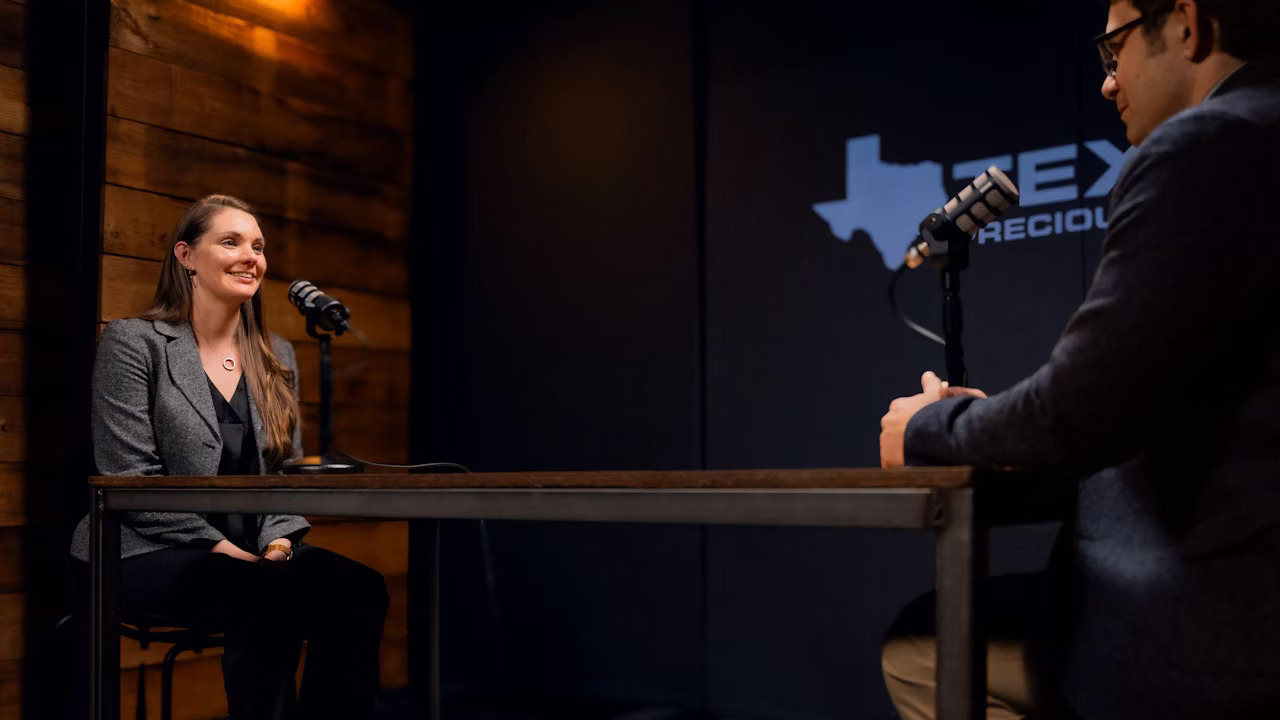
Ep. 31: Robert Gottlieb – Author, Market Analyst & Former Bullion Banker
What are the hidden mechanics of global gold and silver trading? In Episode 31 of the Y'all Street podcast, former bullion banker Robert Gottlieb sits down with Evan to decode the modern precious metals market. This comprehensive episode breakdown highlights key insights from Gottlieb's new book, Mastering Gold and Silver Markets.
In this episode...
- Arbitrage, OTC markets, backwardation, and lease rates.
- The impact of tariffs and the Russia-Ukraine war on currency reserves.
- Getting hired as a trader using a napkin resume.
- he launch of the GLD ETF and overcoming regulatory skepticism.
In this episode of Y’all Street, Evan sits down with Robert Gottlieb, a 30-year veteran of global bullion banking. Bob shares wild stories from his career—including liquidating the Hunt Brothers’ notorious silver position and dodging honey-traps while negotiating gold deals with the Russian Central Bank. Beyond the stories, Bob breaks down the complex mechanics of the gold and silver markets, explaining why central banks are hoarding gold, the truth about bullion bank “short” positions, and how the industrial demand for silver is creating a historic supply squeeze.
Key Takeaways
- The Bullion Bank Myth: Bob debunks the popular theory that bullion banks are massively shorting the precious metals market. He explains how looking only at the Commitment of Traders (COT) report ignores the balancing Over-The-Counter (OTC) positions banks hold to fund mining operations.
- The Hunt Brothers Liquidation: A firsthand account of how Citibank confidentially liquidated the Hunt Brothers’ massive leveraged silver position in 1980 following a devastating margin call.
- De-Dollarization is Real: Why are central banks (like Poland and the ECB) buying gold at record rates? Bob explains that it’s a policy decision to diversify away from the U.S. dollar amid geopolitical and economic uncertainty, regardless of gold’s current spot price.
- The Silver Squeeze: Silver isn’t just a monetary metal; it’s a critical industrial component. Bob outlines the five-year structural supply deficit driven by demand from data centers, EVs, and solar panels.
- Physical vs. Paper: Bob’s practical investment advice: Buy physical gold as a generational “forever” hedge against calamity, but use highly liquid ETFs (like GLD) for shorter-term price speculation.
Notable Quotes
“Central banks do not make a decision based on the price of gold. They make the decision based on their policy… 75% of central banks said they’re gonna continue to buy gold over the next five years.” — Robert Gottlieb
“Gold is not backed by any country. So, therefore, it’s like a pet rock, and it doesn’t have that credit concern.” — Robert Gottlieb
“Corrections are healthy, but blind faith consensus and leverage create violent sell-offs.” — Robert Gottlieb
Mentioned Resources
- Book: Mastering Gold and Silver Markets by Robert Gottlieb
- Product: GLD (SPDR Gold Shares ETF)
- Organization: World Gold Council (WGC)
0:00 - 0:39
Robert: People think that, all right, gold is $5,000, and like you just said, well, I'm a Gen Z, am I gonna buy gold at 5,000? The one thing I can tell you, and I've worked with central banks for over 20, 30 years, is that central banks do not make a decision based on the price of gold. They make the decision based on their policy. So the policy is either the buyer, based on their policy, they're gonna buy or sell. And if you take a look, the World Gold Council, for instance, did a survey of central banks, and 75% of the central banks said they're gonna continue to buy gold over the next five years.
0:39 - 0:53
Intro: Welcome to Y'all Street. He's the machine of the day, the machine that's magic. 100% legit. So Chris, you want a cup of coffee? I just wanna be the best. Thanks, brother. Thank you, sir.
0:58 - 0:59
Evan: Bob, you want a cup of coffee?
0:59 - 1:02
Robert: Definitely, I wanna Texas y'all.
1:02 - 1:14
Evan: I got you this Texas-versus-all-y'all mug since you are on Y'all Street and you just visited our depository down here in Shiner, Texas. What was your initial thoughts?
1:15 - 1:42
Robert: I have to say I was extremely impressed with Texas Pressure Metals. 40 years ago or so, I actually wrote a book and we ran the Citibank's depository, and it was all manual, and to see it robotic, see the facility, it's just amazing what you can do with technology these days, and it would have made our lives a lot easier, especially the guys that physically moved the bars.
1:42 - 3:00
Evan: Yeah, he saw a vacuum that picks up the 70-pound, 1,000-ounce silver bars rather than everybody having to just move them physically. So thanks for coming on, really appreciate it. I just read the book that you have that just came out, Mastering Gold and Silver Markets. I actually got an early copy, which was really nice to be able to read. Me, obviously, I'm somebody who's very interested in this market, but I have a lot of friends who aren't specifically in gold and silver in any way, shape, or form, but people that I think would be super, super interested, as you mentioned, you worked at Citibank, it kind of walks, the book walks you through basically your whole career from a high level, and some of the highlights of it in the first part, and then in the second part, just honestly a masterful ability for education. I think that precious metals markets are important to the world, and so whether you're specifically in them or not, it's good to understand them if you wanna have a macro view, and the book was genuinely, genuinely fantastic. So as a bullion banker, which is what you did for years and years, tell us what a bullion bank is, and just a high level of what you did as a bullion banker.
3:00 - 5:56
Robert: Sure, well, I actually started off like Texas Precious Metals Depository. I started in accounting, and I learned physically from the ground up, and obviously the ground up being the lowest floor of Citibank's wall, and I learned everything I could about the physical side of the business. And before I actually went into trading, I was involved in a couple of transactions that I'm sure we'll discuss later, and I kept on raising my hand to become involved in trading and developing into bullion banking. The idea of bullion banking, a lot of people, there's a lot of misinformation in it, and one of the reasons I actually wrote this book was to explain what bullion banking is all about. And a bullion bank really is in the middle of the, let's say the tire, and it supports all the spokes. For instance, it provides financing and hedging for mining companies. It finances end users, such as jewelry companies or any industrial use that comes into gold and silver. The bank, just like it would in mortgages, it funds these consumers, however, in terms of metal. It also, I've developed relationships with central banks around the world, been involved in transactions from acquisitions to selling to help countries finance their country with still maintaining the positions in the gold and so forth. So there's a lot of factors that bullion banks do. Unfortunately, one of the reasons, actually, I wrote the book was to take out some of the misinformation. One of the most popular misinformation in the industry is that bullion banks are short the world's supply of gold and silver. Why do people think that? It's simply because some people show what's called the commitment of traders report. And a commitment traders report shows the positions of swap dealers, producers, manage money. And manage money in a bullish market would be long. Bullion banks, on the other hand, in a bullish market would be short on the CME futures exchange. However, they're not short outright CME futures. They're long OTC London, OTC forwards, OTC or leasing against it. So they have a match book as far as an outright position. Except for if you just read one single report, which was the commitment of traders, they'll say, oh, the banks are massively short. However, they don't take in account their OTC positions that are not reported anywhere publicly.
5:56 - 6:06
Evan: So OTC meaning the physical supply that they have in silver, they're long there, they're short in New York or the futures, which nets out to zero or roughly zero.
6:06 - 8:10
Robert: Right, OTC technically means over the counter. So it's not really on the, it's not reported in any available information. But you would go to, for instance, to fund a mining company. And let's say a mine, even today where gold is $5,000 and you discover a new mine. And let's say the production of the mine cost is, they say $1,500. Well, that's a great profit, 1,500 to 5,000. But who's not to say that the price of 5,000 won't go back down to a year ago of 2,600. So you would be prudent in a new mine to hedge a certain small percentage so you know you're gonna have the float to keep that mine going forever. What the mine would do is ask a bullion bank either to help fund it from day one because they need the money to actually start the mine or possibly hedge three to five year out production. If you went and hedged three or five year production, you would actually ask the bullion bank to sell gold spot today and then move that forward three to five years for when your initial production comes out. The bullion bank would have to borrow gold to do that. They may go to a central bank or they may use arbitrage between the CME and the OTC, which we'll discuss later. And they'll take that gold, sell it, spot it in the market and then either put that proceeds on deposit for three to five years and therefore that spot price today that's 5,000 may be 5,500 five years from now based on interest rates. So the mining company would be selling gold at 5,500 five years out versus 2,000, 2,500, of course locking a $3,000 profit.
8:10 - 8:27
Evan: So they're saying I would rather take my 5,500 than deal with the risk of it dropping down, me not making as much money. And for that trade off, I'm giving up my upside opportunity if it went up to 6,000 or 7,000 or something like that.
8:27 - 8:30
Robert: Right, but they would only do that for a very small portion.
8:30 - 8:34
Evan: Okay, just to lock in profits for operational costs.
8:34 - 9:23
Robert: If we go way back when gold was $300 and it was $300 for many years, what happened was certain companies over hedged and therefore the stock price no longer became a proxy for the gold price because they were hedged at 300. Got you. So many mining companies back in the 90s stopped hedging altogether because they wanted the stock, their equity of- To go up and down with the price of gold roughly, got you. But today with a price of 5,000 and a cost of 1,500 or 2,000, whatever it is, you're gonna wanna lock in some profit just as a hedge to be able to go back and just in case we did have a sell off.
9:23 - 9:43
Evan: Yeah, yeah, just to make sure. The book is filled with stories from your career. A couple of them, a couple of your biggest ones actually were super, super early on. One happened with Japan's Ministry of Finance, a massive trade that you said you have when you're still kind of a novice. Walk me through that. That's an interesting story.
9:43 - 10:21
Robert: Yeah, first of all, I was still working at the ball and- At Citibank. And there was a group called Citicorp International Trading Corp. And a couple of those traders, they were allowed to trade anything from soybeans to foreign exchange. And we did not have a gold trading desk at the time. It turns out that a contact in Japan brought this transaction in. And the Ministry of Finance was going to produce a coin for the Emperor Hirohito's anniversary. And what they wanted was 223 tons of gold.
10:21 - 10:25
Evan: How much gold is that for people who have no idea of that?
10:26 - 10:28
Robert: At today's price, it's in many billions.
10:29 - 10:29
Evan: Many billions.
10:29 - 10:30
Robert: Many billions.
10:30 - 10:30
Evan: Wow, okay.
10:32 - 11:14
Robert: And what they wanted was all the gold to be four nines, which is the purest form of gold. Meaning 99.99%. And to understand the gold today trading in international standards, 0.995 pure. So to get it to four nines, there's not that much four nines gold around in the world. And us, or the guys at Citicorp Trading, really didn't understand that, unfortunately. And they said, yeah, we could do it. And in the end, we got the deal. Then we had to go out and figure out how to convert 223 tons of gold to four nines and then ship it over to Japan.
11:14 - 11:23
Evan: So you guys said, we can do it. You agreed to it before you even truly understood how you were gonna get that gold into four nines.
11:23 - 11:38
Robert: Exactly. And that's why we won it because- That's why you won it. Every major firm, I mean, from Goldman Sachs to all the major bullion banks that were in trading, obviously said they couldn't do it. And we as novices said we could do it.
11:39 - 11:40
Evan: Ignorance is bliss.
11:40 - 12:39
Robert: Exactly. But in the end, we ended up doing it. There were a lot of interesting stories. For instance, one was that I had a relationship with the Central Bank of Brazil and Casa da Moeda, who was the gold refinery. And in my job in the vault, I was sponsoring the Casa da Moeda onto the CME Exchange as good delivery. I mean, they were just developing their refinery. So I went back to the Central Bank. I said, hey, guys, do you really wanna get your gold known into the international market? We as Citibank will take your full, produce four nines gold for us, and we'll give you two nines five back or we'll pay you for it or whatever. And they became one of the big sources of the four nines gold. We also got involved through the Swiss and negotiated a large-scale deal with the Russians.
12:40 - 12:44
Evan: Okay. Does this mean the Russian government?
12:44 - 15:36
Robert: The Russian Central Bank, yes. Wow, okay. So we took a significant amount of gold from the Russian Central Bank. That also helped us. We also went to different refineries. We did swaps and so forth. The story I think in the book, as you might know, was that we ended up testing some of the four nines gold because we knew, knowing nothing, we didn't trust anything. We had to make sure we delivered what we said we were gonna deliver. And we noticed that we were getting from five different refineries, the Russian gold, to the refineries, the gold was showing up 0.9967, let's say, instead of 0.9999. And we went back to the Swiss and the Swiss went back to the Russians and they said, no, that's not possible, whatever. We said, no, you wanna take a look at our tests? Here are the assay tests. And what happened was there was a meeting in Switzerland with the Russian Central Bank and a senior person from Citibank. And unfortunately, one night he was in his room and he got a knock on the door and it was a lady of, let's say, a little repute wanting to come in. And he said, no, sorry, we're not, you can't come in. He knew what was, something shady happening. The next day they were at a bar, there were different, beautiful Russian women, but in the same exact clothes, dresses. As the lady before. As the lady before. And so it was clearly obvious that they were trying to get the senior executive of Citibank in a compromised position, take a picture, and then it'd be over. In the end, we finalized that there was two refineries that had actual mechanical problems in their process. And the Russians through the Swiss actually physically took that gold back and replaced it with four nines. But it was one of the interesting stories. Also, it was a significant amount of money. And the Japanese MOF asked us to move all the gold to Citibank in the U.S. And then once it was there, we should, one year later, ship it into Japan. So we arranged for that to happen. What we didn't know was that from all the flow of gold from the U.S. to Japan changed the balance of payments and also made the yen stronger. And then- It was that big that it made the yen stronger compared to the dollar? Exactly. And therefore, their ending purchase price was cheaper because they changed the balance of payments.
15:36 - 15:39
Evan: Because of the foreign exchange, that's crazy.
15:39 - 15:55
Robert: At the time also, John Reed was chairman and this transaction was on the balance sheet. And back then, I think it was a couple, maybe it was two, two and a half billion. Today, obviously at $300 versus 5,000, you could imagine how many billions it is today.
15:55 - 15:55
Evan: Yeah, insane.
15:56 - 16:06
Robert: And we kept on getting a call from the CFO, when are you getting that gold off our balance sheet? So it was a quite interesting transaction.
16:07 - 16:32
Evan: You were also involved in the very infamous and notorious liquidation of the Hunt Brothers position. The silver position, yes. That you talk about in the book. That is, I mean, I think obviously one of the most notorious events in gold and silver markets. And I would even say- Especially in Texas. Yeah, especially in Texas. And I would even say in just financial history, it's a major, major event.
16:33 - 17:18
Robert: Right, I actually get questioned about that time, not because I was involved in the transaction, but there's been two major rallies in silver in the world. It was the Hunt Silver position in 1980 and then the 08-11 Reddit financial crisis rally, and why today's rally is different. And we'll get involved in that later. But yeah, the reason we got that transaction was because we owned our depository, the Citibank vault. And we basically said that we'll be able to get and make the movements within the vault without, on a confidential basis, because we own the vault and we were taking the metal in our name.
17:19 - 17:30
Evan: So they wanted it confidentially, and if they worked with a different bullion bank, they'd have to work with a different depository and there was possible that it wouldn't be confidential between those two parties or?
17:30 - 17:34
Robert: Or if they worked with a bank that didn't own the depository.
17:34 - 17:34
Evan: Oh, okay, yeah.
17:35 - 19:34
Robert: Yeah, yeah. So we were buying the metal and then obviously selling it, we weren't keeping it. But it became, we were able to keep it confidential because, for instance, we took, the Hunts bought all the physical silver they could. That being, they took delivery of all the futures on the exchange, took physical delivery. They also took all the delivery of physical around the world that they could, including coin bags. They had, you know, dimes and quarters and dollars that were silver. And matter of fact, I had a person at Bank of Delaware that stored it all and he basically, I wasn't allowed in the state of Delaware because I became an arch enemy because we were physically moved out the entire holdings of the Hunt brothers out of the Bank of Delaware into Citibank. So we basically moved everything there was. We had to liquidate their futures positions. We had to liquidate everything. So it took us about a year to do. And by the time I was done, I went over to Dallas. They were, the Hunt brothers were trading in a company called Placid Oil, which they owned. And all their trading vehicles would go within Placid Oil. And I brought a 10 ounce silver ingot as a thank you to the CFO of Placid Oil. And we're at lunch at, I think, the Petroleum Club in Dallas. I'm sure it still must exist today. And I give him the 10 ounce ingot and he looks at me, he starts laughing. I said, why are you laughing? He goes, well, you know, Bob, I got more silver than Nelson. And I sat back, he goes, yeah, you're right. They were forced, unfortunately, to liquidate everything. Was it margin calls?
19:34 - 19:36
Evan: Were they levered? I mean, what happened?
19:36 - 19:44
Robert: The problem was they cornered the market, but they also, instead of just paying for everything, they were significantly levered.
19:44 - 19:45
Evan: Significantly levered.
19:45 - 20:17
Robert: And the fact is, the banks and dealers that are on the other side of it was also constantly putting up margin because they were short and the hunts were long and interest rates were sky high at the time in 1980. It was probably like 9% or higher. And therefore, the cost of margin was killing some of the people. However, the CME came in and basically increased margin significantly.
20:18 - 20:29
Evan: Meaning that if you have $100,000 worth of silver, you had to have $10,000 of cash behind it. Now you have to have 20 or 30. They increased the amount behind it.
20:29 - 20:40
Robert: And overnight, this happened. And there was no way that the hunts were gonna be able to make that margin call. And then I think later on, the government came in and made a forced liquidation of the entire position.
20:41 - 20:46
Evan: So these were two of your first deals when you were in your early 30s?
20:46 - 21:55
Robert: Yeah, these were probably the best deals I ever were involved in. I was not a trader at the time. I was in the depository. I started off in the accounting, the financial control, and then I was running the business unit. But this really were the best transactions I ever involved in my life. And I got hooked. And I kept on raising my hand and said, hey, I wanna be a trader. And actually, that's how I became a trader was the person that ran this unit. He kept on saying he would hire me. And every week I'd go to him and he said, yeah, I'm gonna hire you. Finally, I got an offer from his competing unit. And I went up to him and I said, hey, this is it. I have another offer to become a trader, but I wanna work with you guys. It's been amazing. And he goes, okay, you have a resume. I said, do I have a resume on me now? And he had a napkin. And he goes, write a resume. And I wrote it on a napkin. And he took it to the head of the investment bank with the napkin. He comes back and goes, okay, you're hired. And that's how I became a trader.
21:55 - 21:59
Evan: So you went from Citibank's depository to their trading desk.
21:59 - 22:22
Robert: Yeah, which was another eye opening because one thing is being involved with a transaction. The other is becoming a trader and starting a bullion banking business. And I was like basically thrown to the wolves. I mean, it was impossible to know how to trade when you don't know how to trade. So you either sunk or swam, you know, swim.
22:22 - 22:33
Evan: So on the Japan Ministry of Finance deal, did that deal end up becoming profitable even after all y'all's noviceness?
22:33 - 22:36
Robert: Well, let's put it this way. In 86, it made $100 million.
22:37 - 22:40
Evan: Okay, so that's a lot of money, especially today.
22:40 - 22:44
Robert: And we didn't get paid for it. Most of it got paid by the contact that was in Japan.
22:44 - 23:11
Evan: Wow. So you become a trader at Citibank. The book walks through. You become, you go to Republic National Bank. They get bought out by HSBC. And your career just starts to go. You had to kind of rebuild multiple times from, you know, you built up Citibank's bullion desk. And then you kind of rebuilt bullion desks a couple of times, specifically at Bear Stearns, correct?
23:12 - 23:20
Robert: Yeah, in 08, I left HSBC to be hired to run a global business. I was myself.
23:20 - 23:21
Evan: Okay.
23:21 - 23:46
Robert: And I hired up Singapore. No, sorry, Hong Kong, London, and New York. And within a year and a half, we were in the top five bullion market makers in the world. Unfortunately, the financial crisis came. And I'm sitting at dinner with my family. And my Bloomberg says JP buys Bear Stearns for a dollar.
23:46 - 23:49
Evan: Yeah, yeah, and then you went over to JP.
23:49 - 23:49
Robert: Right.
23:50 - 24:23
Evan: But you had, you know, throughout this career, you know, I don't wanna give too much away from the book because I really, I think people should get it. But throughout this career, you kind of become notorious yourself to a certain degree. And you even get pursued to help with the launching of new products like the ever present and popular GLD, the first gold ETF. Right. What was that like? And then what is a gold ETF? Why do people buy a gold ETF? What's the proposition of that?
24:23 - 26:20
Robert: Sure, I was at HSBC at the time. And basically a gold ETF is it basically gives individuals much easier access to gold because you're buying a stock. But the stock is backed by actual physical gold. So when it was launched, it was I think a 10th an ounce versus one 10th of an ounce back each share of stock. The people at HSBC and the bullion and treasury didn't believe in it. And I thought, you know, oh, this is gonna be great. And we're gonna be the custodian. We're gonna make money as the custodian in the vault. And actually HSBC's vault, by the way, was Citibank went out of business, out of the precious metals business. And I negotiated at the time was Republic National Bank buying Citibank's vault and physically moving it. Republic, which became HSBC. But yeah, 20 plus years ago, I got involved with, I was the gold experts per se to get it listed. In fact, I hosted at HSBC's boardroom, a meeting with the CFTC, the SEC and- Regulatory bodies. Regulatory agencies. And they didn't believe in the idea of the ETF. And the craziest part, they said, well, it's not transparent. How are you gonna price it? And I explained to them, it was really simple. You just take, at the time it was a gold fixing. Now it's the ice auction. And twice a day, you would have a gold fixing, an AM and a PM. And we said, it's really simple. You just take the price that it fixes at and then you divide that by 10 and that's your price. It couldn't be more transparent.
26:20 - 26:21
Evan: Because of one 10th an ounce per share.
26:23 - 28:17
Robert: And they kept on pushing back. So I actually remember going to one of the regulators. I said, okay, if you don't think this is transparent, and Enron was happening at that time, I said, take a look at the balance sheet of Enron and then you tell me what the price of that stock should be. So all of a sudden the conversation stopped and they got it. That there couldn't have been anything more transparent in terms of pricing than the ETF. And basically, to this day, I strongly suggest people that want to invest in gold, especially as a trade, the best way to do it is via ETFs. Because ETFs, like GLD, is highly traded, deep, and the pricing, you couldn't get a thinner price as far as a bid-offer spread. And you know that it's backed by physical gold. Versus, I do advocate holding physical gold, which is important too. It depends what your goal is. Why, yeah. If, for instance, I believe, and you'll see it in my book, there's parts of why from individuals to central banks buy gold. And it's a portfolio hard asset diversifier. Gold, to me, is the ultimate currency safe haven asset. And if you want to just have something to be a hedge against your entire portfolio, you buy physical gold and you put it in your vault and you forget about it. And it becomes generational, where you just will it over to the next generation, but you have it in a case of calamity. So that's why you would hold physical gold. Versus if you think, hey, you know, gold's gonna go up today and it's gonna unbullish for the next two or three years.
28:17 - 28:19
Evan: More speculating a little bit in shorter term.
28:19 - 28:29
Robert: So you would buy an ETF because you know there's physical gold behind it, but there's no premium to get in and certainly no premium to get out.
28:29 - 29:20
Evan: You know, there's a lot of talk about Gen Z is now really getting their minds opened up to gold and silver, which, you know, people think is an old man's game. And you know, I'm here to say that it's not. Gold is $5,000 for, you know, a one ounce coin. And as you go smaller, you pay higher premiums, you know, per ounce kind of thing as they get down to one 10th ounce or half ounce. For physical. For physical. And so, but you say like $5,000 is a lot of money, you know, with the price being what it is, ETFs are a good option for people who, you know, can't go buy 5,000 or 10,000 or 15,000 worth of physical gold. GLD, I think last I checked, had $170 billion in assets under management. So. Right. Fairly successful, I think you can say.
29:20 - 29:31
Robert: Yeah, no, no. A lot of people at that time didn't believe in it, but it, you know, at times trades more than major indexes.
29:31 - 30:01
Evan: Yeah. So you talk in your book and you've told me personally that you want to be an advocate for gold and silver. You think that it is good and it is beneficial. Talk about, you know, gold and silver in a financial portfolio. What should people be thinking about? How is gold similar to silver? How is it different than silver? Kind of walk through how you think about those questions and what people should be asking themselves.
30:01 - 31:00
Robert: Sure. So let's take a look at the last run-up, which was in 2025. And why, first of all, it was a gold-led rally. Meaning what? That the first six months, really gold led the way as far as price action. And why did it? I believe that gold is the ultimate currency. And when I am saying the ultimate currency, if you have a currency of any specific country, it's only as good as the credit of that country. Okay. Gold is not backed by any country. So therefore, it's like a pet rock and it doesn't have that credit concern. It's also a hard asset. But why has it done so well lately is because it started, probably it started back in the Ukraine-Russia war, where I like to go back to say that's where the de-dollarization of the world started.
31:00 - 31:01
Evan: Okay.
31:01 - 33:08
Robert: And what I mean by that is that many countries started to go away from the dollar and many, many countries started buying gold to diversify. And why did that happen? Well, especially if we take a look at the last administration, when they came in and they were voted in November 24 and January 25 took place, there has been a lot of flip-flopping first of policies. For instance, tariffs started that and tariffs were put on Mexico and Canada and taken off, put on, taken off. There's been a lot of threats of tariffs on NATO countries, taken on, taken off. In addition to that, you have the geopolitical issues of Venezuela, Iran, the Middle East and Russia and so forth. I believe that if you take a look at specifically the European central banks, they got very nervous about the dollar and also the U.S. policies. And if you look at the last, maybe three months ago, the European central bank made an announcement that the holdings of European central bank reserves, the number one is the dollar, the number two used to be the euro is now gold. Even in the European central banks? The European central bank's number two holding, gold surpasses the euro. Euro is now the number three holding. Why is this? Because countries are diversifying away from the dollar. What's the best way to diversify away from the dollar? But gold, gold is dated in dollar terms, but it's gold. So we have seen significant amount of buying. I would say five years ago, the average buying of central banks maybe were 500 tons or less per year. And most recently we're seeing a thousand tons per year. So central banks are stepping up their purchase and accumulation and it's become much more critical part of their own reserve.
33:08 - 33:34
Evan: So do you think that that's happening though with their buying gold instead of dollars or are they buying gold instead of fiat currencies overall? Like for example, the European central bank, are they buying gold in the place of money that they used to buy dollars with or are they buying gold in the place what they used to buy the euro with or is it just kind of they're increasing their gold and they're dropping all the other fiat currencies or treasuries, I guess, that they used to use?
33:35 - 34:44
Robert: Yeah, exactly. They're buying gold to replace fiat currencies. And if you take a look, who was one of the biggest buyers of gold in the European central bank? Poland. Poland. And take a look where Poland is geographically. It's right next to Ukraine and Russia. And just recently, despite how much they bought, the governor of the central bank of Poland just increased the allocation for another 150 tons to buy. And this is very important because people think that, all right, gold's $5,000. And like you just said, well, at Gen Z, am I gonna buy gold at 5,000? The one thing I can tell you, and I've worked with central banks for over 20, 30 years, is that central banks do not make a decision based on the price of gold. They make the decision based on their policy. So the policy is either the buyer, based on their policy, they're gonna buy or sell. And if you take a look, the World Gold Council, for instance, did a survey of central banks. And 75% of the central banks said they're gonna continue to buy gold over the next five years.
34:44 - 34:46
Evan: So you see this trend continuing?
34:46 - 34:57
Robert: Yeah, first of all, we have another three years of this administration. I don't see that the policies of this administration is gonna change. They're constantly flip-flopping. NATO's on, NATO's off.
34:58 - 35:29
Evan: And you're saying the uncertainty of what are they going to do plays a role on this. I would assume also you would say probably the deglobalization narrative of we wanna make sure our manufacturing is done here. We wanna make sure we can make our medicine here. Some of the stuff that COVID kind of showed, would you say that that's another piece of it of countries are becoming, not independent, but more independent compared to how they were in, say, 2015 or something like that?
35:29 - 36:07
Robert: Oh, definitely. But I think what the critical part is that as long as we're gonna have geopolitical uncertainty and economic uncertainty, this will continue. One thing I didn't get to answer, actually, is we were talking about gold and silver and we're only talking gold so far. So, yeah, so gold to me is the ultimate currency and it's held. Another, actually, one more interesting fact on gold is the World Gold Council came up with whatever gold has been produced in this world from day one to today, 20% of that gold is held in central bank reserves.
36:07 - 36:09
Evan: Just physically held?
36:09 - 36:40
Robert: Yes. So when you talk about a deep pocket holder, you're talking about central banks holding 20% of whatever produced. And then there's a scarcity to it. If you take the mine production that comes in every year, only 2% increase per year to the entire supply. So to advocate for gold is really simple. One, you have deep pocket holders. They're gonna continue to buy for the next five years and then you have this scarcity.
36:41 - 36:41
Evan: Yeah.
36:41 - 37:01
Robert: And now, why silver? Well, silver also is a safe haven asset, just a safe haven hard asset like gold. However, silver has an industrial demand supply to it. Yeah. And in the last five years, the silver demand supply has been in a five-year structural deficit.
37:02 - 37:05
Evan: Because, in large part, because of the industrial uses of it?
37:05 - 37:28
Robert: Yeah, you have data center, solar, EVs, you know, there's microchips based on the industrial demand. And I understand that there's been a most recent study saying that this industrial demand may decrease by 1%.
37:28 - 37:28
Evan: Okay.
37:29 - 38:09
Robert: That's one study. Another study I saw by Oxford Economics says that the industrial demand is gonna increase over the next four years. So depending on which study you wanna believe, but the bottom line is Metals Focus, who I think mentioned that there's gonna be a 1% possible decrease, there'll still be a 60 to 70 million ounce deficit forecasted for 26. Wow. So the fact is you have a structural demand supply deficit for silver. So on top of it being a hard safe haven asset, you have that. And then to add to that, silver became a critical mineral.
38:10 - 38:10
Evan: Yeah, it did.
38:11 - 38:31
Robert: So you have industrial demand, you have safe haven asset, and the critical mineral status still to be determined. There's some congressmen that put $12.5 billion possible stockpile on critical minerals. I haven't yet to seen how much of that is silver.
38:32 - 38:33
Evan: I haven't either, I looked.
38:33 - 38:59
Robert: Right. But you gotta think that's gonna take, you're gonna have physical offtake from that. And then if you take a look, we took it, we spent time on the 25 rally, the first half of the year was gold, and then the second half of the year was silver. That's because we had a structural, not just a structural deficit, but physical deficit of being able to get the hands on the silver.
39:00 - 39:00
Evan: Yeah.
39:01 - 39:20
Robert: And the reason started because of tariffs. If the US threatened tariffs, let's say 10% broad based brush tariffs on NATO and Canada and so forth, that meant that what happened was that the price of the US would be 10% higher than the rest of the world.
39:20 - 39:22
Evan: Because of the tariff coming in.
39:22 - 39:45
Robert: Because of the tariffs. So what happened, bullion banks went in and did the arbitrage. And basically said, well, I'm gonna buy metal in London and I'm gonna sell it on the CME Futures, which is in the US. And that was not a 10% discount yet, but a lot of that was priced in.
39:46 - 39:57
Evan: So people had priced it in on, not even on the fact that they knew that tariffs were going to be put on gold and silver, but just on the expectation that they might be a certain percentage that got priced in.
39:57 - 40:18
Robert: Exactly, because at $50 silver, that would be $5 and it didn't go to $5. However, but the chance of it was going. So like for instance, one day I remember it was $1.50. So what happened was the banks bought London metal and they then physically shipped it into the CME.
40:18 - 40:19
Evan: In New York.
40:19 - 40:40
Robert: Yeah, so you're gonna buy $1.50 under, ship it in so you have whatever costs 15 cents to ship it, plus whatever costs to fund it, but you would lock in a huge profit. What happened, and the best way to see this was pre-tariffs, there was 250 million ounces of silver in the warehouse.
40:40 - 40:41
Evan: In which warehouse?
40:41 - 40:42
Robert: Sorry, in the CME warehouses.
40:43 - 40:43
Evan: In New York, okay.
40:43 - 40:51
Robert: In the US. Subsequent to that, it rose to as high as 533 million.
40:51 - 40:52
Evan: So it over doubled.
40:53 - 41:04
Robert: 283 million ounces of silver, yes. Just because. It over doubled, physically shipped from London and overseas into the US because of this tariff distortion.
41:04 - 41:07
Evan: All because of arbitrage, because of the tariff distortion.
41:07 - 41:43
Robert: So now what happens to London? Well, a lot of the London silver disappeared. At the same time this was happening, there was an insatiable demand for silver in India. So a lot of physical silver at the same time was moving from London into India. So now if you take a look at London, well, they initially had maybe 750 million ounces in their warehouses. And a lot of that was against ETFs. So that metal that was against the ETFs can't be used for trading purposes.
41:43 - 41:45
Evan: So when it's against ETFs, meaning it's allocated.
41:45 - 41:48
Robert: It's physically allocated. Physically, and they can't touch it.
41:49 - 41:51
Evan: Sell it, they can't lease it, anything like that.
41:51 - 43:23
Robert: Exactly. So a colleague of mine in the industry, Dan Ghali from TD, did a study on what's called free-floating stock. And that was, okay, how much of that available stock could actually be traded versus how much is in there? And in the beginning of 25, I think it was 305 million was free-floating stock. Added to 750 because the rest was allocated to- Healthy liquidity, you would say, okay. Then with all the metal that went to the US and all the metal went to India, that free-floating stock went from 350 million to about 100, 120 million. I don't know the exact number. So all of a sudden, there's not much silver around. And the daily trading volume in silver in London was let's say 250 to 300 million. Well, now you got 100 million floating, but you had 250. What's going to happen? The market's gonna get squeezed. And as squeezed it did, and everybody now knows, September, October of last year was the big silver squeeze. And what do I mean in silver squeeze? Lease rates went to 30%. Silver forwards went to minus 25% backwardation for like three months. And backwardation means that your spot price is 25% higher than your forward price.
43:24 - 43:58
Evan: Which goes against normal market structure, right? Because you would say something, I should get an interest rate just kind of like a bond yield or something like that, right? I would get a little bit more in the future, but backwardation kind of simply is saying, people are saying, I want my metal now, and I value getting it today more than I value getting- So I'm paying a 25% premium to today versus- Which would show a liquidity issue, a worry that I'm not gonna get my metal, all of those kinds of things is kind of what the evidence of that shows, correct?
43:58 - 44:48
Robert: Exactly. So what happened was from a fundamental basis, and this is when I was building my LinkedIn note, I was saying, please, watch the forward rates, watch the movement because that's gonna matter. And, okay, so you have consumers that the banks used to lend to, I mentioned on a lease basis. Well, they're not lending at 30%. You're not gonna pay 30% because you could go out and buy the metal and pay 6% for money. So what happened was the physical started getting bid up and the price started getting bid up because of the physical tightness. It was a fundamental structurally tightness that helped create the- So the demand is saying, if you really want it, you're gonna have to pay for it. You're gonna have to pay for it.
44:48 - 44:54
Evan: So let's see how many people will pay for it as it goes up and up and up and people just, I mean, simple economics.
44:54 - 45:05
Robert: Yeah, so in September and October, we had this major squeeze and coincidentally, the price from the summer to December or even January, it just kept on going up.
45:06 - 45:12
Evan: Yeah, and that's specifically, but gold was as well, just not quite as exponential.
45:13 - 45:20
Robert: Yeah, well, basically, I think in 25, silver was up 150% and gold was up 67%.
45:20 - 45:23
Evan: Yeah, so pretty good for your pet rock.
45:23 - 45:23
Robert: Yeah.
45:24 - 46:02
Evan: So then starting 2026, it is still kind of going up. It's going astronomical. I remember reading your LinkedIn that you do a lot of commentary on and you were preaching caution. You were saying, we've had this exponential rise, just act with caution that crazy price ups mean crazy prices down. And on January 30th, we got it and we got it pretty well. What happened leading up to that? Obviously, there was a massive price increase. Did something specifically trigger that day? How did that day happen?
46:02 - 47:02
Robert: Yeah, so basically, the first thing is, the higher price you go, the bigger the corrections are gonna be, only because if you're starting at a $30, $29 silver in January 25, and now you're at $70 January 1 of 25, and then going to $100, you're gonna have a bigger correction at $100 than you would when it was 29, just on percentage terms. But a few things led to why we had to have the correction. And then certain things exasperated the sell-off itself. So first of all, specifically silver, because that was the greatest sell-off, you had a tremendous amount of implied volatility. The option volatility got to over 100%. So if you think about it, silver's up 150% last year, and in January, already up another 50%.
47:02 - 47:03
Evan: Yeah, it was crazy.
47:03 - 47:43
Robert: And the implied volatility, 100%, it's gonna tell you it's moving. Well, do you think it's gonna move up, or do you think it's gonna move down? So that in itself told you, we're gonna have a correction, and we're gonna have a big correction. Then a bunch of things happened. For instance, China. China was a major buyer of gold and silver as well, but then I read stories about people on, sellers of gold and silver to online individuals, all of a sudden when the prices started to tick down a little they came in, they went to the, oh, they were guaranteeing profits, sorry.
47:43 - 47:44
Evan: Yeah, I saw that.
47:44 - 48:43
Robert: Sorry, yeah, so they were saying, buy gold and silver, and we guarantee it. Now, as soon as the price started coming down a little, they started to visit those shops, and- Try to get their guaranteed profit, right? Right, now those shops weren't anything, impressive, they were kind of what I call bucket shops, and they couldn't get their money out, and therefore riots, police were called in in riots, and people, they just couldn't get their money. So panics, in one of the biggest markets in the world for buying and helping that demand go up, now you're in a panic-driven market. So that's a big issue. In addition to that, in addition to the plight volatility, it became a very crowded trade. You couldn't look anywhere in the news and not hear silver, you know. Matter of fact, I think right before the sell-off, I heard CNBC say, hey, this silver, it's a meme stock.
48:43 - 48:55
Evan: Yeah, well, SLV's option, just quantity of options that were being traded was insane. It was like number two. I think at one point I saw that it maybe had even surpassed SPY.
48:55 - 50:54
Robert: Yeah, okay, so on the day of the sell-off, $40 billion of SLV traded just as much as SPY. Now, you're talking about SPY, which is a major liquid financial product versus silver. Something's wrong there. Options, the number of SLV options traded as much as QQQ, again. So something's telling you, you know, this is an overcrowded trade. And the bottom line with that part is that, you know, corrections are healthy, but blind faith consensus and leverage create violent sell-offs. They're just not healthy, and that's what happened. And then things exaggerated the sell-off itself. This is why we had the sell-off. What happened during the sell-off? One president, Trump, appointed Walsh as the FOMC. And so everybody said, well, his reputation is a hawk. So, well, a hawk, I mean, that's high interest rates, not good for the metals, sell. Then you had, for instance, FOMO, fear of missing out. So many people that missed the gold and silver. Maybe your Gen Z friends said, hey, I gotta have some of it. So if you buy silver, it's down $5. Okay, now it's down 10, I'll buy a little more. And now it's down to $15, I'd buy a little more. When it gets down to 20, $30, those buyers are weak hands, and they were forced to sell out. So you have FOMO, you had people that were looking to lever into it because, hey, I love this trade, I gotta make some more. And then you had what I call the leverage trades. You had, I think it was ASQ or something, the double leverage.
50:54 - 50:55
Evan: The 2X silver.
50:55 - 52:03
Robert: Yeah, the 2X silver. Now that was, people just get so excited and blind faith, oh, it's so easy to make money. So if silver went up $10 today, I'm 820. So you had so many people in these double leverage, and I even heard stories of some investment banks that recreated USLV, which was a triple lever. So if silver was up 30 bucks, they're up 90. The problem is when silver's down 30, it's down 90, and their entire investment was wiped out. It's gone, yeah. And then you even have, talk about some of these Gen Z traders that were trading Bitcoin, and Bitcoin was flat level. There were some that was trading the Bitcoin levered against buying silver futures. But they cross-margined the silver futures against the Bitcoin. Well, when we had the down day, they had to massively get out of both. So again, you just have way too much leverage. And when you have way too much leverage and blind consensus, it creates, it really creates these violent corrections.
52:03 - 52:11
Evan: And I would assume pretty much all of this matters to gold, just not quite as extreme. Correct, would you say that, Day?
52:11 - 53:42
Robert: Yeah, it wasn't as levered. And I mean, the bottom line is, throughout this whole thing, I basically said that corrections are healthy because markets don't go linear straight up. But you can't have that blind faith consensus. But the bottom line is that the fundamental reason why we rallied hasn't changed. Do we have geopolitical and economic uncertainty? The answer is yes. Is silver still in shortage physical supply? Yes. Is it a critical mineral? Is it have structural industrial? Yes. So the thing is now we just need to do the work to get support. If you look technically, it looks like 70 and 85 are different levels. So maybe we need to do a lot of work at 70 and then maybe 85. But I don't believe this rally is over. I don't think it's far from over. But I don't believe in price forecasts because you never know what's gonna make it. For instance, COVID, we had a massive rally, but who was gonna forecast COVID? Who was gonna forecast tariffs? Before Trump came in, nobody knew it worked. So I don't believe in price forecasts per se, but I do believe that having precious metals in your portfolio as a hard asset is critical.
53:43 - 53:46
Evan: Both gold and silver. You would say silver as well.
53:46 - 54:34
Robert: Yeah, I think gold more than silver, but I think both. I mean, obviously from an investor standpoint, from a retail investor, it's cheaper to buy silver than it is to gold. But the bottom line, I think it's important. There was a study by the World Gold Council that said that if you took all the trillions that were in financial assets and then you took what was invested in gold, it was like one to 2% that was invested in gold. With the price increase, I don't know what that percent is, but it's still a low percent. And the prudent investment houses that have come out, not the 20, 40, say five to 10% should be in these hard assets. And so I think there's still a tremendous amount of room.
54:34 - 54:35
Evan: You think people are under allocated.
54:36 - 54:36
Robert: Yeah.
54:36 - 55:06
Evan: And so you think, just so I make sure that I heard you correctly, you think that the drawdown was healthy in silver and gold, but you're still fundamentally bullish because of all those reasons. We still have a lot of geopolitical uncertainty. We still have just a lot of doubts. We still have a lot of debt, all that kind of stuff that shows, and we see central banks buying gold. All those are still fundamental bullish things, you think, more in the long run, even though we just had the correction.
55:06 - 55:47
Robert: Exactly. And again, if we go back to the, we mentioned the first run up in silver was in eighties and then 2008, 11 was the financial crisis, but it was really, I call it a social media rally. It was, I call it the Reddit rally. Everybody was saying, buy an ounce of silver, dah, dah, dah. And then CME raised margins and there was no fundamental reason why you were buying silver other than there was a social media craze and we crashed. This rally is totally different. It's a fundamental rally for all the reasons that I give you. And that's why I believe on a long-term basis that I'm friendly to both gold and silver.
55:48 - 56:08
Evan: And I think you say this in the book as well, but it sounds like your position also for at least most investors is hold it as long-term, not as a speculative trade, unless if people want to speculate, speculate but don't speculate with money that you're not willing to lose kind of thing. Is that correct?
56:09 - 57:16
Robert: Yeah, a hundred percent. You keep, that's why I advocate physical gold for some people for that's the forever investment. You throw it into your vault and forget about it. And that's your hardcore diversifier. But then if you think that, like you hear that gold is gonna go, you think gold is, you buy into the economic and geopolitical uncertainties of the world. And you say, I think this gold is still has legs. I would much more go into ETFs. And we didn't even discuss equities, mining equities obviously as a mining equities, obviously gyrate more mining equities. The downside of mining equities is that you have geographic and management exposure, the management hedge, not hedge or whatever, but they also tend to have more, they'll appreciate more as well, especially the juniors, but you have to do your due diligence in that.
57:17 - 58:20
Evan: And looking at each one individually. Well, I seriously appreciated you sending me your book early. It actually was a blast. I think, we were talking over lunch and I was making this point. I think that it really is a market for people who care about macro investing. It's like, I'm not in bonds, but I would still read a book about fixed income because it is just important to the world, it's important to portfolios. And I think bullion is important in that way. And I think that it's just, its importance is growing as we see with central bank reserves. So I really do think that it's a great book. Thank you. The title is fitting of mastering it. The second half, I was fascinated by of, I think that you have a really good perspective and it's not a fear mongering perspective by any means. It is simply, hey, here's the facts and here's objective. Where can people buy the book? Where can people listen or hear your commentary? Where can people find you?
58:21 - 58:35
Robert: Sure, right now I'm just on LinkedIn. It's basically an easy way, a professional way to put your information out. The book, you can get at Barnes and Nobles, you can get on amazon.com. Just look my name up in the book.
58:35 - 58:38
Evan: Awesome. Well, thanks for coming on, Bob. I appreciate it.
58:38 - 58:39
Robert: I know, it was great. I enjoyed it.
58:39 - 58:39
Evan: Thanks.
58:40 - 58:40
Robert: Okay.
58:43 - 58:47
Outro: How do y'all drink this? That's the y'all street right there. You gotta stop and bite it a bit.