Ep. 18: Jeremy Cordon – President, Goldback
In this episode, Tarek Saab sits down with Jeremy Cordon, the founder of Goldback, to discuss how a . .
In this episode...
- Vacuum Deposition: The space-age technology
- Go-To-Market Strategy: Selling out inventory during the 2020 panic.
- Failed Experiments—and a Critical Lesson
- Alternative Currencies: Goldbacks, Bitcoin, and the Liberty Dollar.
- Inflation Hedges: Using fractional gold for daily transactions
- Business Resilience: Cordon’s history of "colossal failures".
In this episode, Tarek Saab sits down with Jeremy Cordon, the founder of Goldback, to discuss how a failed cryptocurrency venture led to the creation of the most successful private currency in modern American history. They tour the high-tech manufacturing facility in Portland to understand how gold atoms are “sputtered” into bills, debate the premiums on fractional metals, and explore why 2,500 small businesses are now accepting gold for payment.
Key Takeaways
- The Pivot from Digital to Physical: Cordon explains why his gold-backed crypto projects failed. The market feedback was undeniable: in the precious metals space, trust evaporates once the asset is digitized. “If you don’t hold it, you don’t own it” isn’t just a slogan; it’s consumer behavior.
- The “Toothpick” Analogy: A masterclass in explaining manufacturing costs. Cordon justifies the premium on Goldbacks (vs. spot price) by comparing it to lumber: you cannot buy a toothpick for the “spot price” of wood because the manufacturing cost is higher than the raw material cost.
- Legal Tender Strategy: How Goldback utilized the Uniform Commercial Code (UCC) and state specific laws (like Utah’s Specie Legal Tender Act) to create a product that functions like a “Walmart Gift Card”—legal, transferable, but not a counterfeit federal dollar.
- The COVID Catalyst: While the business started slow, the fear and uncertainty of 2020 served as the ultimate go-to-market accelerator, stripping inventory and proving the concept of “just in case” money.
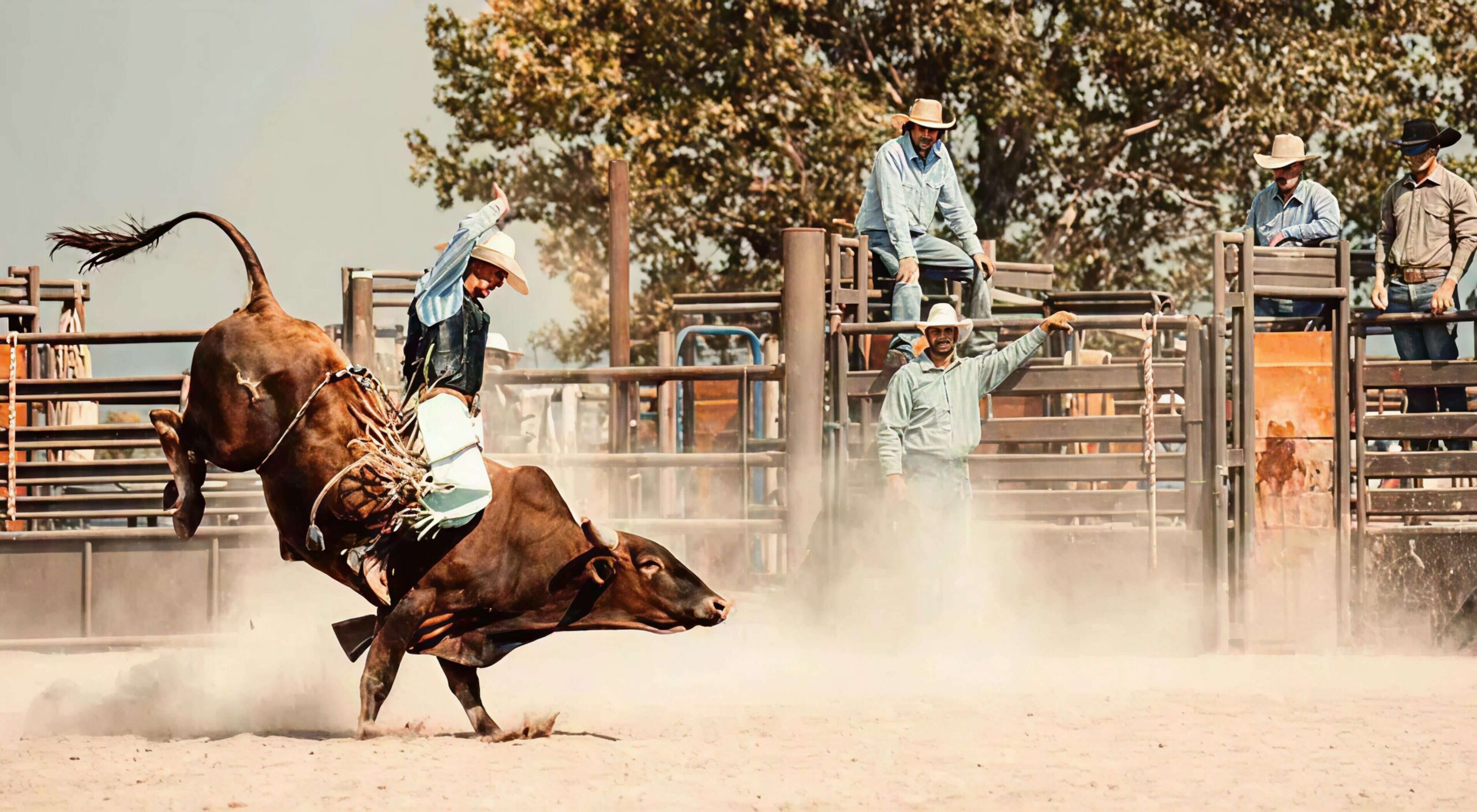
- Grassroots Sales: Cordon’s early strategy wasn’t institutional; it was setting up a folding table at a rodeo next to an MLM dog food booth. A lesson in humble beginnings and finding your “true believers.”
Notable Quotes
“People ask, ‘What’s the absolute worst case with Goldback?’ Well, the absolute worst case is… you have your gold in there, and it’s a floor value. What’s the floor value of the U.S. dollar? What’s the floor value of Bitcoin?”
— Jeremy Cordon
“You’re not going to get a toothpick at spot wood… That doesn’t mean big toothpick is ripping you off. It just costs money to make a toothpick different than a 2×4.”
— Jeremy Cordon
“I didn’t want to make a Liberty Dollar. I didn’t want to get in trouble. I didn’t want to break any rules… doing alternative currency is kind of boundary pushing that way in its nature.”
— Jeremy Cordon
Mentioned Resources
Concept: Gresham’s Law (Implied discussion on bad money vs. good money)
0:00 - 0:19
Tarek: I think just one of the biggest selling points is that it's a currency-like product, but it is an asset that's no one else's liability, unlike the U.S. dollar, which is just a promise. This actually has the metal inside, and as we all know, gold's been money for 5,000 years.
0:19 - 0:46
Jeremy: Right, yeah, people ask, like, well, what's the absolute worst case with gold back? It's like, well, the absolute worst case with gold back is that all of a sudden, you know, the winds change, and, you know, I mean, we've been doubling every year, but you have your gold in there, and it's a floor value, it's 50%, but you've got a floor value there. What's the floor value of the U.S. dollar? What's the floor value of Bitcoin? How low can Bitcoin go?
0:47 - 0:58
Tarek: Welcome to Yallstreet. Today, I speak with Jeremy Corden, the founder and CEO of Goldback. Jeremy, you want a cup of coffee?
0:59 - 1:01
Jeremy: Yeah, man, looks like my company made this mug.
1:02 - 1:05
Tarek: I thought it was appropriate, given that we're talking about Goldback. Coffee, cheers.
1:05 - 1:07
Jeremy: Yeah, man, let's do it.
1:09 - 1:18
Tarek: So we're in Portland today, pretty neat tour of Valorum, the company that manufactures your Goldbacks. How long have you been working with them?
1:18 - 1:25
Jeremy: We've been working with them the whole time. We couldn't have made Goldbacks without them. We started in 2019 for Goldback.
1:26 - 1:27
Tarek: And you're from this area?
1:27 - 1:36
Jeremy: I'm from Oregon, yeah. It was kind of a weird coincidence, but yeah, my whole life up until graduating high school was Oregon.
1:37 - 1:38
Tarek: And your parents, what did they do?
1:39 - 1:58
Jeremy: My dad- Were they in the business? No. My dad's a roofer. I'd say he's retired, but he still does that. He's a lot stronger than I am. The guy's 63 years old, and he can go up and do like 30 pull-ups. Like, it's gross.
1:58 - 2:00
Tarek: Yeah, it gives you something to aspire to.
2:00 - 2:22
Jeremy: Well, I don't know. I did wrestling. I lettered in wrestling in high school, and just my dad was always, you know, he could do an Ironman. So I just never felt like I could, you know? It's like, kids would say, well, my dad could beat up your dad. It's like, no, no, no. Like, my dad would put all of your dads in the hospital at the same time, like- Especially if he has a nail gun.
2:23 - 2:24
Tarek: What about your mom? What'd she do?
2:24 - 2:25
Jeremy: She worked for the airlines.
2:26 - 2:26
Tarek: Oh, which one?
2:26 - 2:27
Jeremy: So Delta.
2:28 - 2:30
Tarek: Nice. And so was she gone a lot?
2:30 - 2:34
Jeremy: No, she did customer service for them. I was gone a lot because I had flying benefits.
2:35 - 2:37
Tarek: Oh, very nice. Do you still have flying benefits?
2:37 - 2:44
Jeremy: I do, but I don't think I've used my flying benefits in 10 years because I'm married and my wife doesn't have them.
2:44 - 3:07
Tarek: Oh, gotcha. So walk me through the journey then. So you went to high school in Portland, and then you left, and where did you go? And how did you, you know, I'm very interested in understanding, I guess, how this journey from Portland brought you to founding a company in the precious metal space. So walk me through that journey.
3:08 - 3:23
Jeremy: Okay, it's not too long of a story because I'm a young guy, but I'll walk you through it. So I grew up in Cresswell, which is a suburb of Eugene. And if you don't know about Eugene and Oregon Ducks, it's kind of like Portland Light. It's the second biggest city.
3:23 - 3:24
Tarek: College town.
3:24 - 4:01
Jeremy: College town, second biggest city in Oregon. Pretty sure. But I went to high school there, graduated, left, and I grew up in a religious household in the Mormon church. And when I was 18, I had to return to kind of the motherland which was Utah because, you know, just like how salmon spawn up the rivers. Like we all go back to Utah to date when it's time to, you know, enter the dating pool. So I was in Utah at 18.
4:02 - 4:05
Tarek: Are there a lot of Mormons in Oregon as well or no?
4:05 - 4:23
Jeremy: I wouldn't say, I mean, you could find a Mormon church in most towns, right? You know, it's probably a 20 minute drive to go to church growing up. Just down in Cottage Grove, but not like Utah. You know, I think Utah is very rightfully famous for being like a Mecca for Mormons.
4:23 - 4:28
Tarek: Okay, so you immediately start looking for your wife? Is that?
4:29 - 5:15
Jeremy: Well, no, I mean, when you're 18, you really don't have a whole lot to offer a prospective wife. And in the Mormon faith in particular, one of the prerequisites culturally to getting married is serving a mission. And the better mission you serve, the prettier your wife becomes. It's kind of the- Is that the general rule? That's the general rule. That's the sales pitch. And, you know, the mission was just something I'd always been taught about. And it was something I was always gonna do since I was a little kid. And, you know, my friends all went and it was kind of the thing to, it was like the good kid thing to do. So I planned on going and you submit your paperwork and they don't tell you where you're, you don't know where you're going to go until you submit your paperwork. So you don't know if you're gonna serve a mission in the United States.
5:16 - 5:18
Tarek: You don't know- It's like a military deployment.
5:18 - 5:56
Jeremy: Yeah, right. You could go anywhere, just about. Mormon missionaries are all over the world. For me, I got sent to Mexico City. And I thought that was super funny because I had always avoided Spanish. Every time there was like a choice between Spanish and French, I chose French because, you know, the cool kids were in French. And I didn't particularly like Mexican food. And I didn't have any friends that were Latino. And I didn't really, you know, care to, you know, learn anything about it.
5:56 - 6:01
Tarek: So getting sent- And Mexico City is an enormous city and you came from Eugene, which is not that big, so.
6:02 - 7:36
Jeremy: Mexico City could eat just about any other city in the United States. I lived in Salt Lake. I think you could fit Salt Lake inside Mexico City 30 times over. So it is just this vast, never-ending city at night. You can only see four stars through the smog. And like three of them are satellites, I think. You know, one of them is blinking. So it's just, it was a totally different experience for me as a 19-year-old to kind of get out of my comfort zone, playing video games in my sweats at my mom's house, not really working, don't really have a lot going on. And all of a sudden I had to talk to people about religion in Spanish and live in a third world country. And I lived off $100 a month. You know, I lived in a apartment that didn't have electricity consistently, which I didn't really understand how common of a thing that was. So when the electricity was on, you're like charging everything. And when it was off, you just went to bed early. We didn't have running water in our apartment. I had to go down and there's kind of this little collection of apartments. And there's a little spigot at the bottom. And you'd go down and you'd get a water bucket from there. And that's how we bathed. We'd stick an iron on the mornings where we had electricity. We'd put like an iron you'd iron your clothes with. We'd stick it in a five-gallon bucket. It'd heat up the water. And then you would squat over the bucket and you would wash yourself and take turns going first.
7:36 - 7:45
Tarek: So when you say an iron, you mean like an iron on a stove, not an electric iron. You wouldn't stick an electric iron. No, an electric iron. In the water? In the water.
7:46 - 7:46
Jeremy: Because it heated up the water.
7:46 - 7:47
Tarek: That doesn't seem safe.
7:47 - 7:50
Jeremy: Well, you know, a lot of things weren't safe. But we did it.
7:51 - 8:06
Tarek: Of all of the things related to that experience, if you had to distill sort of the best thing and the worst thing into one example of each, what would it be?
8:06 - 9:20
Jeremy: Well, here's the thing. A lot of people in Mexico live that way. Minimum wage there at the time was about $4 a day. And you could live off that. I said I was living off a hundred bucks a month. A lot of people were living that way. And what struck me is they weren't necessarily unhappy people. You know, they had kids, they had families. They, you know, they worked. They went to church, you know. And, you know, a lot of like some of the best and happiest people I met were just these poor down to earth Mexicans. And, you know, it's like I realized that like you don't really, you don't have to have a lot of stuff to be happy necessarily. You know, I think it comes down to a lot of other things. But it really established for me maybe an attitude of gratitude for the rest of my life. Because I told myself, I don't care how poor I am in America later. Like I'm never gonna be Mexico City poor. Like I could be the least successful American and I'm not gonna be Mexico City poor.
9:20 - 9:41
Tarek: Yeah, I mean, we experienced that living in Paraguay. And, you know, maybe a hundred yards from where our house was, people were living on dirt floors in a place that was just absolutely infested with bugs. And you think, my goodness, there's, you know, no matter how bad you have it in the States, you don't have it this bad. But they weren't unhappy people, were they? No, not at all.
9:41 - 10:11
Jeremy: I mean, very joyful. No, it's just life. It's just normal. As long as there was a soccer ball around, everybody was delighted. You know, I mean, that's just what it was. And I served outside of Mexico City too, I was 150 miles out in Veracruz. And like you said, dirt floors. You know, people are, yeah, I met a farmer, 103 years old, cataracts in his eyes, bare feet, and he's farming corn at 103. You know, and he's just sitting down on a little stump seat, you know, to hear what I had to say. I was like, what do I tell this guy?
10:11 - 10:20
Tarek: Pretty impressive when you consider that they don't have much medical care. And the people without the medical care live to 103 and we're in the States dying of heart attacks at 55.
10:20 - 10:24
Jeremy: No, it was striking. Well, the food was amazing. Because, you know, it's all grown local and it's organic, I'm sure, but.
10:25 - 10:34
Tarek: Were you dealing with a lot of rejection as a missionary? Was it essentially cold calling? Was there a lot of like door-to-door kind of knocking on door experiences?
10:34 - 11:19
Jeremy: Yeah, I mean, yeah, there's a little bit of that. There's a lot of referrals. Some people are just looking for a change in their life. You know, there are people that, you know, weren't really close to whatever religion they grew up in. And they wanted to take a big change and you kind of find them at that time. And, you know, we had one guy, his name's Cesar, and he had these like the big, long, scraggly hair and he was an alcoholic and he'd beat his wife and he'd beat his kids and he'd spend the family money on alcohol. And, you know, we turned it around for him. You know, he gave up drinking and he cut his hair and he wasn't beating his wife and he wasn't beating up his kids. And, you know, they all, you know, joined church and went to church. And I think that was a really, you know, good thing for them.
11:19 - 11:26
Tarek: Yeah, so after the experience in Mexico, where did you go? Did you go back to Utah or back to Oregon?
11:26 - 11:35
Jeremy: So I went back to Utah. I had some savings from working when I was in high school and I bought my first house in 2012.
11:35 - 11:39
Tarek: Wow. Wow, that's pretty impressive. And how old were you when you bought your first house?
11:40 - 11:40
Jeremy: I was 21.
11:41 - 11:43
Tarek: That seems pretty young. And you weren't married at the time.
11:43 - 11:50
Jeremy: Well, I was really lucky. I had very good, I had timing on my side. A kid today couldn't do that with 8,000 bucks in their pocket.
11:50 - 11:54
Tarek: Yeah, that was after the great financial crisis. So there wasn't really a full recovery yet in the housing market.
11:54 - 12:27
Jeremy: So I think 2012 was actually close to the bottom of the housing market. So I bought a house that was 1,600 square feet. It had four bedrooms and one working bathroom. It was downtown in Salt Lake City and I paid $103,000. It was an FHA loan, so I only paid about $3,000 down and I took the other $4,000 and fixed up the house. I added a bathroom. I added a bedroom to a detached garage and I rented out the house to my nine closest friends.
12:28 - 12:50
Tarek: So there's already some entrepreneurial instincts even at a young age, right? To buy a house, to rent it, to fix it up. I mean, that's pretty impressive for a young man. Where did you get those instincts? I mean, was that bred in you by your dad who was, or did he have his own company, I guess? Or was he working for somebody else?
12:50 - 13:52
Jeremy: He was a roofer. My grandparents were both very successful. All my grandparents are successful. They all did real estate. My grandpa owned apartment buildings that he built in the 60s in California and that wealth kind of skipped my parents' generation. They were divorced. I lived with my dad in high school. I was the only kid that lived with my dad. We lived well below the poverty line. My dad wouldn't take welfare. He didn't qualify because he wasn't paying child support anyway. And we lived in a house. We had an electric bill. We had property taxes he wasn't paying and we heated it with a wood-burning stove. So in the summer, I'd work for my dad. I'd do roofing. I'd save every penny from that. But otherwise, I just rode my bike everywhere because I didn't wanna be a burden to my dad financially. So I'd ride my bike about 100 miles a week. I rode to high school and back and to my friend's house. Usually, I'd have breakfast at high school, lunch at the high school, and dinner with a friend most days.
13:52 - 14:03
Tarek: At that age, did you have any sense of what you wanted to do for your career or for your future or what life was gonna be like after your missionary work? Did you have any thoughts?
14:04 - 15:09
Jeremy: I think it was kind of a big mystery for me. I wasn't really sure what I wanted to do. I was kind of one of those kids that would... I wasn't much of a tryhard in school. I did found the chess team. So that was probably my big extracurricular thing that I did. We had only 350 kids in the school. And I was one of the founding members of the chess team. We went out and we beat schools that were a lot bigger with several thousand students like Sheldon or Churchill, big high schools and Eugene. But as far as what I wanted to do for a career, I don't remember really having much of a plan. My grades were just okay. I had the highest SAT score in my graduating class, which irritated the valedictorian, all the tryhards. Because I wasn't obviously trying that hard on my grades. I had like a, you know, but...
15:09 - 15:18
Tarek: So then when you're 21 and you have this house and you now have nine tenants, what were you doing then for work? Where did you land?
15:19 - 16:01
Jeremy: I was going to school. And I worked in a lot of different industries. And I'm really glad that I did in hindsight. I worked at Jimmy John's. That was one of my college jobs. I worked as a PE teacher one year. I did an afterschool program. I did a summer program one year where I taught classes like ninja training and Lego building and different things to kind of just poor inner city kids. I had a job as an asbestos removal supervisor. Oh, goodness. So I did blue collar work. What was that like? It was kind of wild. I learned that I'm not a very good blue collar worker. I didn't last that long in it.
16:02 - 16:07
Tarek: Why not? Why aren't you a good blue collar worker? What about it didn't resonate with you?
16:07 - 16:17
Jeremy: I'm just kind of a daydreamer, you know? And they wanted me to work this fast and I'm working this fast while daydreaming. You know, you got a kid like me, and it's that ADD, you know, just kind of in my head all the time.
16:17 - 16:19
Tarek: Yeah. And then what?
16:21 - 16:28
Jeremy: Well, you know, a lot of different jobs. And I met my wife, and that was kind of my big lucky break.
16:28 - 16:31
Tarek: Was she wildly impressed with Mexico City? Did that check the box?
16:31 - 16:37
Jeremy: You know, I don't know if she was super duper impressed with my mission. I think she was impressed that I could speak Spanish.
16:38 - 16:38
Tarek: Okay.
16:39 - 16:42
Jeremy: And she was impressed that I worked hard and that I cared about it.
16:42 - 16:49
Tarek: So we're still a long way from you being involved with the gold industry. So bridge the gap for me.
16:49 - 17:43
Jeremy: Yeah, absolutely. So getting back from the mission, one of my obsessions was the Ron Paul campaign. And 21 years old, I absolutely loved Ron Paul. Everything he talked about, precious metals in particular really caught me because I'd saved all this money. I'd been saving it for years, and here it was losing value. And I just, I didn't know anything about gold or silver, but I was a learning quick. I think the Mike Maloney series got me originally. He did like this series on the hidden secrets of money. There's maybe only one or two episodes out at the time. And then Ron Paul again, talking about sound money all the time. So it was really kind of those two guys. But it just got me researching everything I could. I did an internship while going to school with the Libertas Institute. And if you're not familiar with them, you might be familiar with the Tuttle Twins.
17:44 - 17:44
Tarek: Oh, sure, yeah.
17:44 - 17:54
Jeremy: So that was Conor Boyack. That was right after he had written his first book. I believe I was his first ever intern back in 2013.
17:55 - 18:03
Tarek: The Tuttle Twins series, he has a book on Jekyll Island, which is pretty surprising for a book geared towards, yeah, young children.
18:03 - 19:22
Jeremy: No, for sure. No, it was a really great internship for me to do. I very much consider myself a libertarian. I got all my friends involved. And one of them was the chair of the Libertarian Party in Salt Lake for a long time. So just kind of going down that whole liberty path and discovering precious metals was kind of what got me initially super interested in precious metals as actually a Ron Paul delegate, trying to help him win the presidential campaign in 2012. So getting married, though, I couldn't just be a part-time Spanish translator. I had to get a real job. My wife and I both worked for sales doing Medicare Advantage plans. So we did that. On the side, I wrote blogs. And one of the blogs I wrote was about Larry Hilton, who had drafted the Legal Tender Act in Utah. He had a little side business. I wrote a blog about it. One of them got picked up in the alternative media, got about a quarter million hits over a weekend, and it turned his little side business with 200 customers into one with thousands of customers over a weekend. And I thought that was pretty great, so I asked if I could work for him, and that's how I got into precious metals.
19:22 - 19:26
Tarek: And at the time, were you also interested in cryptocurrency or just precious metals?
19:26 - 19:55
Jeremy: I was mostly interested in precious metals. When I was first looking at cryptocurrency, there was kind of a learning curve for me that I just wasn't quite willing to jump over. Yeah, this is when Ron Paul coin was a thing. This was probably like 2011, 2013, maybe not that early. Not that early for cryptocurrency. So no, I was aware of cryptocurrency, but I wasn't buying a whole lot of it.
19:55 - 20:12
Tarek: And so here you are working for a precious metals company. You're selling presumably gold and silver coins and interacting with clients and bringing them on board the hard money train. How did you conceive the idea of Goldback?
20:13 - 21:39
Jeremy: So I worked at a repository first. I was the first full-time employee, and that was really an experience for me in terms of building a business from scratch. I worked for Larry, but this was a side project. He was there often enough to mentor me, but really it was me doing most of the work, most of the marketing, most of the sales, most of the business development. That business is now Alpine Gold. I'm not really affiliated with them anymore. So I worked there for a few years, and really what we were trying to do that was maybe different than a lot of the precious metals businesses is our focus was how do we make gold and silver money again? How do we get people to spend it? How do we make it legal? How do we get people actually transacting? How do we get the return to the gold standard? 22-year-old Jeremy was going to farmer's markets and haggling and bartering with junk silver. Hey, this is silver, and this is different, and look at the year here, and this quarter contains 90% silver. It's worth this much. You should give me your salsa for it. I just thought that was so fun to go out, and I was a missionary, right? And that's all you do all day is you just talk to strangers about what you think is important, and you just become fearless at some point, and that was a huge asset to me later.
21:39 - 21:48
Tarek: And you were a dreamer, so the idea of tackling a subject as big as making gold and silver money again is something that you would fantasize about.
21:48 - 23:06
Jeremy: Oh, absolutely. Well, Mike Maloney's whole thesis in his first few episodes is, oh, well, the money is broken, and it's fundamentally designed to be broken, and we're probably going off a cliff, and the same fools that made the last system will make the next one, and you can dodge the train if you buy gold and silver. That's probably his whole thesis in four videos in a sentence or two. But in that sense, your gold or silver is really kind of like a bunker for your wealth. You don't live in your bunker. You have a bunker in case the bombs drop so you can survive. Your wealth can survive, but what are you gonna do with your 100-ounce gold bar? What are you gonna do with that? Are you gonna have a little grater? Are you gonna shave off little pieces of your gold bar? What's your plan? Are you gonna authenticate your silver coins post bombs dropping with your sigma from your Faraday cage? I mean, what is that? A lot of people buy precious metals because they're worried about just in case, and it's not just kind of the prepping angle. The dollar's losing a lot of its value today. Yeah, I don't think the bombs have to drop to have a concern about the dollar. I heard that the dollar's lost over 10% of its value this year, and we're in August.
23:09 - 23:43
Tarek: Oftentimes that's measured against other currencies as well. So sometimes they'll say, well, the dollar's lost 10% of its value against a basket, and that doesn't measure how it's performing against tangible assets like your house, like food, like gold, like anything that you can hold. I mean, you look at from the time that the dollar's been introduced in, what was it, 1913, it's lost like 98% of its value, and you mentioned that you bought a house for $103,000 in 2012. You can't even buy a front porch for that right now.
23:43 - 24:24
Jeremy: No, I mean, the same house is probably worth 2 3rds of a million dollars. Yeah, no, I started working in precious metals. I joined, I started doing alpine gold. It was the day after my son was born, that my first son was born, that that article went viral. So I was sitting there in the hospital. My wife was recovering, and I was monitoring the comments and responding to things, and we ended up moving with a one-week-old baby across the state of Utah to take this job, which at the time was a pay cut for me. I went from making $16 1 1⁄2 an hour doing Medicare Advantage sales to 10 bucks an hour doing precious metal.
24:25 - 24:27
Tarek: That's tough, married and with a baby.
24:27 - 27:00
Jeremy: And married with a baby, but I had a rental property that was net bringing me in $2,000 a month. So I felt like I could afford to take that risk. You get 10 guys paying you 250 bucks a month, and your mortgage is $600, and it's a pretty good, that's probably why I went for it. I didn't make $10 for too long. I was able to level up pretty quick. But building up that business for a few years, I was kind of ready to do the next thing. And for me, what that looked like was a gold cryptocurrency because a gold cryptocurrency was gonna solve the problem of people being able to actually transact and use gold as money. I thought, well, what more could you want? You have gold, and you need to split it into 1,000 pieces. You can do that digitally now. And cryptocurrency is really proving itself out. You can encrypt it. The company that I started then was called Quintric. And what we were going to do is we were going to live stream our vault, show the holdings in the vault against the blockchain that says how much gold we're supposed to have. So anybody could log in, and they could visually see how much gold we had versus how much gold we were supposed to have. And they could even go back to when we counted the gold piece by piece for the entire program. Super proud of it. We're only using U.S. gold eagles. There's some tax benefits that we felt were significant. And I went to conferences to try to promote this. I'd never done a cryptocurrency before. I'd never run, really, a company as a president or the head of a company before, although I did have experience with Alpine Gold. Running a software company or a fintech company is really rough when you don't have a big background in coding. I'd raise a little bit of money for it. A lot of things didn't quite work out exactly right. Our website and our mechanism for transferring funds would break at trade shows, and I'd be calling the programmer and trying to get it fixed and up and running again. We just had one guy doing it that was way overwhelmed and way overloaded. Yeah, I talked to him now. I was like, oh my gosh, that was the most stressful period of my whole life, because people kept coming at me with more things that they wanted. I learned a lot about what it looked like to set up a company, what it looked like to get early investors, strategic partnerships, and I made a ton of mistakes because I was 28 years old. I was kind of in over my head.
27:01 - 27:02
Tarek: What was the biggest lesson that you learned?
27:02 - 28:22
Jeremy: My biggest lesson is that I didn't, not to get in over your head. I got in over my head. I didn't raise enough money, I didn't have expertise in the space, and I didn't have partners that did that were actually present and helping. But more importantly, I'd go to these conferences and what people would tell me over and over again is some variation of, if you don't hold it, you don't own it. Jeremy, you have a beautiful idea on how to split gold into 1,000 pieces. It's not that I don't trust you, I don't trust the government. And for some reason, they were fine. I worked at a repository. I never heard this working at a repository, but as soon as crypto was involved and the whole thing was blockchain, the entire thing, and it was just a blockchain-based crypto thing, it really flipped a switch for people where they felt like that was too risky and you needed to be able to hold it as well. And for my crypto, I couldn't, and it's just some variation of that. If you don't hold it, you don't own it, hundreds of times. And it was around that time period, I met the manufacturing company for Valorum, or for the gold back called Valorum. So this is the kind of stuff that they made.
28:23 - 28:23
Tarek: Old school.
28:24 - 30:15
Jeremy: Yeah, that's a 2018. Let me hold that up. So they've been around for, and that one's super beat up, been in my wallet forever and ever. The technology's better now. It doesn't wear out quite like that anymore. But I was just so fascinated with what they had. I thought, this is really incredible. They were looking at doing crypto cold storage wallets where the wallet number would be on the outside and you could destroy the bill and get the crypto password on the inside. I was so fascinated by what they were doing that I helped them raise some money, kind of independent of Quintric and Alpine Gold and all those things. I went and I was able to get some money from my grandparents and put it into that company as an investment. Adam Trexler, the president of Valorum was pretty excited to work with us. We did a little initial project for a made up country in Europe called Brepheny. It was like, Europe's full of, okay, so you go to Europe and it's chock full of people that claim royalty because their ancestors were a duke or a king or they had an earldom or something that doesn't exist anymore. But like, oh, but if it did exist, I would be the heir. Like the whole continent's full of those people. And my business partner, Larry, had met one of these families of the kingdom of Brepheny in Ireland, which isn't a kingdom, but it was like, I don't know, 600 years ago or a thousand years ago. We're direct descendants of the kingdom of Brepheny. And I think we call it LARPing. You know, and they dress up and this is our kingdom. And he was just, you know, I think they made Larry a knight in their kingdom and he was just so enamored.
30:16 - 30:20
Tarek: So we did a- Was he like wearing tights or like what kind of, what was the costume?
30:20 - 31:05
Jeremy: I don't know. I didn't get to go. His daughter went to Ireland and they went around and they did a bunch of filming and it was all for, you know, this Quintric project. So we did the Brepheny note. It was a huge, and the Brepheny note was 1 5th of the gold was in the note and 4 5ths of the gold was in the vault forever. It's just, we just vaulted it forever and you can turn in and 100% of the gold was there between the gold and the bill and the gold and the cryptocurrency. And the notes were hideous. And I think we made 3000 of them. There's no margin in it. There's no money in it at all. I think we made like a 2% margin and we sold 40 of them out of 3200 that we produced. So a huge colossal failure.
31:05 - 31:06
Tarek: Who's financing the gold?
31:07 - 31:16
Jeremy: I think it was just, yeah, I don't remember. That was 2018. I think we recovered some of that money by melting down the bills at some point.
31:17 - 31:31
Tarek: And what was your wife thinking during this time? So you've been venturing off in a cryptocurrency, you're issuing breffanies. What is she saying? And at this point, do you have any other children? What is the situation like personally?
31:32 - 31:54
Jeremy: You know, we kept having kids. So we had our first son in 2015, our second in 2018 and we're pregnant with a third. And, you know, my wife just really believes in me. And, you know, she's been my biggest cheerleader. She doesn't let me play video games anymore, really. You know, so she keeps me really focused and really busy.
31:55 - 31:56
Tarek: How important is that?
31:57 - 32:28
Jeremy: I think that having a wife or a partner that believes in you and builds you up and is a functional partner and adds a lot to the marriage is probably, you know, your partner is gonna be your most important life choice. And I felt a lot more confident in myself after marrying my wife. You know, she had a lot of things going for her. Like I said, a lot of guys really liked her.
32:29 - 32:39
Tarek: So what was she saying then as, you know, the second failed venture is trying to get off the ground and you're down on yourself? Like what was her message?
32:40 - 35:00
Jeremy: Well, Quintric hadn't failed yet, but it wasn't doing well. And we're kind of scratching our heads trying to figure out what to do. The SEC was investigating the company and we learned later that they were investigating and subpoenaing hundreds of crypto companies all over the United States, which was a little stressful. Around that time, this might've been March or April, Adam Trexler from Valorum called me. He said, hey, you know, I really wanna do more business with you. I know the first note didn't really turn out the way you wanted, but I'd love to do another thing with you if you can think of something. And one night in April, I'm tossing and turning and I had this dream and it was such a fun dream because, you know, like I woke up and I could remember all the details and I wanted to write them down kind of dream, you know, like a sticky kind of sticks with you dream. I had this dream that people were trading with these things and they had multiples and, you know, they were doing transactions and getting change in gold, like a farmer's market. And I woke up and I thought, oh, you know, like the last bill thing we did, like there was gold in the vault and there's gold in the bill. I need to make a system where all the gold is just in the bills. Like, it's just like gold and cash. Like, that's what it is. Like, it's just a cash-like form of gold. And I had to scratch my head and think, okay, well, it has to be a different like structure for it. I mean, it's not gonna be sold at spot, obviously, because it's fractional. Like, how small can I go? And I talked to Adam Trexler that day and I was pushing to go down to a thousandth of an ounce, which they'd never done, but they thought they could do. And I just started chasing that. My wife was super supportive. She said, you know, Jeremy, this is such a different idea from Quintric, from Brephony. This really should just be its own company. It should be its own brand. We should just start our own company because then you don't have to, you know, you can start fresh with new investors. This is a fresh idea. You know, let's just start fresh. And I thought, well, okay, well, we could stick it under one of these other companies, but she really encouraged me to kind of have a whole separate mission for Goldback.
35:00 - 35:42
Tarek: And so when we talk about Goldback, walk me through the mechanics of what this note actually is. So correct me if I'm wrong. You essentially have a gold bar that is extremely thin. So in the case of a 1,000th troy ounce product, it's a very flat, rolled out, thin 1,000th gold bar that is then sandwiched in between these two pieces of I'm gonna say plastic. I'm sure it's not plastic, but the two pieces of translucent layer that protects it while it's being handled. Is that right?
35:43 - 36:10
Jeremy: Kind of, it's not rolled out. It's vacuum deposition, so it's sputtered. If it was rolled out, it would probably cost about $100 to do, and it'd be less secure and less verifiable and on and on and on. And sputtering technology, if you're not familiar, is kind of a space age technology. It's the same technology that gets gold in like microchips in Taiwan. So as far as being like, it's a very, very high tech way to own gold.
36:12 - 36:28
Tarek: Yeah, the manufacturing going on tour today, and when I say rolled out, I just mean that it's like visually, when you think about it, it's flat, but you're saying that the technology is, it's actually like a semiconductor chip almost in the way that the metal is bonded to the surface.
36:28 - 36:40
Jeremy: Right, this happens in a deep space vacuum chamber. It's millions of dollars worth of equipment, and it's laid on atom by atom in like a spray, kind of.
36:41 - 36:44
Tarek: And what does that do? What is the advantage of that?
36:45 - 37:14
Jeremy: Well, the advantage of that is with our manufacturing company, we've built a gold product that has never been counterfeited. And we're constantly running with more anti-counterfeiting features. The first goldbacks back in 2019 had six kind of government level anti-counterfeiting features. The current generation of goldback has maybe nine or 10. And next year we're gonna be adding three or four more.
37:16 - 37:34
Tarek: So what was the experience like? So you said, you told Adam, hey, let's go ahead, let's go down this path. Your goldbacks are all connected to states in some way. So what were the origins or the early stages of that rollout?
37:34 - 39:05
Jeremy: You know, it was an adventure. It really was, I was working at the time with one of my mission companions from back in Mexico City days. I invited him to be a co-founder of Goldback, and his mother did the artwork for us. She was there, she started drawing without me ever asking her to. And she showed me, I think the first one she showed me was the 25 on the Utah. So it was like a suffragette. And I was just so blown away by the art and just how much emotion she put into it. It's just this hand drawing. Yeah, there was just a lot of energy. We tried to figure out the name for Goldback. We had, you know, 40 or 50 different names on the board that were running through a filter, trying to figure out what we wanted to call it. My other partner, other co-founder, Larry Hilton, he's an attorney, and we were building the legal structure for the Goldback. I read the entire 50-page case against Bernard von Notthaus with Liberty Dollar. And I didn't wanna make a Liberty Dollar. I didn't wanna get in trouble. I didn't wanna break any rules. So, you know, I wanted to do, and I'd just gone through this SEC investigation for the cryptocurrency. So I was very, very determined. I still am to do everything by the book, make sure I'm following every possible little rule, because doing alternative currency is kind of boundary pushing that way in its nature.
39:06 - 39:12
Tarek: So what exactly is a Goldback if it's not official currency? What is it?
39:12 - 39:48
Jeremy: So it's a lot like a Walmart gift card. A Walmart gift card is not official currency, but it is legal, and it is legal to make a Goldback under state law. And not just in the state of Utah, but in every state, because it's the uniform commercial code. Goldbacks are negotiable instruments. They're exchangeable to the bearer on demand for U.S. minted $50 gold coins by weight. So just like you might see that language on a coupon, hey, this is worth a 10th of a penny, this has a cash value, Goldbacks have very similar language, and that's a legal hook in all 50 states.
39:49 - 40:01
Tarek: I see. And how was the adoption? How did you roll it out? What were the, you know, you have the product, you like the product, you like the design. How did you go to market with it?
40:02 - 41:13
Jeremy: You know, we just had the first two. I only had ones and fives. And going out to the market, I remember the very first time, because I'd never rolled out a new physical product before. That was brand new territory for me. Even the cryptocurrency was, hey, download the app, and I'd go to big trade shows. But I remember being at like a rodeo. Maybe it was like the county fair or something down in Spanish Fork, small town. Tons of people there for the rodeo. And I'm like in this hangar that was super hot, and it's full of like all these like MLM people. Like I got my MLM dog food here. You know, I was right next to that lady. And I'm sitting there at this fold-out table by myself with no decorations and no swag and no outfit. And all I have is the Utah one and the Utah five. And people are coming by and I'm saying, look, you know, like I fixed money. Like I got this Utah one and this Utah five. And just imagine inflation-proof currency. By the way, those costed $2 for a Utah one, and it was $10 for a Utah five for the 2019 series.
41:13 - 41:13
Tarek: And what are they today?
41:14 - 41:32
Jeremy: Oh gosh, if you have a one gold back, it's worth maybe $6.75, $6.50, depending on the gold price. If you had bought a 2019 Utah gold back, those sell on eBay for 10, 15, $20.
41:32 - 41:34
Tarek: They've become collectibles.
41:34 - 42:32
Jeremy: Right, and which is crazy because that was only like six years ago. And there's this huge, like there's this huge collectible market for gold back now because we didn't make a lot of the early ones. So I'm selling ones and fives and people were coming by and a lot of people weren't that interested. But one guy came by, he's an attorney, says, you know, he looked at it, he asked about it. I told him what I was doing. He's like, my God, you fixed money. And I'm like, I know, right? I fixed money. You know, he's like, you fixed money. So he made his own frames and he started taking goldbacks as law practice. And he started signing up all these business owners in Spanish Fork to take goldbacks as payment for goods and services. And, you know, I discovered that there's this percentage of the population that really understands what we're trying to do with goldback. And when they find it, they get excited and they wanna help. They wanna get their community engaged. You know, now we have an app that you can download. We feature businesses that take these.
42:32 - 42:35
Tarek: How many businesses take the goldback now?
42:35 - 43:28
Jeremy: First, it was like, you know, people ask me, what would I ever do with it? And I felt like I needed to have some businesses I can point at. Like, well, you can spend it at that barber shop. Like, I needed something. So I went out on weekends and I would sign up local businesses. I was hoping that I could get maybe that true believer crowd. You know, if I could just find more people like that lawyer, if I could just get a few true believers, I could get a proof of concept going. And I was stunned to find that maybe half of small business owners that I talked to were willing to sign up. Like, I couldn't believe it. The hardest part is actually getting to the small business owner. You talk to the receptionist, you talk to the 19-year-old girl and the guy's busy and he's golfing. But if you can find the business owner and offer them payment in gold, it's like, why wouldn't I take gold?
43:29 - 43:46
Tarek: So let's just say the small business is a barber shop and the haircut's 30 bucks and you walk in there with some goldbacks that are one one-thousandth of a troy ounce. Walk me through the mechanism of paying for that haircut. What would you do?
43:47 - 44:18
Jeremy: Well, it's really easy when goldbacks are like $5 or $6 because you just do the math in your head and both people do that. When it's $6.60, there's a calculator on goldback.com. And let's say it's $32 for a haircut. You can go, you can type in, hey, I owe you $32. How many goldbacks is that? And maybe it's four or five goldbacks kind of thing. There's some fraction of a goldback. So you pay what you got. You can type in how many goldbacks you paid and then it calculates change that they owe you.
44:18 - 44:27
Tarek: Got it. So generally, people will pay more than what the bill is or the invoice in goldbacks and then they get their change back in USD.
44:28 - 45:28
Jeremy: Right, that's exactly right. And so we put that calculator on goldback.com. We don't really know what people do with goldbacks after they buy them. It's not like cryptocurrency where I can see what the whole market is doing. But in 2023, we had 60,000 hits on the goldback calculator. And in 2024, we had 120,000 hits on the goldback calculator. So we know people are actually doing this. And we get anecdotal reports. Oh, I use my goldbacks here. I use my goldbacks there. We don't have the only goldback calculator. There's other ones out there that people use. So we don't really know how often these move around. We've done some surveys with businesses that we advertise, we feature them. We find that 75% of them occasionally do goldback transactions. 13% of them went out of business and like 12% of them had never done a goldback transaction.
45:29 - 45:46
Tarek: And what happens if, let's say you have $5,000 in goldbacks and you're a business and you're running low on cash. So you need to trade in those goldbacks, get some cash to pay the plumber or whatever bills you have. What is the mechanism for them to do that?
45:47 - 46:40
Jeremy: I mean, they just have to go where goldbacks are sold. And for us, we had Alpine Gold, which sold goldbacks and they would show up and, hey, I've got $500 worth of goldbacks. My partner decided to take them. I don't wanna take them. We just give them all their money back. And mathing it out, only about 2% of the goldbacks that were being sold were ever coming back that way. And that has held true for six years. So most goldbacks, they go out and people either save them, which case the value goes up, so it's a real savings, or they recirculate them back into their community. And to answer your earlier question, I wanna say that we have in the ballpark of 2,500 featured businesses that'll take goldbacks tomorrow. And it's companies like roofing companies or plumbing or you can get your car repaired or it's not just like buying soap at the farmer's market.
46:41 - 47:30
Tarek: Yeah. Now, one of the objections to the goldbacks, particularly for people who are accustomed to buying gold, is that oftentimes people are looking for gold at the lowest possible premium. So if gold is trading at, say, $3,500 an ounce and they can get a gold coin for a $100 premium or a bar for a $50 premium, they're looking for a pretty narrow spread. Now, on these goldbacks, a 1,000th of an ounce, you said, is, call it 660, whereas the underlying gold value relative to spot might be $3.50, let's say. So that's a pretty substantial markup. So what would you say to somebody that kind of objects to the level of the premium on these products?
47:30 - 48:39
Jeremy: No, and that's probably the number one question and concern that people bring up. I hear it all the time. What about the premium? This is a great idea, but can you do it at the melt price? And for a long time, what I would say is something like, well, premiums go up the smaller you go. And in the bar world, if you went down as small as 1,000th of an ounce, you're looking at like a three or four or 500% premium and we do it for 100%. So for what it is, it's actually really cheap. In fact, the ones and the halves, they're subsidized by the larger denominations. So they're ultra cheap fractional gold. And that's kind of where I hung my hat. It's like, I've got the cheapest fractional gold. If you have fractional gold, I've got the cheapest. And if you don't understand why things have a premium when you divide them into smaller and smaller units, then you might not understand why a toothpick would have a higher wood weight costs than a two by four. You're not gonna get a toothpick at spot wood. You know what I mean? But that doesn't mean that toothpick is ripping you off. It's not a big conspiracy by big toothpick. It just costs money to make a toothpick different than a two by four.
48:39 - 49:33
Tarek: When I saw the tour today and I saw just the level of sophistication of the equipment and how brand new the facility was and how complicated it is to actually bond the gold to the material, it's just, it's mind blowing how difficult it is to produce a product like this because you're right. I mean, you have to be concerned about counterfeiting and preserving the brand. And some of the, like the black light technology and some of the security features on the product are really, really impressive. I gotta hand it to you. So if we can rewind the tape a little bit then. So you started selling through Alpine Gold and now you're going out to presumably bullion dealers, you know, online e-com. How does this roll out? And maybe you can talk a little bit about, you know, how many goldbacks do you have out there? How big is the network at this point? How, what is the total value?
49:33 - 49:54
Jeremy: Yeah, no, absolutely. It, you know, so I'm at this little farmer's, you know, I'm at the rodeo selling these on a stand by myself. And the next place we brought them was Freedom Fest. So we had ones and fives there. One of the first buyers was Senator Mike Lee. He saw the first two Utah goldbacks. He got excited.
49:54 - 49:55
Tarek: You're doxing him right now.
49:55 - 50:32
Jeremy: I'm doxing him, but he wouldn't take them from me because I wanted to give them to him. He stood in line behind 30 other people to buy the early goldbacks at Freedom Fest in 2019. So that was really exciting to kind of have our big debut there. And, you know, we really didn't have a lot of distributors. We sold them through Alpine where I already worked and getting them to do that was kind of like a big, it was a bigger deal. You know, I had to convince the board of directors and the UPMA board, and that it was a good idea.
50:33 - 50:37
Tarek: I imagine COVID must've been a big shot in the arm, no pun intended.
50:37 - 51:08
Jeremy: Yeah, no, and that's where I was going. So we did this all in late 2019. We did some giveaways. We gave away maybe 20,000 goldbacks out into the market for people signing up. But when 2020 rolled around, you'll remember that there was this month, I wanna say it was like February or March of 2020 where it went from being the kind of the InfoWars readers that were really scared about COVID to everybody becoming really scared.
51:09 - 51:10
Tarek: The whole world became preppers overnight.
51:10 - 52:29
Jeremy: The whole world became preppers overnight. And I remember going around Costco and there's just this fear. People weren't wearing masks yet. There's just this palpable fear in the air. People are buying toilet paper and they're buying water bottles and nobody, I don't think anyone ever really truly made fun of preppers again. Like I've never- Every Mormon felt vindicated. Yeah, all the Mormons were like, oh, we're ready to go, you know? You know, we already have our N95 masks. We're ready for this. Yeah, that's right. So here we are in COVID and this fear, like I think people were really scared that things could just fall apart. We didn't know what the death rates were really gonna be. People are saying that 10% of people were dying in Italy. I remember reading that and people were just like, you know, the first cases were getting reported. There was a heat map. It was starting to spread. And what we saw in the gold space is that fractional gold could not be held in stock. 10th ounce American gold eagles were sold for 100% premiums and they were sold out. You couldn't buy them. That demand didn't hit the one ounce coins the same way. Goldbacks not only sold out everywhere, but like the only place you could buy a goldback was on eBay.
52:30 - 52:52
Tarek: Well, I'll challenge you on that in a sense that on the silver side, particularly with silver American eagles, remember silver during COVID dropped to that 12, 13, 14, dollar an ounce. And in some cases, silver American eagles were trading at spot plus 17. So you were seeing that 100% premium in the lower denominations, but more so on the silver side than on the gold side.
52:52 - 53:48
Jeremy: Right, well, silver is more fractional. So I think what we actually saw in precious metals was a very real amount of monetary demand for, hey, if I have gold just in case, or I have silver just in case, I want a just in case metal that I can use. And that's not your 10 ounce bar. You can't use your 10 ounce gold bar. So that's not very interesting if you're also buying toilet paper and water bottles, like 10 ounce gold bar, like who's that for? Like what's the use case compared to, say junk silver or goldbacks. And again, goldbacks were brand new, but we got very lucky. We got very lucky with our timing in that everything that we could produce for the next two or three years was sold out almost instantly. So from there, our biggest struggle was just increasing production capacity so we could service the market.
53:48 - 53:58
Tarek: So did you find that some of the bigger retailers then in the bullion space were much more open to the pitch when they were all out of inventory? Oh yeah. That was the game changer for you.
53:58 - 54:30
Jeremy: Well, Atmex were selling goldbacks and J.M. Bullion was selling goldbacks. And they were mad at us because they'd keep selling out and they'd ask us for more. And we said, well, hang on a minute. We were rationing goldbacks to Money Metals and J.M. Bullion and Atmex and letting them know kind of when we got them in stock and what percentage of them we were allowed to sell to them. And then they'd take them and they'd try to keep them in stock. So they were charging a much higher markup on the goldback just like they were for all the other fractionals just to keep it in stock.
54:30 - 54:30
Tarek: Right.
54:31 - 54:38
Jeremy: So that's really kind of the environment that goldback was born into, which is very lucky for something like the goldback.
54:38 - 55:02
Tarek: Talk to me about some of the legal considerations that you've had as you've rolled out the different states. So you have Utah, you have South Dakota, you have Florida, you have Nevada. We're gonna be talking about Oklahoma, which you're announcing. What other states do you have and what is involved in the decision-making process in terms of choosing those states?
55:02 - 56:49
Jeremy: You know, there was a lot. When we started Goldback, I remember thinking all we're ever gonna do is a Utah goldback because Utah has the special law that my partner helped write. And in Utah, uniquely goldbacks are specie legal tender under this law. So we can just have a Utah goldback. I didn't really think I'd be doing artwork for a lot of other states and a lot of other places, but we had a guy that was on the UPMA board that lived in Nevada. And he absolutely insisted that we do a Nevada goldback. He was willing to pay for it. He said, okay. And you know, Chris's mom went to draw the Nevada goldback. And then we had a group in New Hampshire led by Ian Freeman, I wanna say. Like the Shreeshire Church, maybe. They wanted to see a New Hampshire goldback happen. And they put up quite a bit of money to sponsor getting them there. So we were doing our legal research again. And that's when we kind of found this hook with the Uniform Commercial Code that we could really legally do goldbacks anywhere. And that really opened it up. Now we were constantly selling out. We didn't really have a lot of rotating inventory just to roll into new states. So we didn't do new states that fast. It was Utah, then the next year it was Nevada, then the next year it was New Hampshire, and the next year it was Wyoming. These are all pretty small states. Wyoming is the least populated state in the country. But we did get maybe a, I don't wanna hurt anybody's feelings, but we did get maybe a more skilled artist when we went from New Hampshire to Wyoming.
56:49 - 57:00
Tarek: So did you find that when you roll out, say, Wyoming, that it's most of the sales are people in Wyoming or do people outside of Wyoming, are they also interested in those designs?
57:00 - 57:52
Jeremy: Well, initially I thought that it would just be Utahns buying Utah goldbacks. Because I see everybody in my community, I'm thinking, okay, these will be the people that want the Utah goldback. But the message and the story behind the goldback just went everywhere. And people didn't want to be excluded from using goldback if they didn't live in a state. So maybe initially most of the sales were in Utah, but pretty soon we found that only 10% of Utah goldbacks are being sold in the state of Utah. Which is still 10 times as much per capita, because it's one in 100 Americans live in Utah. So Utah is definitely swinging way above its weight doing 10%. That's still 90% going to other markets. Our other big states were California and Texas buying a lot of the goldbacks. And the same thing for Wyoming and the same for South Dakota.
57:52 - 58:05
Tarek: California and Texas are two of the biggest precious metals buying states in the United States. I think Texas is number one, actually. So how many do you have in circulation today? Like what is the total value of all goldbacks in circulation?
58:06 - 58:08
Jeremy: I wanna say it's well over 200 million at this point.
58:09 - 58:11
Tarek: That's impressive. That's really impressive.
58:11 - 58:20
Jeremy: It's gone up quite a bit. And part of that is we've sold a lot of goldbacks, but also the value of the goldbacks have really gone up. We started at $2 and now it's 650.
58:21 - 58:22
Tarek: And how many employees do you have?
58:22 - 58:38
Jeremy: A couple dozen. But there might be 40 employees at the manufacturing plant. And you go down the distribution chain, and I would say that there's probably, including contractors, there's about 100 different people that have their employment tied to the goldback.
58:39 - 58:54
Tarek: That's remarkable. Now, as you start thinking about the next steps for the company, what do you have on the horizon? What are you looking at? What are you excited about? What are you thinking about?
58:54 - 59:23
Jeremy: Well, Florida was a huge jump for us because we went from having a five piece set with kind of these like hand pencil drawn images. And we hired a professional artist with 25 years of experience. My wife actually does the series planning now. She's very good at it. So again, great partner, super involved in the business. Her hands are deep in the dough helping out.
59:23 - 59:29
Tarek: And you finally feel vindicated. You got a winner. You've made good on all of that support through the years.
59:29 - 1:01:35
Jeremy: Yeah, no, she's been very happy and very supportive of the business the entire time. It's funny because I knew my wife was very talented. We were really struggling with the Florida Goldback Series. A lot of the designs I was getting back from the team just weren't what I wanted. Although they were doing their best. And my wife who is just an art prodigy, she got tens of thousands of dollars in scholarship for art in high school. And just, she was looking at, and she's just an avid researcher. She's the best researcher I think I've ever met. She'll just research things just until the wee hours of the night. She asked, she said, well, do you want some help with the Florida Series? I said, well, I mean, you can. At this stage in our marriage, all of our kids were in school or in preschool or whatever. And she had finally, finally had time where she wasn't just with kids. And it was driving her nuts because she's got to do something with herself. She says, well, let me help you with Florida. And I said, okay. But if you're going to help with Florida, I don't want you to just get the job because you're my wife, that's not good enough. You're going to have to do it as a contractor. You're going to have to do it through the appropriate channel. I'll give you a referral. They'll look at your work. If the team doesn't like it, you just have to like walk off because I'm not going to push you just because like I can. She said, that's fine. So we gave her an alias. She worked in my operations manager. She presented her designs and her ideas for the Florida. He was absolutely blown away. He negotiated a contract with my wife as a contractor, not knowing it was my wife. And it wasn't until after the Florida Series was all the way done that I approached my team with the big reveal. It's like, okay, guys, you know that like really smart genius lady that like helped do this whole series? It's actually my wife. And they're like, what? Why didn't you tell us? I'm like, I didn't want to make it weird. Like, well, now it's weird. Well, you all at least know she's good, right?
1:01:35 - 1:01:40
Tarek: They all felt so bad talking about you behind your back to your wife, all those years.
1:01:40 - 1:02:39
Jeremy: Oh, gosh. Yeah, maybe, but no, I mean, she really earned the job. And she's not the artist, she's the series planner. She does like the research and the designs and stuff like that before it goes to the artist. The artist is Paul Pedersen and he's just incredible. He's very fast and he's very good. And it's hard to get someone that's fast and good in the art space. But he did a phenomenal job with the Florida Series. And we decided to do Florida back in August of 2024. And just to give you an idea of how fast this happened, we decided to do Florida in August of 2024. And we were able to churn out the state for initial sales in January, within four months of drawing the series, going into production and going to the market. There were goldbacks being produced for Florida while other ones are being developed and drawn still.
1:02:40 - 1:03:39
Tarek: Well, I gotta tell you, I mean, as you know, I've been in this industry almost two decades and I know how difficult it is to create and distribute a product and to see the success that you've had with these goldbacks at almost 200 million in circulation. It's just really mind blowing. And we've actually been pretty late to the party at Texas Precious Metals. We've had so many customers ask us about it. We've had, we've candidly just had a lot of irons in the fire, but I'm very excited to begin carrying your product, to begin working with you. I am super impressed with the product. And like I said, the factory tour today really truly blew me away with just the level of sophistication of what's out there. And so thank you for joining me. And I'll close with this, with all due respect to Florida and Oklahoma and Nevada and Utah. Wait till you come out with the Texas Goldback because that one is going to be a big hit.
1:03:39 - 1:05:33
Jeremy: I guarantee it. We're building up to it. And we're really excited about the partnership with Texas Precious Metals. We need to get more businesses in Texas. We need to get more people really pushing this. And it is a grassroots movement. I know we're wrapping up here. I made my old kind of premium case for goldbacks. The thing I'm saying nowadays is when you had junk silver and when junk silver was being produced in the 1930s and 1940s and 1950s, the face value of junk silver was two or 300% above the value of the silver in it. So if a silver dime, a mercury dime, costed, it was worth 10 cents, there was two and a half cents worth of silver in it. And the reason why is because if you run a money system, it just costs money. It costs money to mint things. It costs money to recast things. It costs money to store things and to recirculate things. And the way we did it with junk silver for a hundred years is there was an arbitrage from what the base metals were worth and what you would manufacture it into being. And in that sense, goldback has a very similar model, except it's cheaper. We have found a cheaper way to do a sound money system where you're paying up front, you're paying double the spot, the melt price of gold, but you keep that value. The exchange rate is higher than what most people can buy goldbacks for. So you're actually saving money by using goldbacks. And the spreads on goldback are tight. So if you put $100,000 into goldbacks, you're not gonna lose more on goldback than you would with even most other forms of bullion now, just because there's such a strong market for buying back goldbacks.
1:05:33 - 1:05:52
Tarek: Yeah, and I think just one of the biggest selling points is that it's a currency-like product, but it is an asset that's no one else's liability, unlike the U.S. dollar, which is just a promise. This actually has the metal inside. And as we all know, gold's been money for 5,000 years.
1:05:53 - 1:06:34
Jeremy: Right, yeah, people ask, what's the absolute worst case with goldbacks? Well, the absolute worst case with goldback is that all of a sudden, the winds change. And I mean, we've been doubling every year. But let's say tomorrow that nobody wanted a goldback and everybody's out. I don't know what that would look like or what would trigger that. But you have your gold in there. And it's a floor value, it's 50%. But you've got a floor value there. What's the floor value of the U.S. dollar? What's the floor value of Bitcoin? How low can Bitcoin go? But those are like the two multi-trillion dollar markets.
1:06:37 - 1:06:40
Tarek: Right, yeah, you're making the case for gold?
1:06:40 - 1:07:01
Jeremy: Well, and the next time monetary demand really hits gold again, the next time there's a big inflation scare, when goldbacks were brand new, they sold out and you could only buy them for 50 bucks on eBay. Now we have millions of dollars and we have millions of goldback users. And we're only 0.5% of the gold bullion space.
1:07:02 - 1:07:45
Tarek: Yeah, building that network and creating the network effect of goldback and the ecosystem around it is, I think, honestly, one of the more impressive achievements of this entire six-year run for you is just how many people have these in their hands. And I gotta say, I mean, I've held a stack of $1 bills before, you know, 500 $1 bills in your hand. There is nothing like holding a stack of these goldbacks and just feeling it and the weight and the value. It's a product we're excited to sell. So congratulations on all the success and looking forward to see more big things coming from goldback in the future. Thank you, Jeremy.
1:07:45 - 1:07:52
Jeremy: Yeah, absolutely, super nice. Thanks. Thank you.