Who is Josie Conner?
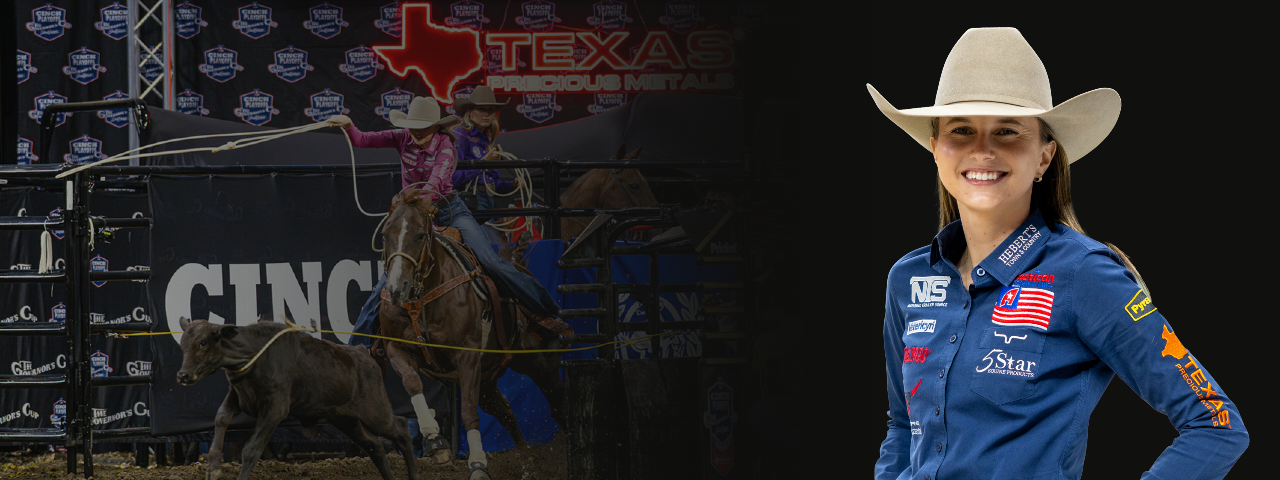
Josie Conner is a professional breakaway roper and rodeo athlete from Iowa, Louisiana. She competes in the Women’s Professional Rodeo Association (WPRA), where her career earnings have already passed $600,000. That figure does not include what she won on the junior and jackpot circuit before breakaway roping reached the professional level. She owns Dutch, a two-time AQHA Breakaway Horse of the Year, and won the coveted buckle at the 116th California Rodeo Salinas in 2026. She holds a business degree from McNeese State University. She is engaged to Riley Webb, a three-time NFR tie-down roping champion, and the two travel the rodeo circuit together more than 200 days a year. In 2026, Texas Precious Metals released the Josie Conner Silver Round commemorating her accomplishments in the sport.
Growing Up in the Arena
Conner was born and raised in Iowa, Louisiana (spelled like the state, pronounced “EYE-O-WAY”), and still lives there. Her family’s place was not a sprawling cattle ranch. It was a working setup built around what the family needed to make a living in rodeo: a few horses, calves to rope, and an arena. Her father pro-rodeos, circuit-ropes, trains horses, and gives lessons. She had been riding before she could remember, and began roping around age seven or eight.
By 12, she was competing in junior ropings put on by Riley Webb’s parents, working her way through the 12-and-under, 15-and-under, and 19-and-under divisions. She and Riley were friends for years before they started dating at 17.
Coming Up During the Breakaway Boom
Breakaway roping is not a new event. Women have been roping for generations. What is new is the stage and the money. When Conner was in junior high and high school, the ceiling for a breakaway roper was a collegiate title. After that, most women earned their degrees and moved on because there was no professional rodeo path.
That changed around 2019, when Conner was 16. The American Rodeo added breakaway roping with a $100,000 payout. The WCRA followed with major events in big cities. In 2021, the PRCA and WPRA picked it up. In the same window, $10,000 jackpots with added money popped up everywhere. Conner was running 10 to 20 calves a weekend across three jackpots and averaging about $200,000 a year at 16 and 17, before she ever entered a pro rodeo.
Dutch and the Horses Behind the Runs
Conner estimates that the horse is 80 percent of the result in breakaway roping. Her top horse, Dutch, is a two-time AQHA Breakaway Horse of the Year, and she jokes that he is more famous than she is. Fans regularly ask to pet him and take photos with him.
Dutch is 17. An injury at the start of 2026 forced her to leave for the summer run without him, and she admits she worried about competing without the horse she trusted most. A seven-year-old mare she had purchased stepped up. Heading into the new season starting October 1, she feels confident with both. Dutch gets magnetic and red-light therapy blankets to keep inflammation down. The mare needs to be ridden and prepared. Knowing what each horse needs, Conner says, is part of the job.
Money, Education, and Brand
When breakaway roping took off, and their teenage daughter was earning real money, Conner’s parents sat her down. If this is what you are going to do, they told her, you have to break the mold, because most people who rodeo successfully come out of it with nothing. She would treat it like a business. Today, she invests in a mutual fund and an IRA, and she recently graduated from McNeese State University with a degree in business, giving her another foundation for life beyond rodeo.
She sees herself as her own brand and is honest about her love-hate relationship with social media. Sponsors need the posts. But the only reason anyone follows her online, she says, is that she wins inside the arena. The roping comes first.
How Conner Operates
Know Your Horse:
Conner does not train young horses and does not start colts. She prefers veteran horses that already know their job, and she believes the great ones are born special. Her work is building the partnership day in and day out: catching, feeding, bathing, riding, and learning exactly what each horse needs to perform. A 17-year-old gets pampered to feel his best. A seven-year-old gets run down, so she is prepared. The top people in every event have the top horses, and the pair has to function as a team.
Routine Before the Run:
She tightens her saddle a set number of ropers out, sets her rope, watches the start a few times, then gets her hat pulled down and her powder on two or three runs before hers. She rarely watches the roper just ahead of her. In the box, she hears almost nothing, not the announcer or the crowd, except the voices of the people she trusts: Riley or her dad. She says a prayer before every run for safety and to shine to the best of the ability God gave her.
In Every Loss, There is a Win:
Conner finds the lesson in every bad run and moves on. Nearly every run, including practice, is on video, so she does not have to guess how she felt. She can see it. Strong fundamentals mean she rarely makes the same mistake twice, and a supportive circle of Riley, her parents, and their friends makes even hard stretches feel easy.
Break the Mold with Money:
Her parents, whom she calls her role models with money, set the rule at 16: document everything, treat the career like a business, and plan for the day the winnings slow down. She started investing early, finished her degree, and approaches sponsorships and branding as part of the job.