Ep. 20: Larry Rhoden – Governor of South Dakota
How do the unpredictable economics of cattle ranching prepare a leader to govern a state? In Episode 20 of the Y’all Street podcast, South Dakota Governor Larry Rhoden sits down with Tarek Saab at the Governor's Cup in Sioux Falls.
In this episode...
- The realities of homesteading 160-acre plots in the 1890s.
- Lessons learned from the Army National Guard and Rhoden's WWII veteran father.
- Navigating term limits and building a leadership team from scratch.
- How state-level jurisdiction and business-friendly policies are driving migration to South Dakota.
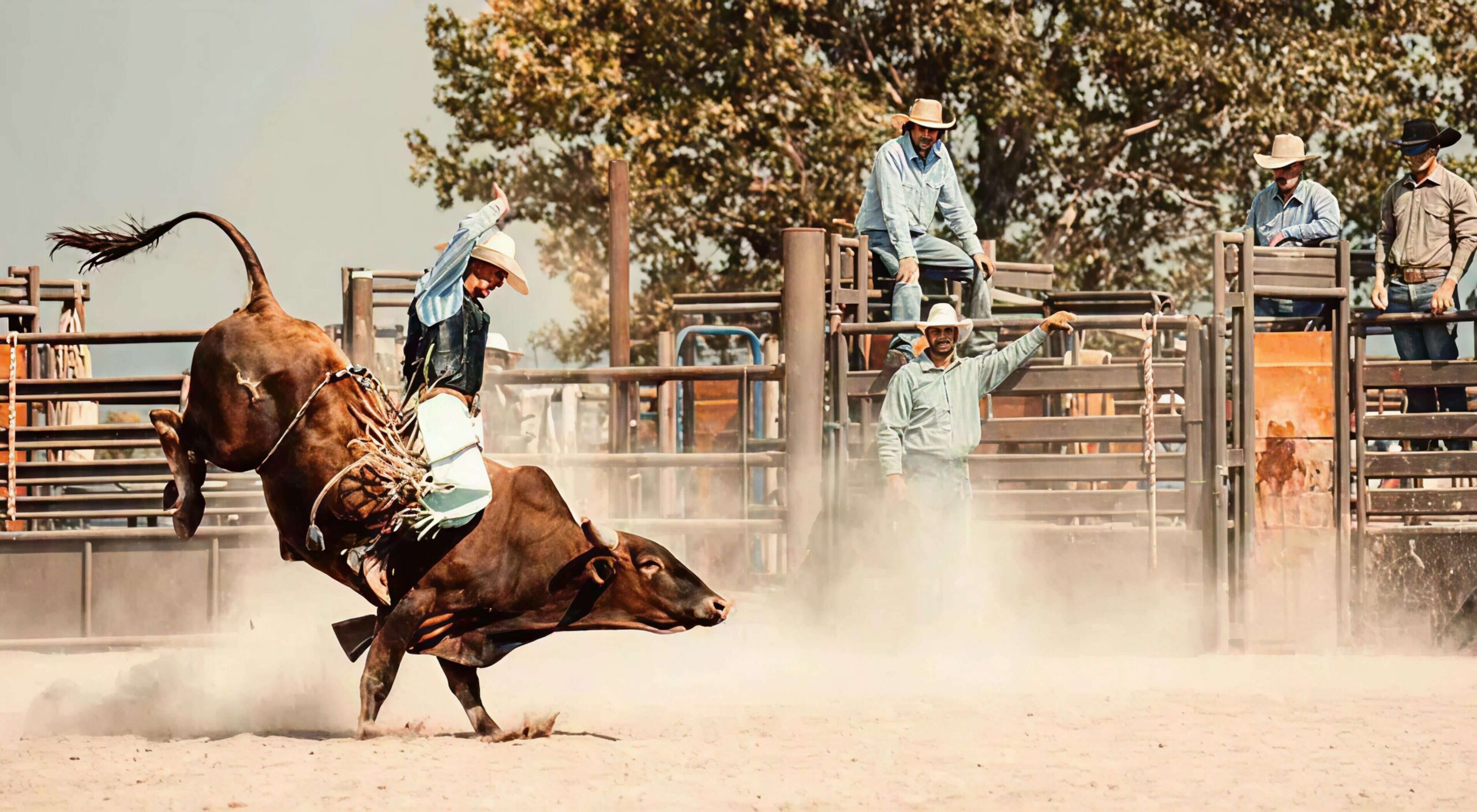
- The economic and cultural importance of the PRCA and rodeo to the state.
Tarek sits down with South Dakota Governor Larry Rhoden at the 2025 Governor’s Cup in Sioux Falls. From managing a volatile 52-member legislative caucus to running a cattle operation in the harsh western plains, Gov. Rhoden breaks down the mechanics of true leadership. They discuss the historical grit of the South Dakota homesteader, the heavy burden of his father’s WWII legacy, and why the state’s refusal to shut down businesses during the pandemic was the ultimate masterclass in economic risk management.
Key Takeaways
- The “Relevance” Framework: How do you get 52 highly opinionated leaders to agree on one agenda? Gov. Rhoden explains that consensus building isn’t about giving orders; it’s about actively listening and finding ways to make every stakeholder feel relevant to the mission.
- Agriculture as Risk Management: Ranching is a masterclass in managing uncontrollable variables (weather, commodity prices, disease). Rhoden explains how the humility he has gained from surviving harsh winters and from relying on neighbors shapes his pragmatic approach to state budgets and crises.
- The Dividends of Liberty: Rhoden unpacks the decision-making process during the COVID-19 pandemic. By recognizing that rights are granted by God, not the government, South Dakota refused to shutter its economy—a strategy that continues to pay massive macroeconomic dividends today.
- The Reluctant Leader: Rhoden’s political career is a testament to the idea that the best leaders are often drafted by their peers. He moved from the school board to the Governor’s office simply by answering the call to serve.
Notable Quotes
“More than anything else, people want to be heard, and they want to be relevant. And so I look for ways to make people relevant.” — Gov. Larry Rhoden
“If our rights, liberties, and freedoms aren’t a product of the government… government has no business shutting them down or taking those rights away.” — Gov. Larry Rhoden
“I don’t think you really fully understand what it’s like to be a steward of the land until you’ve drug calves into a barn in the middle of the night in a raging blizzard… and be humbled by having to sit back and receive help from the neighbors.” — Gov. Larry Rhoden
Mentioned Resources
- Event: The Governor’s Cup (Sioux Falls, SD)
- Organization: Professional Rodeo Cowboys Association (PRCA)
- Product: The South Dakota Goldback
0:00 - 0:20
Larry: We understand that our rights, liberties, and freedoms are given to us by God, our creator, and not government. And if government doesn't have, if our rights, liberties, and freedoms aren't a product of the government, they have no business, government has no business shutting us, shutting them down or taking those rights away.
0:21 - 0:33
Tarek: Welcome to Y'all Street. Today I speak with Governor Larry Rhoden of the great state of South Dakota. Governor Rhoden, would you like a cup of coffee?
0:34 - 0:36
Larry: Certainly, never turned down a cup of coffee.
0:36 - 0:42
Tarek: I got you this, well I had to get you the Governor's Cup. Coffee, cup, I mean that was the only one you'd get. Coffee, cheers.
0:47 - 0:48
Larry: Pretty good coffee.
0:48 - 1:02
Tarek: So we're at the Governor's Cup here in South Dakota, and you're fourth generation from South Dakota. Where did your family come from, when did they get here, and tell me a little bit about the history.
1:02 - 1:23
Larry: Yeah, so I'm in western South Dakota. They kind of homesteaded South Dakota from east to west, and so we were about the turn of the century. My grandparents on both my mom's side and dad's side homesteaded out in the country where I'm at, Union Center, which is about 50 miles east of the Black Hills.
1:24 - 1:26
Tarek: Did they come from the east coast or did they come from overseas?
1:28 - 1:36
Larry: Dad's family came from Illinois, and my grandma's family I believe was Connecticut and that area.
1:37 - 1:42
Tarek: What was the advantage to going to South Dakota at that time? Was it just because they were getting land?
1:42 - 1:45
Larry: Well, yeah, there was free land.
1:47 - 1:47
Tarek: That's an attraction.
1:47 - 2:36
Larry: You'd come out and sign up at the land office and get a quarter section of land. I think there were hardship homesteads in western South Dakota where it's a little sparser. You could prove up on a half section of land. So that was the big draw to the country, and that was, like I said, in the late 1800s, 1890s. Everybody talks about how tough the pioneers, the homesteaders were. I've said that when I've talked about South Dakota and the fabric of South Dakota, that the homesteaders weren't very many of them that were that tough or tough enough. And they lasted about a year or two, and then they headed back to Illinois or Connecticut or wherever they came from.
2:36 - 2:46
Tarek: So that was pretty common that they would come out and leave. Was there still tension at that time with the Native Americans in the area or had that passed by that point?
2:46 - 2:50
Larry: Yeah, in our area that was pretty well a thing of the past.
2:50 - 2:50
Tarek: Okay.
2:51 - 3:00
Larry: After the Battle of Little Bighorn, the Native Americans were pretty well done after that.
3:00 - 3:04
Tarek: And when your family came out, how many acres did they get in total?
3:05 - 3:06
Larry: A quarter section.
3:06 - 3:07
Tarek: A quarter section, okay.
3:07 - 3:25
Larry: But what they'd do back then, a family would come out and whoever was 18, they could prove up on a quarter section, so they'd have one family that might have three or four or five homesteads. I had uncles and great-uncles, great-aunts.
3:25 - 3:27
Tarek: And a quarter section was how many acres?
3:27 - 3:30
Larry: 160 acres. Half mile by half mile.
3:32 - 3:40
Tarek: And what was their form of agriculture? I mean, were they planting crops? Were they running cattle from the beginning? What was the focus?
3:40 - 4:10
Larry: Well, it was kind of interesting because they didn't really know. They were given free land. They didn't know what the weather was and what they were up against. But out west, they had to plant so many acres of trees, and there were different things you could do to prove up on the land. But it was mostly cattle, and they had their set of rules as far as what it took to comply with getting the free land.
4:10 - 4:19
Tarek: Did you have any sense for where they got the cattle from? Was it just other people living in South Dakota, or were they driving cattle from Texas?
4:20 - 4:38
Larry: Yeah, I think some of them brought cattle with them and livestock and whatever. But once the railroad came through, there was a lot of change things as far as being able to meet their needs as far as bringing in livestock.
4:41 - 4:44
Tarek: What was life like for you growing up? Did you grow up on that same section?
4:45 - 4:53
Larry: Yeah. Well, the place I'm on, Dad put together when he came back from World War II.
4:53 - 4:53
Tarek: Okay.
4:54 - 5:38
Larry: And my brother is about two miles away. He's on my granddad's original homestead. And so the farm growing up, we had the stereotypical diversified old-school family farm operation. We had beef cows was primary. Sheep were secondary to the cattle, but we also had milk cows. We had hogs. We had chickens. I remember my sister and I, our first job in life as little kids was cleaning eggs to sell to the grocery store. So we did anything and everything to make a living.
5:38 - 6:00
Tarek: How many siblings did you have in total? I had a twin sister and three older brothers. And you mentioned that your dad went to World War II, and that was very common for a lot of the farm boys at that time were going overseas to fight. Any stories from that time how difficult it must have been to continue the farming operations with all the guys gone?
6:01 - 7:41
Larry: Yeah, really a lot of stories. Dad got in country right at the onset of the Battle of the Bulge. He was in the 11th Armored Division, Patton's Third Army. So he went from zero to 100 as far as right into the heat of the battle and saw a lot of action there. And then, of course, that led to the end of the war. His company liberated a very bad death camp, Moshhausen, and it was one of the most notorious of the concentration camps. So like you said, there were a lot of neighbors that had served too, and so growing up with them and a lot of neighbors worked together for a lot of things, so I heard a lot of the stories. It's probably an interesting story. About 20 years after Dad was gone, my brother and sister were digging around in an outbuilding where there was this huge trunk that had been there since long before us. We always had orders to stay out of it. They got to digging through that, and they found a camera with an undeveloped roll of film in the bottom of that trunk, and it was a roll of film. Lori took it in and had it developed, and it was all pictures, different pictures during the fighting and the Battle of the Bulge, and then the last pictures were pictures from Moshhausen, and the bodies stacked up like firewood for as far as you could see.
7:41 - 7:44
Tarek: And they never developed them? They just had the roll, and they didn't want to see them?
7:44 - 7:57
Larry: Yeah, they kind of told you a lot about their psyche once he got back. It's like they just want to put that part of their life behind them and shut the door on it.
7:57 - 8:00
Tarek: Yeah, it must have been shocking. So he didn't talk much about the war then, I guess.
8:01 - 8:28
Larry: Well, like I said, I was the youngest son, so I stayed on the place, and so I spent a lot of time with Dad. He was my best friend, business partner, and inevitably something would happen that would remind him of some story, and so I heard a lot of it. He really opened up to me as far as what they went through in World War II. They truly were the greatest generation.
8:28 - 8:41
Tarek: I believe it. I believe it. So you lived on the ranch through high school. At 18, you entered the National Guard, is that right? Or did you go to school?
8:42 - 8:53
Larry: No, I went to Vo-Tec for ranch management and then joined the Army National Guard, and so I would have been 19, 20 years old when I joined the Guards.
8:54 - 9:07
Tarek: So when you were at Vo-Tec doing the ranch management, was that with the expectation that you were going to come back and sort of take the reins of the operations? Yep, absolutely. What changed to make you decide to go into the Army National Guard?
9:10 - 9:45
Larry: Well, just like anybody on the ranch, my dad and mom were still needing to earn a living, and it wasn't a big ranch, and quite honestly for me, I'd grown up, listened to Dad talk about his war experience, and I had two brothers that served, two older brothers. One served in Vietnam, and I really wanted to experience that, to hear them talk about it, so I thought the National Guard was a nice way to get a taste of it without an all-out commitment.
9:45 - 9:47
Tarek: What was that experience like for you? Did you enjoy it?
9:48 - 10:14
Larry: It was. It was kind of a life changer. There's something about basic training, and just for especially a kid that's been born and raised on a ranch, to get off the ranch and then be on your own and then face that kind of training, and it really helped me kind of get in touch with what I could do and just how much I could push myself.
10:15 - 10:20
Tarek: Was it the first time that you had really been around people outside of South Dakota?
10:21 - 10:27
Larry: Yeah, absolutely was. I remember getting off the bus in Detroit and standing outside.
10:27 - 10:28
Tarek: Culture shock.
10:28 - 10:45
Larry: Yeah, and standing outside, and all I could hear was sirens and cars and noise and more people than I'd ever seen in my life, and thinking I'm around more people than I've ever seen in my life, and I've never felt lonelier.
10:47 - 11:25
Tarek: I live on 120 acres, and yesterday I was in downtown Manhattan, and I just couldn't stop thinking about how different the lifestyle is for people that live in the city and just surrounded by this concrete and what life is like out on the ranch. So I can imagine that must have been a pretty big shock for you. Through that whole experience, what do you think was sort of the biggest lesson that you learned? And do you, during this kind of period, how long were you in the Army National Guard for?
11:25 - 11:25
Larry: Six years.
11:26 - 11:33
Tarek: Six years. Yeah, what was the biggest lesson that you learned in that period?
11:33 - 12:02
Larry: You know, probably the biggest changer for me was the first time I started developing leadership skills in my basic training platoon. Later on in our cycle, I was made platoon leader, so I was kind of the trainee that was the leader of that particular platoon.
12:02 - 12:03
Tarek: Why did they make you the leader?
12:04 - 13:00
Larry: Well, they would just pick somebody at random that they saw kind of standing out. Don't know what they were looking for, but they saw something, and there were several others that were picked before me that didn't last very long, and then I became platoon leader and stayed in that position to the end of that cycle. And then they nominated me. My drill sergeant nominated me to be training leader of the cycle, and so I interviewed with the drill sergeants along with four other guys and was awarded that. And that combined with working alongside the drill sergeants that were coaching me as far as how I could react to people because you have all these young men, and there's a lot of issues.
13:00 - 13:00
Tarek: Oh, yeah.
13:01 - 13:07
Larry: And it was a great—it really helped me mature in the way I looked at leadership.
13:08 - 13:10
Tarek: Especially being the youngest son in your family.
13:10 - 13:11
Larry: Yep.
13:11 - 13:15
Tarek: So you hadn't really taken on a lot of leadership responsibility until you'd gotten there.
13:15 - 13:50
Larry: So it was a great experience for me, and then when I'd come home and got in the guards, and we always, in our family, I think our parents were people of faith, and they always instilled in us children the sense of service to others. And so we were back on the ranch, but I still wasn't very political, but I volunteered. I stepped up and served on committees, and one thing kind of led to another.
13:50 - 13:53
Tarek: Were you volunteering at the local level primarily?
13:53 - 14:04
Larry: Sure. Coaching basketball and refereeing at games and serving on co-op boards and whatnot.
14:05 - 14:08
Tarek: When did you decide to run for office?
14:08 - 15:00
Larry: Well, it was kind of a progressive thing. I remember somebody come up to me and remind me that the school board had an election, and I should think about running for the school board. So I did, and didn't campaign, but our family's pretty well known and got a spot on the school board. Six years later, somebody came up to me. It was a county commissioner who said, you really should think about running for the legislature. I've said ever since, quite often after that, that I was looking for a way to get off the school board. How old were you at the time? Oh, man, that would have been 2000, so I was 41. So it was kind of late to get involved in politics.
15:01 - 15:02
Tarek: Did you talk to your wife about that first?
15:03 - 15:28
Larry: Yeah, in fact, I remember that was at a parent-teacher conference. He brought it up to me, and we were on our way home, and I says, hey, I had a funny conversation with a guy named Dale Hammock. He says, well, he told me I should consider running for the legislature. Sandy was driving, and she was quiet for a little bit and says, well, I think you should. So there you go.
15:28 - 15:30
Tarek: That's all it takes is a supportive wife.
15:30 - 15:38
Larry: Yeah, and it's pretty amazing, like in the legislature and politics, how few wives do really support their husbands.
15:38 - 15:38
Tarek: Is that right?
15:39 - 15:57
Larry: Yeah, and it wouldn't have happened if I wouldn't have had a supportive wife because that was key for me, being able to go up here and leave the ranch and know that I wasn't leaving a mad spouse behind.
15:58 - 16:07
Tarek: So when you're in the state legislature, you're still running the operation. You're still running the farm. And so was that a difficult balancing act for you?
16:07 - 16:50
Larry: Well, in ways, but in South Dakota, we do a lot of things right in state government in South Dakota, and a citizen's legislature is a big part of that. Our sessions are 40 days long, and so we're meeting in January, February, and a little bit into March. When there's not a whole lot you can do around the ranch. The big thing is getting somebody to do the chores, feed the cows, because we feed cows all winter. I had a good friend who was about eight miles away that, out of the blue, one day offered to take care of the cattle for me when I was away in Pierre. He did that for 16 years while I was in the legislature.
16:50 - 16:58
Tarek: And then you were in the Senate for about six years. Yeah, I was in the House for eight years and then six years in the Senate.
16:59 - 16:59
Larry: Okay.
16:59 - 17:21
Tarek: And during that period, if you could just sort of distill those 15 years into a couple of key learning experiences. What did you learn? What surprised you? Did you have any regrets during that period? What was it like being involved?
17:22 - 18:48
Larry: Well, so I was the product of term limits. Eight years before I was elected, they instilled eight-year term limits. So what that did when I got in, all the leaders were arbitrarily booted out, and so there was a void in leadership. And so I figured as long as I'm there, if I was going to be there, I should have a seat at the table. So I ran for leadership positions. I was assistant majority leader the second term, majority leader on year five. That was another turning point for me because I had great manners. And it was a study in human nature. We had 50 out of 70 members of the House. The majority caucus was 52 members. So I had a huge caucus and a very wide spectrum of republicanism represented in those 52 members. And so just learning how to deal with that and bring 52 separate leaders elected from 52 areas of the state to bring them to consensus on a plan is no small feat.
18:49 - 18:50
Tarek: How do you do that?
18:50 - 19:45
Larry: Well, a lot of listening. More than anything else, people want to be heard and they want to be relevant. And so I look for ways to make people relevant. And I had four whip leaders elected under me, and I worked to make them be relevant by representing the caucus and them making their whip group members feel relevant and heard. And so I think that's the biggest, maybe the thing that I did right because we had a very successful caucus as far as getting our agenda through and getting some good things done for the state.
19:45 - 19:46
Tarek: When did you meet Kristi Noem?
19:47 - 20:29
Larry: Yeah, that's interesting. It was my third, fourth term in the House. I was majority leader, and that was the first year she ran for the legislature. And I was in the middle of property tax reform for ag land to go to a productivity model, and it was some pretty heavy lifting. And Kristi was elected, and she had an ag background and very capable, and I recognized her skill set early on. And we were very much aligned politically. We were both ranchers. She's a rancher.
20:29 - 20:38
Tarek: Yeah, I read something that said that as far as you can tell, this is the first lieutenant governor pairing with a farming and ranching background.
20:38 - 20:43
Larry: Yeah, we kind of looked into that, and we think we're probably the first time in the United States' history.
20:43 - 20:48
Tarek: And do you think that heavily informed the way that you governed?
20:49 - 21:33
Larry: Oh, yeah, I think so. Obviously, the farm and ranch is, especially with the kind of upbringing I had, I think it gives you a different perspective, maybe a more fundamental perspective on life. I remember there was a speech that was written. I don't remember the guy's name. It was called Solitude and Leadership, and it talked about how cowboy poets, how wise some of the words from their mouth coming from people that had such a simple upbringing. But it's different. You're alone with your own thoughts.
21:33 - 22:27
Tarek: It reminds me, you just mentioned, how important it is to listen in order to lead well. And it strikes me, again, as someone that lives out on some property, that when you live far away from the city, you tend to be much more reliant upon your neighbors to help with things. My neighbors come over when it comes time to cut wood or to fix a machine or whatever the case may be, and you tend to develop reasons to like people instead of reasons not to like people. And I find that that was very different than my upbringing growing up in the city where you're just packed in like sardines and you're looking for reasons not to like people. So I can see how that would have impacted your leadership.
22:28 - 23:22
Larry: Yeah. Recently we were talking about that and stewardship of the land, and I articulated in a speech something to the effect that I don't think you really fully understand what it's like to be a steward of the land until you've drug calves into a barn in the middle of the night in a raging blizzard or put your life at risk for care of livestock or helped a neighbor who was in need. And more importantly, and I've lived this, is be humbled by having to sit back and be in a position where you had to receive help from the neighbors. And it really kind of changes your perspective of what's important.
23:22 - 25:16
Tarek: And the sense of uncertainty on income, because when you're out on the land you don't know what are cattle prices going to do, what is the weather going to be like, is the animal going to get sick, how much is this going to cost. It's that constant sense of anxiety that you live through that really shapes how someone becomes resilient and appreciative and having sort of an attitude of gratitude when things do net out at the end of the year. I saw a video of you welding, whipping out the blowtorch and making some brands. And it just struck me and I was thinking, if every governor knew how to weld, I just think the country would be a little bit different. Getting their hands dirty and seeing what honest everyday Americans actually have to go through and some of those struggles and trials. I just think it's a good lesson for all. So Governor Kristi Noem, she gets elected and then when Trump names her as the Secretary of Homeland Security, you wake up one day and you're now the governor of South Dakota. I'm just, I can't stop thinking about what that experience must be like because you didn't run for governor and you think about four generations of your family living in South Dakota, as you mentioned, your dad going through World War II, you serving in the Army National Guard, working on local committees, and now you're sitting down one night in January with your wife Sandy and you're the governor of South Dakota. How do you process that? How did you process that? What was going through your mind?
25:16 - 27:23
Larry: It became more and more clear in the last year or two that there was a pretty strong possibility she could get that position. So I said I was preparing to be prepared. I had some good political allies that are very wise, good friends of mine. We kind of talked about that possibility and what would be changing and what you'd have to do right away, but it really didn't settle in until it actually happened, and it just really seemed surreal because you think about it, but you really don't know what it's going to be like until it's there. My saving grace was the team that Kristi had put together. I was involved with her when she put them together and did most with the interviews and had a working relationship with them. I'll say this. I have a ton of respect for Kristi and I always will. One of her strengths, I'll say, is she doesn't tolerate mediocrity. So you were either top shelf. If you were on her team, you were either top shelf or you weren't on her team. So I had a very good bunch of very competent, motivated people on my team, and I was wise enough to say, look, nobody's going to lose their job because I don't want to upset the apple cart when I've got a good thing going. Same with her cabinet. Very competent people in the cabinet. So we left them in place. I brought on, you know, we kind of rearranged the deck chairs a little bit, but it was a really smooth transition. And I think, you know, every leadership position I'd held leading up to that was good prep to take over the reins.
27:24 - 28:39
Tarek: One of the things that COVID, I think, reminded the American population was how important the state's roles really are in U.S. government. And where I think sort of growing up to the 80s and 90s, and particularly an era of globalism and, you know, national chains becoming a big thing in the United States, the U.S. felt like it was getting largely homogenized, that it didn't really matter where you lived. It was the same stores, the same experience. And I think through COVID, people realized just how greatly jurisdiction mattered and how different life was during that period. And I feel like that has continued to permeate, you know, through a lot of the migration from states to states. And I'm curious to know what the imprint is that you want to leave on the state and how you think South Dakota is unique compared to its peers.
28:39 - 30:51
Larry: Well, I have some very distinct feelings about why South Dakota is unique. And a lot of that was because of Kristi Noem and her leadership and our team. We took a different direction in every other state. And you're right, it was a wake-up call for just how Kristi said, I'll kind of sidetrack. She used to say that what's wrong with the U.S. will not be solved in Washington, D.C. It will come from the states and from the governors. And I think COVID can prove that. The governors had the power to shut things down, or they thought they had the power to shut things down, shut businesses down, and usurp people's rights. Kristi and I took a different track. It was we know, we understand that our rights, liberties, and freedoms are given to us by God, our creator, and not government. And if government doesn't have, if our rights, liberties, and freedoms aren't a product of the government, they have no business. Government has no business shutting them down or taking those rights away. We stood on that principle and let the sound science, data, and the facts rule our decisions instead of fear. And there were a lot of governors making decisions based in fear and not what was actually going on, and it was some tough sledding. I remember standing in briefings where the talking heads telling us, if you don't respond correctly in these first few months, you could lose 300,000 South Dakotans to COVID. So it's pretty tough sledding to butt 49 other governors that are shutting their state down, but that's what we did. And when we came through it, it's been paying dividends ever since because a lot of people recognize that South Dakota's different.
30:51 - 31:01
Tarek: South Dakota led the way. It was the example during that period. Do you stay in contact with other governors? Do you communicate frequently? Is there like a governor text chat somewhere?
31:01 - 31:52
Larry: Well, yeah, we do, and I'm just on the front end of that. And then there's the NGA, the National Governors Association. They meet different times, different places across the country. And then there's the RGA, the Republican Governors Association. They also have the WGA, the Western Governors Association. So there is all kinds of opportunities to get together with the different governors. I've went to a few of those. I don't go to very many, but I think they're a valuable thing to get to know fellow governors and already built some relationships and friendships with different ones. So, yes, there's plenty of opportunity to get together and take advantage of their expertise.
31:53 - 32:03
Tarek: Tying everything back to today, we're at the Governor's Cup here in Sioux Falls. I actually learned today that rodeo is the official sport of South Dakota.
32:04 - 32:05
Larry: That's right.
32:05 - 32:12
Tarek: Were you ever personally involved in rodeo? And are you a fan of rodeo? What does this event mean to you? I'm just curious.
32:13 - 32:56
Larry: Yeah, I rodeoed a little bit in high school, rode a few bulls. What did Mom think of that? Well, my mom was old-school ranch wife. She didn't care too much. You'll learn soon enough. It didn't take me very long to realize that I wasn't a bull rider. Although I look back now, I say I was better than a lot of those people. It just didn't take me near as long to ride a bull as did other people. Actually, I think I was in my fourth year as a legislator, I carried the bill that made rodeo the official state sport.
32:56 - 32:59
Tarek: Is that right? Why is that? What motivated you to do that?
32:59 - 33:40
Larry: Well, it made perfect sense. We had a huge debate on the floor because there was a legislator from Sioux Falls that owned a semi-pro team. She thought it should be basketball. I remember getting up on the floor and I said, are you kidding? It's a sport of rodeo. I started naming all the world champions that have come out of South Dakota. I said, we've turned out like a dozen Michael Jordans in the sport of rodeo out of South Dakota. So it was a no-brainer. I had almost unanimous support in the House and in the Senate to make that our official state sport.
33:41 - 33:42
Tarek: So how important is this event to you?
33:44 - 33:50
Larry: Well, Rory Lemel came to me years ago. I don't know, it would have been about five years ago now.
33:51 - 33:52
Tarek: Another pro rodeo athlete, by the way.
33:52 - 33:59
Larry: Yeah, and Rory Lemel grew up just like 25 miles north of us. My wife Sandy taught him in grade school.
33:59 - 34:00
Tarek: Is that right?
34:00 - 34:41
Larry: Yes. He called me up with the idea and I floated it to Governor Noem and she loved it. So we worked together to get that going. I thought how perfect for South Dakota to have an event like this. During COVID, we were kind of the salvation in a way for the PRCA. We had several rodeos come to South Dakota because every other state was shut down. Including the extreme bronc match out in Rapid City, they have every year out there. So, yeah, it was a pleasure for me to be involved in that.
34:41 - 35:07
Tarek: That's great. Well, I have a parting gift for you. I don't know if you've seen these South Dakota goldback notes. This is my friends at Goldback created this, and what this is is one one-thousandth of an ounce of gold sandwiched between two substrates to look like a note. But it's got one one-thousandth of an ounce of gold in there, and it's for the state of South Dakota.
35:08 - 35:09
Larry: Wow, that is very cool.
35:10 - 35:15
Tarek: And you told me before this interview you're a fan of precious metals, gold and silver.
35:15 - 35:25
Larry: Yeah, I've tried to invest. Anytime we had a few extra bucks rolling around, I'd wait until the silver prices were down.
35:25 - 35:29
Tarek: Not anymore. The silver prices just keep going up.
35:29 - 35:30
Larry: I haven't been buying much silver lately.
35:31 - 35:36
Tarek: That's great. Well, Governor Rohden, thank you so much for joining us on Y'all Street. It's been a real pleasure.
35:36 - 35:37
Larry: Thank you, sir.