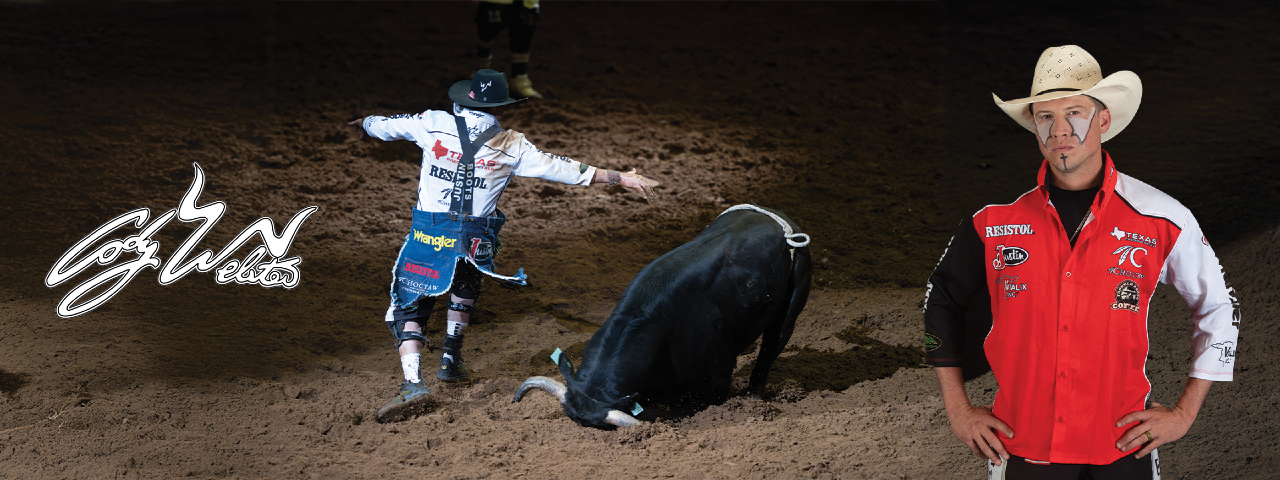
In any other industry, standing in front of a speeding 2,000-pound projectile is considered a workplace accident. In Cody Webster’s line of work, it’s a Tuesday.
Webster, a 6-time PRCA Bullfighter of the Year, is the gold standard in what is arguably the most dangerous job in sports. But as he revealed on Y’all Street, modern bullfighting isn’t just about adrenaline junkies with a death wish. It is a sophisticated, high-stakes business where split-second decisions determine not just safety, but financial viability.
The “Secret Service” of the Dirt
The popular image of the “rodeo clown” in baggy pants and makeup is a relic of the past. Webster represents the modern evolution: the Bullfighter.
“My job is very serious,” Webster told Tarek Saab. “It’s literally taking care of the best bull riders in the world.”
Webster compares his role to a Secret Service agent. When a rider is bucked off or—worst-case scenario—gets their hand hung up in the rope, Webster’s job is to step into the “eye of the storm.” He uses angles, leverage, and psychology to manipulate the bull’s movement, drawing attention away from the vulnerable cowboy. It’s a job that requires the agility of an NFL cornerback and the composure of a bomb disposal expert.
“I can help you with the steps, but the teacher is the bull. And he’s going to teach you the hard way.”
Cody Webster
The Yellowstone Effect
Webster’s career surge coincides with a massive cultural shift. He calls it the “Yellowstone Effect.”
“Cowboy is cool again,” Webster notes. Thanks to hit TV shows and the democratization of media via Instagram and YouTube, rodeo is no longer a niche rural event. It’s a mainstream spectacle filling Madison Square Garden.
This influx of attention has brought real money into the sport. “We’re talking guys that can legitimately make a great living and retire from being a rodeo athlete,” Webster says. But unlike the NBA or NFL, there are no guaranteed contracts. If Webster doesn’t show up—broken ribs and all—he doesn’t get paid. This “eat what you kill” mentality drives a relentless work ethic, with him working nearly 200 shows a year.
The Business of the Bull
Perhaps the most surprising aspect of Webster’s career is his backend operation. He isn’t just fighting bulls; he’s building them.
At his Flying W ranch in Oklahoma, Webster and his wife breed specialized fighting bulls, even consulting with Spanish matadors to test their stock’s genetics. This vertical integration allows him to understand his “opponent” on a cellular level. He knows their bloodlines, their tendencies, and their triggers.
The Bottom Line
Cody Webster is proof that in the Western industry, your brand is built on your willingness to endure. Whether he’s battling cancer or a 1,800-pound bovine, his strategy is the same: don’t back down, read the situation, and make your move before it’s too late.
“If you’re thinking, you’re a step late,” Webster says. “And if you’re a step late, the bull’s got the upper hand.”
Catch the full interview with Cody Webster on Episode 2 of Y’all Street.